
Veteran-Owned | 25+ Years | 185+ Five-Star Reviews
Marble Polishing and Restoration in Miami: Diamond Honing, Polishing, and Sealing
Marble polishing and restoration in Miami is usually a repair job, not a cleaning job. Marble floors here take more abuse than most homeowners realize.
South Florida's humidity accelerates etching from acidic spills. Hard water from Miami's water supply leaves mineral deposits that dull the surface over time. High-traffic areas in condos, lobbies, and historic properties wear unevenly. And decades of improper maintenance, wrong cleaners, wax buildup, improper sealers, compound the damage until the floor no longer looks like the stone it once was.
Keep It Clean Tile and Grout has been restoring marble floors throughout Miami-Dade County and the Florida Keys since 2002. Our process is mechanical and controlled, diamond honing removes damage at the surface level, progressive polishing rebuilds clarity and reflectivity, and penetrating sealers protect the stone without forming a film that traps moisture in South Florida's climate.
📞 (305) 741-9729, call or text to schedule your assessment.
Short answer
Can a dull or etched marble floor in Miami be restored?
In most cases, yes. Dullness, etching and scratches are damage in the stone, not dirt on it, so no cleaner will fix them. We hone the surface with diamonds to remove the damage, polish through progressively finer grits to bring the clarity back, and protect the stone with a penetrating sealer that leaves no film. If the floor only needs cleaning, we tell you that at the assessment.
What Marble Restoration Actually Involves
Marble restoration is not cleaning. It is mechanical correction of the stone surface itself.
Cleaning removes surface contamination, dirt, residue, hard water deposits, and light soiling that sits on top of the stone.
Restoration corrects the surface, scratches, etching, dullness, and loss of reflectivity that has penetrated the marble at the crystal level. Once etching or scratching reaches the stone surface, no cleaner or topical product will resolve it. The surface must be mechanically corrected through honing and polishing.
Most Miami homeowners calling about dull or hazy marble floors need restoration, not cleaning. The same distinction applies above floor level, which is why countertop and vanity top restoration runs on the same honing and polishing sequence rather than any cleaning product. We identify which one applies to your floor during the initial assessment, and we tell you honestly before any work begins.
What We Find on Most Miami Marble Jobs
South Florida marble floors face a specific set of conditions that other markets do not.
Etching from Acidic Products Marble is calcium-based stone. Contact with acidic substances, citrus, wine, cleaning products containing acids, and even some grout cleaners, etches the surface chemically. The etch removes the polish at the crystal level, leaving dull spots that look like water stains but do not clean off. Etching is extremely common on Miami kitchen and bathroom floors and on entryways where acidic outdoor cleaning products have been tracked in.
Hard Water Mineral Deposits Miami's water supply leaves calcium and silica deposits on marble surfaces over time. Light deposits can be addressed through cleaning. Heavy mineral buildup that has bonded to the stone requires mechanical removal before polishing can begin.
Traffic Wear and Surface Scratches High-traffic areas, doorways, hallways, main living spaces, develop scratch patterns and surface wear that reduce reflectivity. These areas require honing at the appropriate grit before polishing to restore visual consistency across the full floor.
Wax and Topical Coating Buildup Marble floors in older Miami homes and commercial properties were frequently waxed for maintenance convenience. Wax buildup dulls the natural reflection of the stone and must be stripped before any restoration work is possible. Film-forming coatings applied to marble in South Florida's humidity also trap moisture and cause surface cloudiness over time.
Improper Sealer Application Non-penetrating topical sealers applied to marble create a surface film that dulls the stone, traps moisture, and peels in high-humidity environments. We use penetrating impregnating sealers only, Stonetech Bulletproof Sealer, Miracle 511 Impregnator Plus, or Aqua Mix Sealer's Choice Gold, which protect the stone from within without altering the surface appearance or trapping moisture.
Our Marble Restoration Process
Every marble restoration project follows the same mechanical sequence. The specific grit sequence and number of stages depends on the severity of damage assessed during the initial walkthrough.
Stage 1, Surface Assessment and Documentation We document the floor condition before any tooling begins, etch locations, scratch patterns, coating buildup, lippage, and areas of uneven wear. This assessment determines the starting grit and the number of correction stages required to achieve the target finish.
Stage 2, Mechanical Honing Diamond abrasives remove etching, scratches, and surface damage at the crystal level. The starting grit depends on damage severity, heavier scratching and deep etching require coarser diamonds before refinement can begin. This stage is where the actual correction happens. Everything after this stage builds on what is achieved here.
Stage 3, Progressive Polishing We move through successive diamond grits, each pass removing the scratch pattern left by the previous grit and increasing surface clarity. The progression continues until the desired reflectivity level is achieved. A high-gloss finish requires more polishing stages than a honed matte finish, we establish the target finish level before work begins. Not sure which finish you want? Our guide to honed vs. polished marble walks through it room by room.
Stage 4, Final Surface Clarity The final polishing stage brings the surface to its target reflectivity. For high-gloss marble this means a mirror-quality reflection from the stone itself, not from a topical coating applied on top of it.
Stage 5, Penetrating Sealer Application Where sealing is appropriate, we apply a penetrating impregnating sealer that protects the marble matrix from within without forming a surface film. In South Florida's humidity, film-forming coatings on marble trap moisture and cause cloudiness and surface deterioration. We use penetrating impregnators only.
One Afternoon of Damage: Acetone on a White Marble Floor in Coral Gables
Not every marble job starts with years of wear. This one started with painters who did not cover a white marble floor in a Coral Gables condo. Paint drops landed on the stone, and the owner reached for acetone to get them off. The paint came up. The acetone left dull, damaged patches everywhere she used it.
Acetone is a strong solvent, and it strips the sealer right off the stone. On white marble that damage shows from across the room, because there is no veining to hide it. You cannot clean it out or buff it out. The damaged surface has to be honed away.
Miguel ran this one himself. Polycrystal diamonds and water only, nothing else on the stone, starting at 800 grit and working up to a 3500-grit finish. She only wanted the damaged area done, not the whole unit, so that is what we worked. On white marble, matching the repair to the floor around it, in reflection and in texture, is the whole job.
The honest catch: the repaired section now looks better than the rest of the floor.
If this happens to you: if paint, nail polish remover, or any solvent lands on marble, wipe it up and call before you put any product on it. Every product that goes over fresh damage makes the correction harder. Our rule is simple: never acetone on marble. The full write-up of this job is on our marble polishing in Coral Gables page.
★★★★★
"Miguel was amazing I called him on a Sunday he picked up he was there by Monday Servicing the unit sent me pictures of before and after I've worked with him previously definitely recommend."
Karen T., Coral Gables
Over 20,000 Square Feet in Seven Days: The Vibe Miami Lobby
Vibe Miami is a residential high-rise in Downtown Miami. Its lobby and connecting common areas, more than 20,000 square feet of marble, had lost their shine the slow way: daily traffic and routine maintenance cleaning, etching the surface a little at a time. Property managers notice that kind of wear long before anyone can name it. The stone was not damaged beyond repair. It needed honing and polishing, which a mop and a maintenance program cannot do.
Miguel ran the job. We worked diamonds and dip pads across the full footprint while the building stayed open, with residents coming and going around us. It took seven days, and we finished ahead of schedule. A penetrating sealer went down at the end.
What to look for in your building: if the lobby looks dull right after the cleaning crew leaves, the problem is usually etching, not dirt. More cleaning will not fix it. Lobbies, corridors and common areas are covered on our commercial marble polishing in Miami page.
When the Shine Is the Problem: Polished Counters Honed to Matte in Coral Gables
Most people call us to bring the shine back. This Coral Gables homeowner wanted it gone. She had chosen polished marble years earlier, lived with it, and decided she was done with the shine on every counter in the house.
There was nothing wrong with the stone. Polished and honed are the same marble worked to a different grit, so the finish can go either way. We worked the tops down to a flat, even matte with diamond abrasives and water, then applied a penetrating sealer so the stone is protected without the sheen coming back. Afterward we restored the Saltillo in the same house, one of the oldest homes in Coral Gables.
Worth knowing: on natural stone, taste is reversible. You are not stuck with a finish you picked years ago. More on counters and vanity tops on our countertop and vanity restoration page.
★★★★★
"Excellent service-friendly knowledgeable great interaction, great results....I highly recommend them"
Linda D., Coral Gables
Trinity Cathedral, Downtown Miami
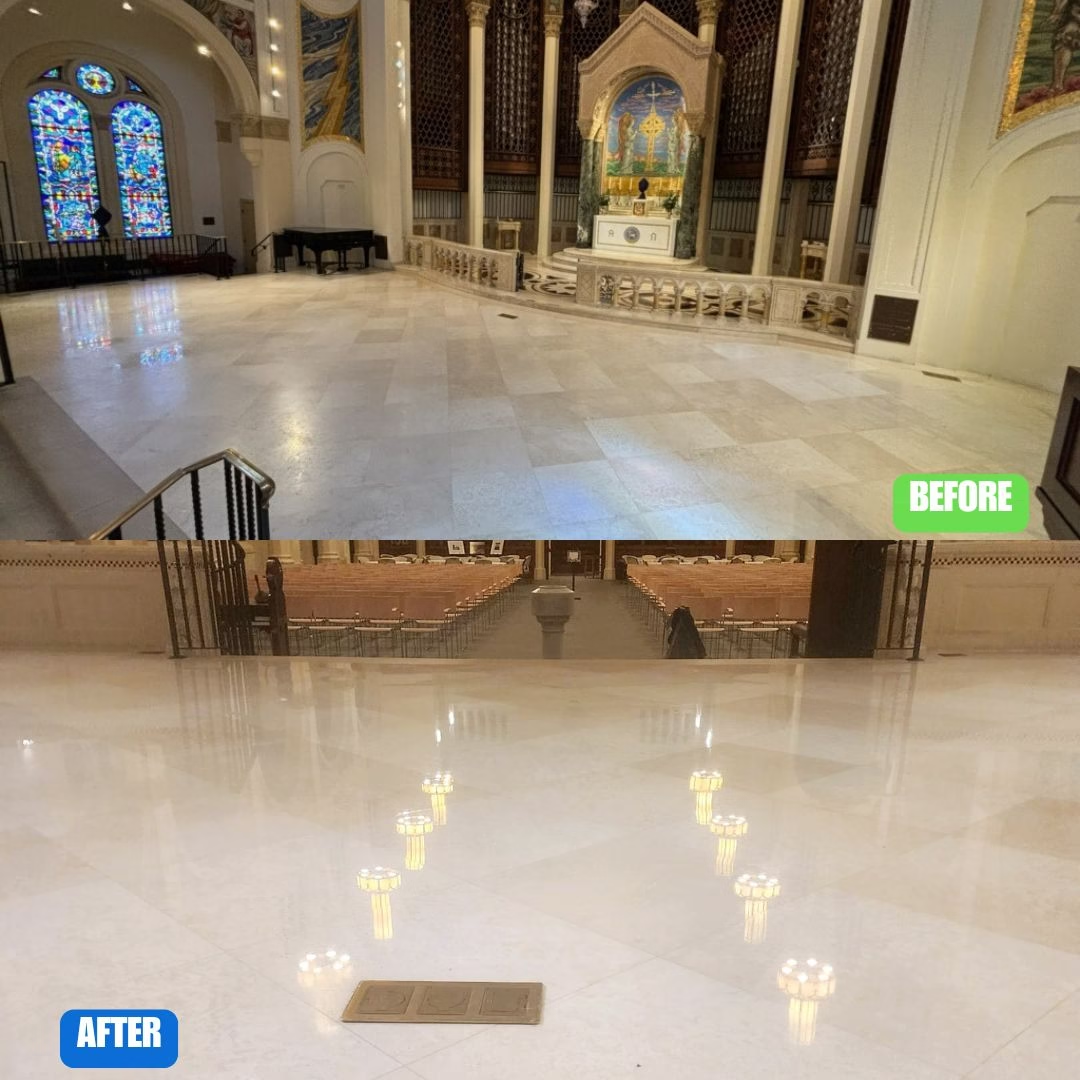
The historic marble floor at Trinity Cathedral had gone extremely dull under years of traffic in a working church. Miguel ran the job: deep cleaning, diamond honing, polishing, and a penetrating sealer. The people who worship there noticed. Several of them reached out afterward and hired us for their own homes, and the priest was very happy with the floor.
Trusted Across Miami-Dade and Monroe County | 185+ Five-Star Reviews
★★★★★
"These guys are awesome. I called them late at night freaking out because I accidentally [stained] some of the marble... Highly recommended."
Mike E.
★★★★★
"Wow, I'm speechless. Thanks Keep It Clean!"
Gloria C., marble polishing
"Professional from start to finish. Our marble floors look incredible."
Coral Gables Homeowner
★★★★★
"Honest, technical, and extremely detailed."
Brickell Client
★★★★★
"Finally found a company that understands marble polishing and restoration."
Pinecrest Homeowner
Honest Limitations
We document limitations before we quote, not after we invoice.
Deep scratches that have penetrated significantly into the marble surface can be reduced but may not come out completely depending on depth and stone type. We assess scratch severity during the walkthrough and explain realistic outcomes.
Severe etching on softer marble varieties, particularly Crema Marfil and some Calacatta types common in Miami condos, may require multiple correction stages and may leave subtle variations in reflectivity in heavily damaged areas.
Lippage and uneven tiles can be addressed through honing but complete leveling depends on the severity of height variation and the tile installation method. We assess this during the initial walkthrough.
Color variation in certain marble types is natural and will become more visible after polishing removes surface contamination. We explain this before work begins on floors where natural color variation is significant.
Service Coverage
We restore marble across Miami-Dade County, including Coral Gables, Coconut Grove, Pinecrest, Brickell, Key Biscayne, Miami Beach, Surfside, Bal Harbour, Sunny Isles Beach and Aventura, and in Monroe County from Key Largo through the Florida Keys. The same honing and polishing sequence runs on the other calcium-based stone in these houses, so we also handle travertine restoration in Miami, limestone restoration, and terrazzo restoration, calibrated to the density of each so the finish holds where one surface meets another.
A $250 assessment fee applies to all marble and natural stone floor evaluations, paid via Zelle to confirm your appointment. The fee is credited in full toward your service.
Frequently Asked Questions About Marble Restoration in Miami
What is the difference between marble cleaning and marble restoration? Marble cleaning removes surface contamination, dirt, hard water deposits, residue, and soiling that sits on the stone surface. Marble restoration corrects damage that has penetrated the stone itself, etching from acidic contact, scratches from surface wear, and dullness caused by crystal-level damage. Cleaning products and topical treatments cannot resolve etching or scratching because the damage is in the stone, not on top of it. If your marble floor looks dull, hazy, or scratched even after cleaning, you are looking at surface damage that requires mechanical correction through honing and polishing, not a different cleaning product.
Why does marble etch in Miami homes? Marble is calcium-based stone and reacts chemically with acidic substances, citrus juice, wine, vinegar, many common household cleaners, and grout cleaning products. The acid dissolves the calcium carbonate at the surface, removing the polish at the crystal level and leaving a dull spot that looks like a water stain but will not clean off. Miami homes see particularly high rates of marble etching because of the climate and the prevalence of acidic cleaning products used on outdoor surfaces that get tracked indoors. Once a marble floor is etched, mechanical honing is the only way to restore the surface. We identify etching severity during the assessment and explain the correction process before work begins.
Can marble floors be restored in Miami condos and high-rise buildings? Yes. We carry full commercial liability insurance and provide COI documentation required by Miami-Dade condo associations and HOA management companies. We use low-moisture, dust-controlled processes appropriate for occupied residential buildings, no truck-mounted equipment, no excessive water, no chemicals that create air quality issues in enclosed spaces. We are familiar with elevator protection requirements, building access logistics, and the noise and work-hour restrictions common to Miami's condo buildings. Contact us when scheduling and we will confirm the documentation your building requires before the appointment.
What type of sealer do you use on marble floors in Miami? We use penetrating impregnating sealers only, Stonetech Bulletproof Sealer, Miracle 511 Impregnator Plus, or Aqua Mix Sealer's Choice Gold depending on the application. These products penetrate the stone matrix and protect from within without forming a surface film. In South Florida's humidity, film-forming topical sealers and waxes applied to marble trap moisture at the surface, causing cloudiness, soft spots, and accelerated surface deterioration. If a previous contractor applied a topical coating to your marble, we will identify this during the assessment and strip it before the restoration process begins.
How long does marble floor restoration take in a Miami home? Most residential marble floor restoration projects in Miami take one to two days depending on square footage, damage severity, and the number of honing and polishing stages required. Floors with heavy etching, deep scratch patterns, or wax coating buildup require additional time at the early correction stages. High-gloss finishes require more polishing passes than honed matte finishes. Commercial properties and large-format floors are scheduled around operational requirements. We provide a specific project timeline before work begins based on the conditions we document during the assessment.
How often does marble need restoration in South Florida? There is no fixed schedule. It is always up to the client and how the floor is treated: the cleaning solutions used on it, the foot traffic, and the sand tracked in from outside decide how fast marble wears. We check the wear during the $250 assessment, credited in full toward the service, and tell you what the floor needs now. The most important maintenance between professional visits: neutral pH cleaner only, no acidic products, no steam, no wax or topical floor finish. Acidic cleaners re-etch the surface. Wax buildup requires stripping before the next restoration can begin.
We work marble across Miami-Dade. For residential work in the Gables, see marble polishing in Coral Gables. For lobbies, corridors and building common areas, see commercial marble polishing in Miami.
Can you restore historic marble floors in Miami churches and landmark buildings? Yes. We have experience restoring marble in historic commercial and institutional properties throughout Miami-Dade County, including the Trinity Cathedral Church floor in Downtown Miami. Historic marble installations require careful assessment of stone type, existing damage, and the appropriate correction sequence to preserve the architectural character of the space. We provide full COI documentation for historic properties and commercial buildings and are familiar with the access and coordination requirements of institutional restoration projects.
Schedule Your Marble Restoration Consultation
We serve Miami-Dade County and the Florida Keys.
A $250 assessment fee applies to all marble and natural stone floor evaluations, paid via Zelle to confirm your appointment. The fee is credited in full toward your service.
The difference isn't magic. It's years of knowing exactly how to treat your floors in a tropical rainforest climate.
Always Local - Always On Time - Always Honest.
Page last reviewed and updated September 16, 2026.