
Veteran-Owned | 25+ Years | 185+ Five-Star Reviews
Saltillo Restoration in West Palm Beach — The Floor Other Companies Refused
When a West Palm Beach homeowner called three local contractors about his Saltillo floor, all three turned the job down. Too far gone. Too much buildup. Not worth the risk.
He found Keep It Clean Tile and Grout because nobody in Palm Beach County would touch it.
We took the assessment, documented what we were dealing with, and told him exactly what was achievable, using the same Saltillo restoration process we run on every clay floor. Then we restored it.
The Property
Location: West Palm Beach, FL. Surface: Mexican Saltillo tile, kitchen and hallway transitions. Square footage: Approximately 800 square feet. Condition coming in: Decades of oxidized acrylic coatings, yellow, brittle, peeling throughout main traffic areas. Method: Deep mechanical and chemical strip, humidity stabilization at 74°F, 5-coat NCL One finish buildup.
Extended service area note: Keep It Clean serves Miami-Dade County and the Florida Keys as our primary market. This West Palm Beach project came to us after the homeowner exhausted local options. We evaluate complex Saltillo situations outside our primary service area on a case-by-case basis.
The Problem — Decades of Yellow Acrylic Buildup
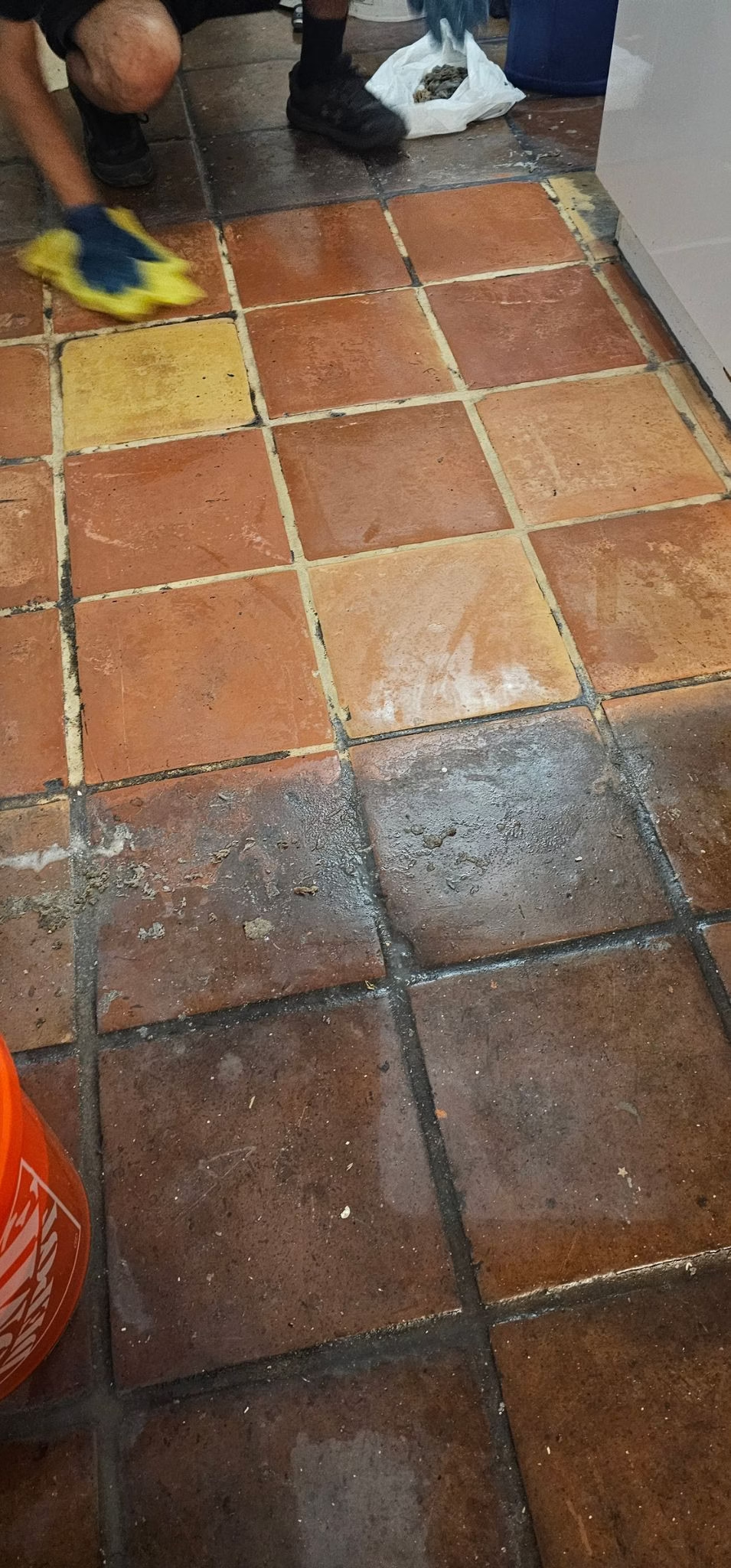
Homeowners searching "why is my Saltillo tile turning yellow" or "how to remove yellow wax from Mexican tile" are almost always looking at the same thing we found in West Palm Beach, oxidized acrylic coating buildup, not the natural color of the clay.
This is one of the most common misconceptions about Saltillo floors throughout South Florida. The yellow is not the tile. It is what has been applied on top of the tile over decades without proper removal between coats.
Each maintenance cycle applied a new coat of acrylic or wax over the previous one without stripping back to the clay. Over years those layers built up, oxidized from UV exposure and heat, yellowed, and eventually began to peel and crack throughout the high-traffic areas of the kitchen and hallway.
The floor had lost every trace of its authentic appearance. It looked like yellow plastic, not handmade Mexican clay.
What the local contractors saw when they walked in: a floor buried under so much failed product that the restoration process was intimidating. What we saw: a floor that could be recovered if the stripping process was executed correctly and the humidity conditions were controlled before finishing.
Why This Job Scared Other Contractors
Standard Saltillo restoration involves stripping one or two layers of failed coating. This West Palm Beach floor had multiple generations of product fused into the clay, acrylic, wax, and water-based sealers that had petrified and bonded to the porous surface over decades.
The risk with heavy buildup like this is driving contamination deeper into the clay during the stripping process. Aggressive chemistry applied without proper dwell time control can push the dissolved product into the porous clay body rather than lifting it off the surface. The result is a floor that looks worse after stripping than before.
We used a precise technical strip: 80-grit silicon carbide brushes for mechanical agitation combined with manual hand-detailing using a Gillette scraper at the transitions and edges. Every section was monitored for dwell time. No flooding. No rushing.
The Technical Process
Phase 1, Deep Mechanical and Chemical Strip. Specialty clay-safe stripping chemistry was applied at controlled dwell times across the full 800 square feet. Mechanical agitation with silicon carbide brushes assisted penetration without abrading the fire-skin. Manual hand-detailing with a scraper addressed the transitions between the kitchen and hallway where buildup was heaviest and machine access was limited.
This phase removed oxidized acrylic coatings, embedded wax residue, and old maintenance product that had accumulated over decades. Once the buildup was lifted, the authentic clay character began to reappear, natural pits, handmade variation, color movement, and honest wear patterns that had been buried under product for years.
Phase 2, Deep Neutralization. After stripping, the full surface was neutralized using a pH-balanced rinse to remove alkaline residue and stabilize the clay. On a job with this level of buildup, neutralization is especially critical, residual alkaline chemistry left in the clay causes finish adhesion failure regardless of product quality. This stage also clarified which dark areas were surface contamination now removed versus ghost matrix absorption embedded in the clay body.
Phase 3, Humidity Stabilization. Interior climate was stabilized to approximately 74°F before any finish was applied. Saltillo is extremely reactive to moisture, in South Florida's humidity, applying finish over an unstabilized substrate causes cloudiness, blushing, and soft spots regardless of how well the stripping was done. We used air movers and allowed full hard-dry time before beginning the buildup sequence.
Phase 4, 5-Coat NCL One Finish Buildup. This floor was exceptionally thirsty. After decades without proper stripping, the exposed clay had significant absorption capacity. A standard 2-3 coat application would have been absorbed almost entirely into the clay, leaving the surface uneven and underprotected.
We executed a controlled 5-coat buildup using NCL One high-solids finish:
Coats 1 and 2 satisfied the initial absorption of the clay and established a base layer across the field.
Coats 3 and 4 built the primary wear layer and protection system, creating the foundation for visual consistency and durable surface protection.
Coat 5 was the final leveling coat, applied using precision spray technique to ensure even reflection throughout the kitchen and hallway transitions.
Each coat was allowed to cure before the next was applied. No heavy single coat. No shortcuts in the buildup sequence.
The Honest Truth About This Floor
We always keep Saltillo restoration honest, especially on a job this complex.
Saltillo is not supposed to look like polished stone. It is handmade clay. It has movement, character, texture, variation, and natural imperfections that are part of its identity, not defects to be corrected.
The goal on this West Palm Beach job was not to erase the floor's history. It was to remove the failed coatings that were hiding the authentic clay and protect what was underneath with a system designed to last in South Florida's climate.
The finished floor has a clean satin appearance, unified reflection across the field, and protection against moisture and surface contamination. Most importantly it looks like authentic handmade Saltillo again, not yellow plastic.
Trusted Across Miami-Dade | 185+ 5-Star Reviews
★★★★★
"Professional from start to finish. Our saltillo floors look incredible."
— Miami Homeowner
★★★★★
"Honest, technical, and extremely detailed."
— Brickell Client
★★★★★
"Finally found a company that understands floor restoration."
— Pinecrest Homeowner
Our reviews come from real Miami-Dade and Monroe County homeowners and property managers. You can read them directly on our Google Business Profile.
Frequently Asked Questions — Saltillo Restoration in West Palm Beach
Why did three companies refuse to restore this Saltillo floor? Heavy acrylic buildup that has petrified and fused to the clay over decades presents a genuine technical risk that many contractors are not equipped to manage. The danger is driving dissolved contamination deeper into the porous clay body during the stripping process, leaving the floor in worse condition than before the work began.
Proper execution requires identifying the coating chemistry, applying stripping products at precise dwell times, using appropriate mechanical agitation without abrading the fire-skin, and monitoring every section throughout the process. Contractors who lack experience with multi-generation Saltillo buildup will decline these jobs rather than risk permanent damage. We took this West Palm Beach project because we had the technical process to execute it correctly.
Why does Saltillo tile turn yellow in South Florida homes? The yellow color on most South Florida Saltillo floors is not the natural appearance of the clay, it is oxidized acrylic or wax coating buildup. Standard Saltillo maintenance products from the 1980s and 1990s were applied repeatedly without full stripping between cycles. Each coat oxidized in Florida's heat and UV exposure, yellowed, and was covered by the next coat rather than removed.
Over decades the layers accumulate, turn brittle, and begin to peel. Professional restoration strips these failed layers using clay-safe chemistry and rebuilds the protective system from the raw clay surface. The original clay color is almost always intact underneath.
What is NCL One finish and why was it used on this West Palm Beach job? NCL One is a high-solids professional floor finish used in demanding restoration applications where clay porosity is high and multiple coats are required to build adequate wear protection. On heavily stripped Saltillo, especially floors that have not had proper product removal in decades, the exposed clay absorbs the first several coats almost entirely.
A lower-solids product would disappear into the clay and leave the surface uneven and underprotected. NCL One builds a consistent protective layer without requiring excessive coat counts to achieve coverage. It is also compatible with the breathable finish requirements for South Florida clay tile, it does not form a completely impermeable film that traps moisture from the substrate.
How do you control humidity during Saltillo restoration in South Florida? Humidity control is one of the most critical and most commonly skipped steps in South Florida Saltillo restoration. Saltillo is extremely porous and highly reactive to environmental moisture. If finish is applied over clay that has not fully dried after stripping and cleaning, or in a space with uncontrolled humidity, moisture from the substrate migrates upward through the clay and becomes trapped beneath the finish coating.
The result is cloudiness, whitening, soft spots, and premature coating failure that requires full re-stripping. We stabilize the interior environment to approximately 74°F and use air movers to ensure the substrate reaches full hard-dry before the first finish coat is applied. This step adds time to the project. It is not optional.
Do you service Saltillo restoration outside Miami-Dade County? Miami-Dade County and Monroe County / the Florida Keys are our primary service area. This West Palm Beach project came to us after the homeowner was unable to find a qualified Saltillo restoration specialist locally. For complex Saltillo situations where no local solution exists, we evaluate extended service area requests on a case-by-case basis. The assessment fee covers our evaluation time and travel for out-of-area projects. If you are in Palm Beach County or elsewhere in South Florida and have a Saltillo floor that local contractors have declined or mishandled, contact us and we will tell you honestly whether it is a project we can take on.
What maintenance does Saltillo require after professional restoration? After professional restoration with a breathable protective finish, Saltillo maintenance is straightforward: neutral pH cleaner, damp mop, no steam, no alkaline products, no acidic cleaners. Do not apply wax or acrylic floor finish between professional restoration cycles, this is how the buildup problem starts again. With correct maintenance, professionally restored Saltillo in South Florida typically holds well for three to five years before the next restoration cycle is needed. The exact interval depends on foot traffic, sun exposure, and whether the maintenance protocol is followed consistently.
Schedule Your Saltillo Restoration Consultation
We serve Miami-Dade County and Monroe County / the Florida Keys as our primary service area. Extended service area requests for complex Saltillo situations are evaluated case by case.
A $250 assessment fee applies to all Saltillo and natural stone evaluations, paid via Zelle to confirm your appointment. The fee is credited in full toward your service.
The difference isn't magic. It's years of knowing exactly how to treat your floors in a tropical rainforest climate.
Always Local - Always On Time - Always Honest.