
Veteran-Owned | 25+ Years | 185+ Five-Star Reviews
Grout Haze Removal in Miami, Fresh and Years-Old Haze
When new tile is installed and the grout is cleaned up, a thin film of residue is often left behind on the tile surface. In Miami's humidity that film bonds faster and harder than in drier climates, and once it cures, regular cleaning will not remove it.
That film is grout haze. It is not dirt. It is not a cleaning problem. It is a residue removal problem that requires the correct chemistry matched to the specific type of haze and the specific tile surface.
Keep It Clean removes grout haze across Miami-Dade, post-construction cleanup, new tile installations, high-rise condos, and residential homes. Every job starts with identifying the haze type correctly before any product touches the surface.
Watch How We Do It
Why Grout Haze Is More Aggressive in Miami
Miami's construction environment creates ideal conditions for grout haze problems. Fast-paced renovation timelines, especially in high-rise condo projects in Brickell, Downtown, and Miami Beach, mean tile cleanup is frequently rushed before the grout has fully cured. The humidity slows the drying process which keeps the residue active longer and allows it to bond more tightly to the tile surface before it is removed.
The type of grout matters too. Modern high-performance grouts, including polymer-modified and epoxy systems common in high-end installations, leave different types of residue than standard cement grout. Each type bonds differently to the tile surface and requires a different removal approach. Using the wrong chemistry on the wrong haze type can permanently damage the tile finish.
Veteran-owned. Licensed and insured. 25 years restoring tile and stone across Miami-Dade and Monroe County.
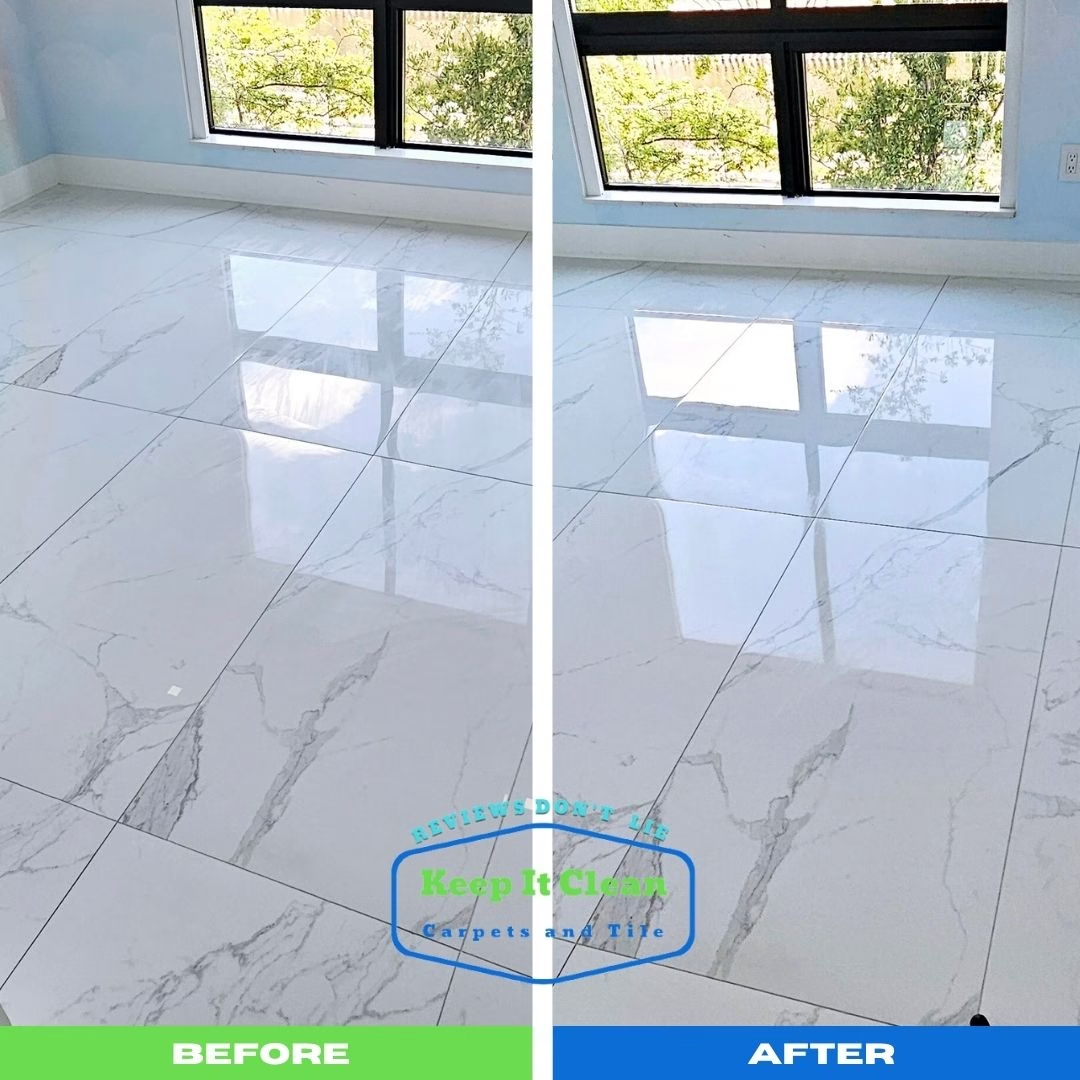
Understanding Haze Variations - Cement - Polymer - Epoxy
Cement Haze
👉 Cement haze is common on ceramic and porcelain tile after installation or regrouting. It's caused by fine cement dust left behind during the grouting process that dries on the tile surface and becomes more noticeable over time, especially in South Florida's humidity.
When not addressed properly, cement haze can dull the finish, attract soil, and make clean floors look permanently cloudy. Our approach uses controlled, surface-safe chemistry to neutralize and remove cement residue without damaging the tile or grout.
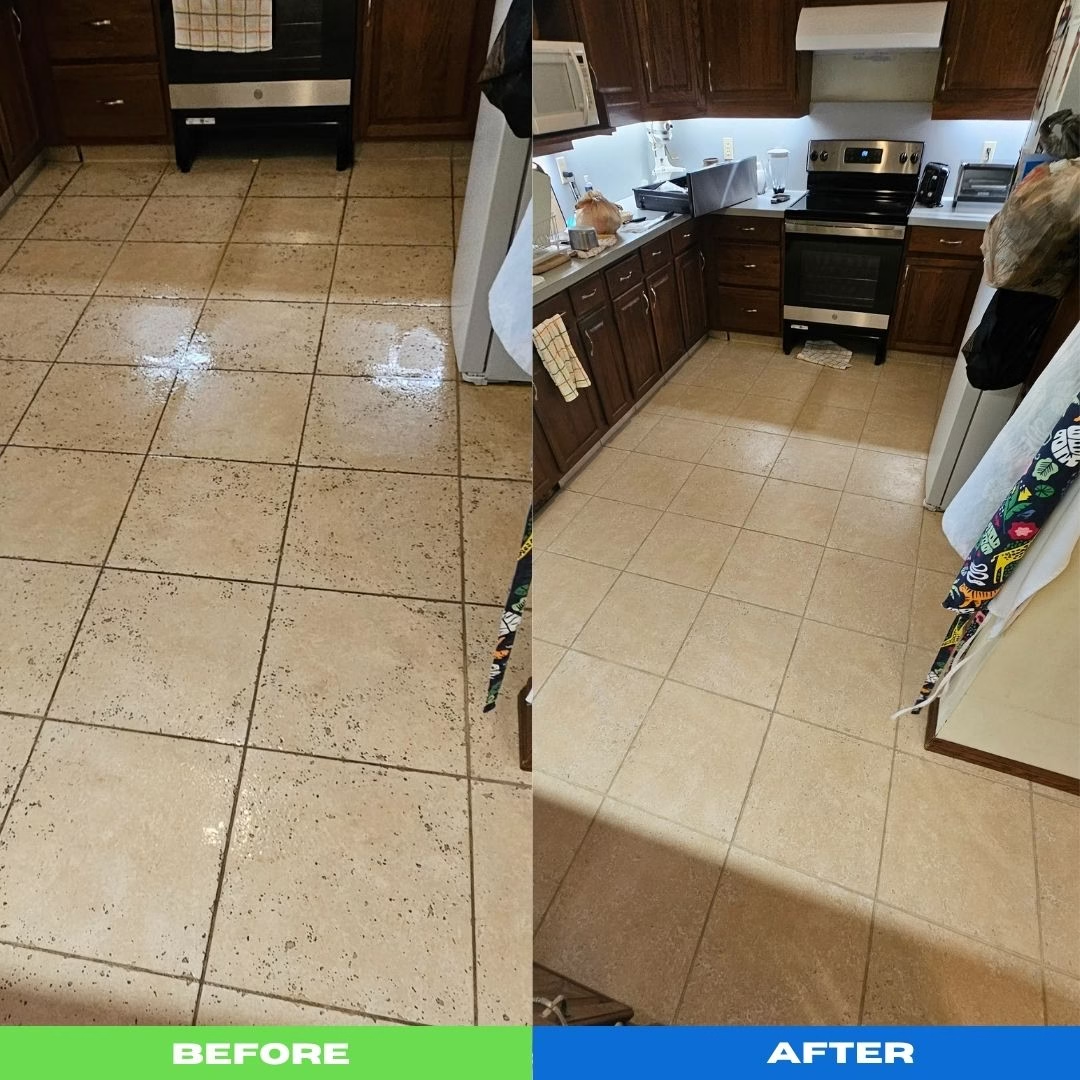
Polymer Haze
👉 Polymer grout haze is a stubborn plastic-like film left behind by modern, high-performance grouts that contain advanced bonding agents. This haze needs to be attacked quickly.
Epoxy Haze

👉 Epoxy grout haze is the most aggressive residue type and the most commonly mishandled. Epoxy grout systems, including LATICRETE Spectralock and similar products, are used in high-end tile installations because of their strength and stain resistance. The tradeoff is that when epoxy residue is not removed correctly during installation, it cures into a plastic-like film that bonds tenaciously to the tile surface.
Standard haze removers will not touch cured epoxy haze. Acidic cleaners can etch polished tile and natural stone. Mechanical abrasion without the correct chemistry removes the haze but can scratch the finish. Epoxy haze removal requires specialized solvents, controlled dwell time, and careful mechanical agitation matched to the tile type.
This is the haze removal scenario where experience and correct chemistry matter most. Keep It Clean handles epoxy haze removal across Miami-Dade, including post-construction cleanup for new condo projects and high-end residential installations.
Grout Brands We Remove Haze From
We have removed haze left by every major grout brand installed in South Florida:
- Mapei
- Laticrete
- Custom Building Products, including its Prism line
- TEC
- Ardex
Each of these brands makes cement, polymer-modified, and epoxy grouts, and each formula leaves a different residue on the tile. That is why we ask what was installed before anything touches the floor. If you still have the grout bag, the bucket, or the installer's invoice, send a photo of it along with photos of the floor. The install date matters just as much, because polymer and epoxy residue get harder to remove the longer they cure.
Brand names belong to their owners. Keep It Clean Tile and Grout is not affiliated with or endorsed by any grout manufacturer.
Trusted Across Miami-Dade and Monroe County | 185+ Five-Star Reviews
"Professional from start to finish. Our floors look incredible."
— Coral Gables Homeowner
★★★★★
"Honest, technical, and extremely detailed."
— Brickell Client
★★★★★
"Finally found a company that understands how to remove epoxy from new installed tile."
— Pinecrest Homeowner
Grout Haze Removal FAQs, Miami
Q: How do I know if my tile has grout haze or just needs cleaning? A: Grout haze typically appears as a uniform cloudy or dull film across the tile surface, not concentrated in one area or in the grout lines. It is most noticeable in certain lighting angles and often appears after a new tile installation or regrouting project. Regular cleaning products do not remove it because the residue has bonded to the tile surface rather than sitting on top of it. If your tile looked hazy immediately after installation and has stayed that way despite cleaning, it is almost certainly grout haze.
Q: Can grout haze be removed from natural stone like marble and travertine? A: Yes, but the process is different from ceramic or porcelain tile. Marble, travertine, and limestone are calcium-based stones that react to acidic products. Standard cement haze removers that contain acid will etch natural stone surfaces permanently. We use non-acidic removal chemistry specifically formulated for natural stone, it removes the haze without affecting the stone finish.
Q: What is the difference between cement haze, polymer haze, and epoxy haze? A: Cement haze is fine mineral residue left from standard grout, common on ceramic and porcelain tile after installation. Polymer haze comes from modern polymer-modified grouts like Polyblend, it is stickier and bonds more aggressively than cement residue. Epoxy haze comes from epoxy grout systems and is the most difficult to remove, it cures into a hard plastic-like film that requires specialized solvents and controlled mechanical removal. Each type requires a different chemistry and process.
Q: Do you remove haze from Mapei, Laticrete, and other grout brands? A: Yes. We have removed haze left by Mapei, Laticrete, Custom Building Products including Prism, TEC, and Ardex grouts. Each brand makes cement, polymer-modified, and epoxy formulas, so the product and the install date tell us more than the brand name alone. If you have the grout bag, bucket, or invoice, send a photo with your floor photos.
Q: How much does professional grout haze removal cost in Miami? A: A $250 assessment fee applies, paid via Zelle to confirm your appointment and credited in full toward your service. Final pricing depends on the square footage, the tile type, the haze type, and how long the haze has been on the surface. Cured epoxy haze requires more labor than fresh cement haze and is priced accordingly. We assess every job before quoting anything, we do not quote from a price list because the scope determines the cost. Call 305-741-9729 to schedule your assessment.
Q: How long does grout haze removal take? A: It depends mostly on square footage. A bathroom or small area can take a few hours, and a large open floor can take up to a full 8-hour day. Years-old haze and cured epoxy haze take longer than fresh cement haze, and post-construction cleanup in larger condo or commercial spaces may run past one day. We explain the expected timeline at the assessment, before the job starts.
Q: Do you seal the grout after haze removal? A: Sealing after haze removal is strongly recommended, especially in Miami's humid environment. Once the haze is removed and the tile surface is clean, the grout lines are open and vulnerable to resoiling. A penetrating sealer applied after haze removal protects the grout lines and makes future maintenance significantly easier.
When the Haze Is Years Old: A Miami Lakes Purchase

Almost everything written about grout haze assumes it is new. Someone just had tile installed, the floor looks cloudy, and they know why. That is the easy version.
The harder version is the floor you inherit.
This was a newly purchased home in Miami Lakes, empty before move-in, with large-format concrete-look porcelain through the main living space. The new owner saw a dull, patchy floor and assumed it was dirty, or worn out, or simply old tile. What was actually on it was cement haze that had been there since the day the tile went down. The previous owner had almost certainly stopped seeing it years earlier.
Aged haze behaves differently from fresh haze, and it is worth understanding why. A fresh film sits on the surface and has not fully hardened. Given years of foot traffic, mopping, and Miami humidity, that same film cures harder, and ordinary soil works its way into it. You end up with two layers bonded together: the original residue, and everything that has been ground into it since. Dwell times go up. Sometimes it takes more than one pass.
It also hides. Soil sitting on top of aged haze masks how much film is really there, which is why this floor needed tile and grout cleaning first and haze correction second. Reverse that order and you are treating a surface you cannot actually see yet.
The practical signal to watch for: a floor that looks clean when it is wet and cloudy again once it dries. Water temporarily fills the microtexture of the haze and evens out how light reflects off it. When it dries, the cloudiness comes straight back. Homeowners often read that as the floor never getting properly clean. It is usually haze.
If you have just bought a place and you are not sure what you inherited, deal with it while the rooms are still empty. It is faster, it is cheaper, and you will never have better access to the floor than before the furniture arrives.
Fresh Haze in North Miami Beach: When Someone Else Went First

Almost everything written about grout haze assumes you are the first person to touch the floor. Sometimes you are not.
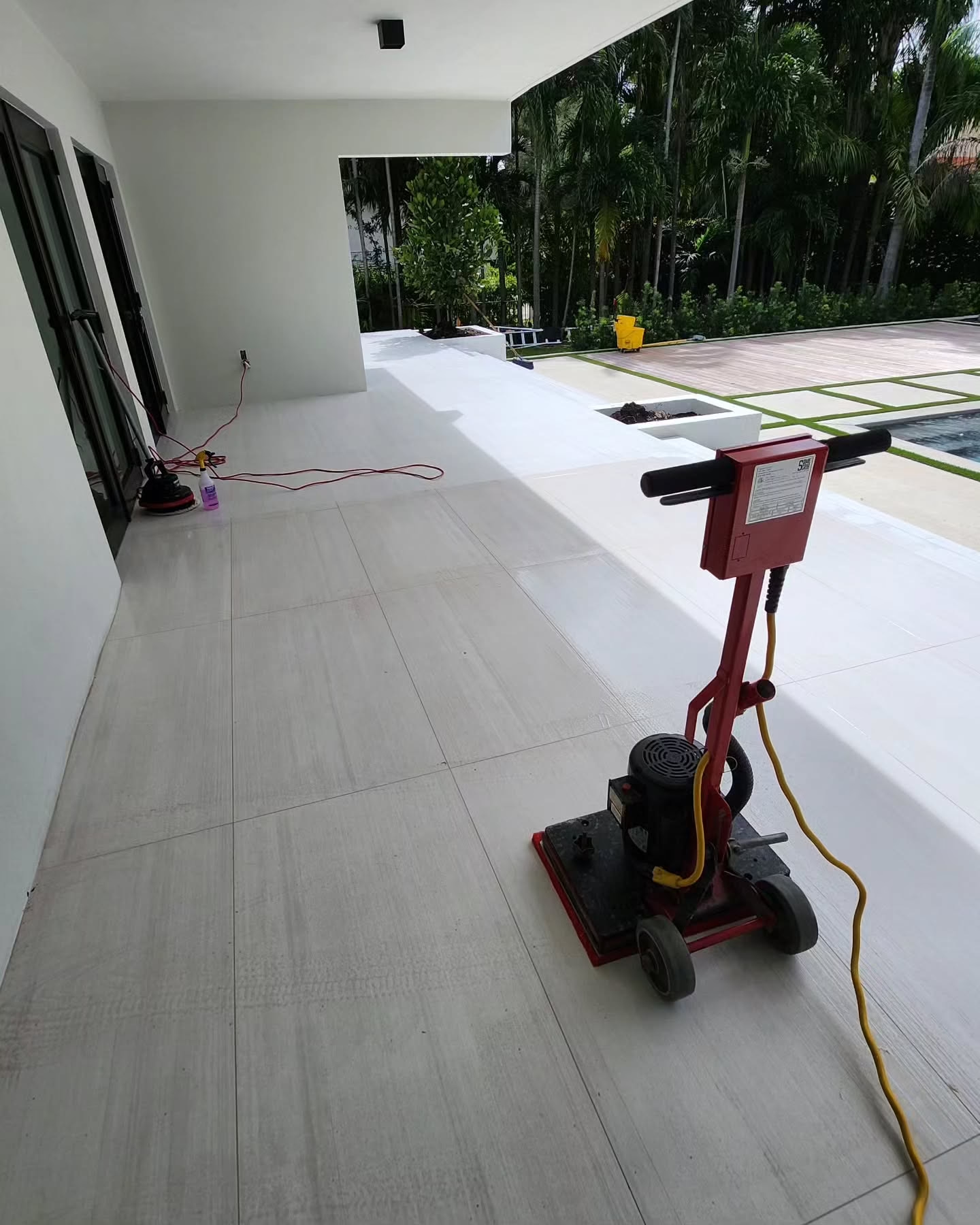
This was an enclosed Florida room in North Miami Beach. Large-format concrete-look porcelain, brick knee walls, windows on three sides pulling in a lot of hard afternoon light. The homeowner had already hired someone. That crew came out, worked the floor, and left it patchy. By the time we got the call the question was no longer how to remove the haze. It was what the last crew left behind, and what they had changed about the surface.
Those are two different problems, and the second one is the one that ruins floors.
A second attempt is harder than a first for a specific reason: you do not know what chemistry went down. If someone reached for a standard acidic haze remover on a floor that never needed acid, that acid can open the microtexture of a matte porcelain and leave it hungrier for soil than it was before anyone showed up.
If they scrubbed hard with the wrong pad, you get burnishing and fine scratching that reads to the eye as cloudiness but is not residue at all. And if they lifted the haze in some areas and not others, what you inherit looks like uneven tile rather than a floor with a film on it. Homeowners at that point usually think the tile itself is bad. It rarely is.
Concrete-look porcelain makes every part of this worse. That finish is engineered to imitate poured concrete, which means a deliberately matte, slightly textured surface. Texture is exactly where cement residue hides. It is also why this floor looked acceptable from the doorway and obviously wrong once you walked to the far corner and turned back toward the light. Haze on a matte surface shows up as a change in how light scatters, and that change is angle-dependent. A quick wipe-down never touches it.
So the order of operations mattered more than usual. Identify the residue and rule out surface damage before anything else. Test in an inconspicuous spot. Then correct with the chemistry the haze actually calls for, using controlled dwell time instead of more aggression, followed by controlled extraction. Low moisture. No high pressure, no steam, no gambling on a floor someone else already gambled on.
Then dry it with an air mover and read it again in the same light before calling it done, because a wet floor lies. Water fills the microtexture and temporarily evens out the reflection. Plenty of "it's clean now" mistakes in this trade get made standing over a floor that is still damp.
If you have already had someone out and the floor came back worse or blotchy, one thing helps the next person more than anything else: find out what product was used. The bottle, a photo of the label, a line item on the invoice, anything. It changes the approach completely, and on modern polymer and epoxy grout systems it can be the difference between correcting a floor and having to resurface one.
Franco ran this job. It was scheduled the same day the homeowner called.
★★★★★
"I couldn't be happier with my experience with Keep It Clean Tile & Grout. From the very first call, Miguel's customer service was exceptional. He went above and beyond to accommodate us and was able to schedule the work the very same day. More importantly, after a horrendous experience with a previous contractor, Miguel was genuinely understanding and a sympathetic ear... Franco, the technician who performed the work, was equally impressive. He was careful, meticulous, and clearly took pride in doing the job right. The end result was absolutely top-notch and exceeded our expectations."
Jose P., North Miami Beach
Recent Grout Haze Removal Projects Across Miami-Dade
We remove grout haze regularly across Miami-Dade, post-construction cleanup, new tile installations, and renovation projects in homes and condos. Recent work includes:
Grout haze removal in La Gorce → Cement grout haze removal on large-format porcelain tile in a La Gorce residence.
Grout haze removal in Kendall → Post-installation haze removal on ceramic tile in a Kendall home renovation project.
Grout haze removal in Palmetto Bay → Surface correction and haze removal after a full bathroom retile in Palmetto Bay.
Grout haze removal in Miami Beach → Post-construction grout haze cleanup in a Miami Beach high-rise condo.
Grout haze removal in Tavernier → Haze removal on coastal property tile in Tavernier, Monroe County.
Schedule a Grout Haze Assessment in Miami
If your tile has a cloudy film, a dull finish that cleaning does not fix, or residue left from a recent installation, the next step is an honest assessment.
We look at the surface, identify the haze type, explain the correct removal process, and walk you through what to expect before any work begins.
A $250 assessment fee applies, paid via Zelle to confirm your appointment, credited in full toward your service.
Call Keep It Clean for grout haze removal across Miami-Dade and Monroe County.
🧼 Keep It Clean Tile and Grout
Always Local - Always On Time - Always Honest.