
Veteran-Owned | 25+ Years | 185+ Five-Star Reviews
Coral Stone Restoration in Miami
Coral stone, also known as coral rock, Keystone, or Oolite, is one of South Florida's most distinctive building materials, found in entryways, patios, pool decks, and exterior walls throughout Miami-Dade's older neighborhoods. It is also one of the most misunderstood. Most cleaning and restoration companies treat coral stone like standard tile or limestone, and that mistake causes permanent damage. Keep It Clean provides coral stone restoration in Miami built specifically around how this material actually behaves.


Why Coral Stone Is Different
Coral stone is fossilized, reef-formed limestone, porous by nature, formed from ancient coral and shell deposits over thousands of years. That porosity is part of what makes it beautiful, and it's also exactly why it requires a different approach than denser stone or standard tile.
Coral stone carries two risks that most contractors don't account for. It is acid-sensitive, meaning the wrong cleaning chemistry, including many standard grout cleaners, will etch or permanently weaken the surface on contact. And it is extremely porous, meaning excess water or aggressive scrubbing doesn't lift contamination off the stone the way it would on denser material. It drives that contamination deeper into the structure instead, often making the problem worse than it started.
Grout haze, mineral buildup, mold, and salt air exposure all settle into coral stone's pores rather than sitting on the surface. That's why coral stone that looks "ruined" or permanently cloudy after installation is, in nearly every case we've seen, simply a stone that was cleaned the wrong way, not a stone that's actually beyond repair.
Our Process
Coral stone restoration requires controlled, low-moisture methods from start to finish. We use pH-neutral cleaning safe for acid-sensitive stone, never the standard acidic grout cleaners that cause permanent etching. We extract embedded contamination through deep pore cleansing rather than surface scrubbing, since surface-level cleaning cannot reach haze or buildup that has settled into the stone's structure. Once the stone is fully restored, we apply a breathable penetrating sealer formulated for South Florida's humidity and salt air, never a film-forming coating that traps moisture inside the porous structure.
No high pressure. No acid-based shortcuts. No treating coral stone like it's something it isn't.
Trusted Across Miami-Dade | 185+ 5-Star Reviews
★★★★★
"Professional from start to finish. Our floors look incredible."
— Miami Homeowner
★★★★★
"Honest, technical, and extremely detailed."
— Brickell Client
★★★★★
"Finally found a company that understands floor restoration."
— Pinecrest Homeowner
Our reviews come from real Miami-Dade and Monroe County homeowners and property managers. You can read them directly on our Google Business Profile.
Where We've Done This Work
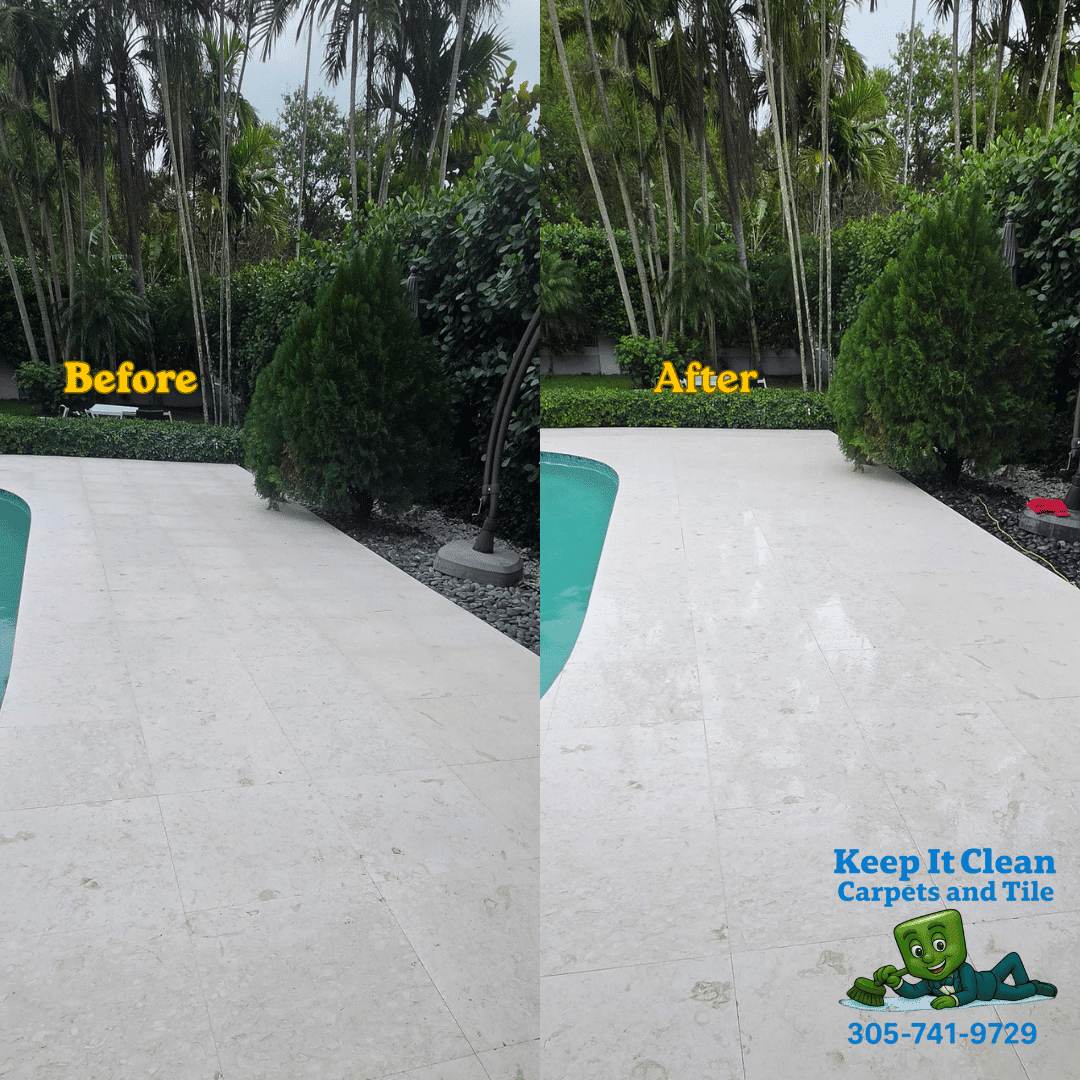
We've restored coral stone across Miami-Dade, including full case studies you can see below. Our Coral Gables project required full grout haze extraction from a heavily embedded installation, restoring the stone's natural texture and protecting it against future moisture and salt air exposure. Our Miami Shores project involved a complete clean and seal on a pool deck, bringing the coral stone back to a uniform, breathable finish.
→ Read the full Coral Gables coral stone restoration case study
→ Read the full Miami Shores coral stone restoration case study
Frequently Asked Questions — Coral Stone Restoration in Miami
What is coral stone and where is it commonly found in Miami? Coral stone, also called coral rock, Keystone, or Oolite, is a porous, fossilized limestone formed from ancient coral reef and shell deposits. In Miami-Dade, it's commonly found in older homes and estates throughout neighborhoods like Coral Gables, Coconut Grove, Miami Shores, and Pinecrest, used for entryways, patios, pool decks, walls, and decorative architectural features.
Why does coral stone need a different restoration approach than tile or other natural stone? Coral stone is significantly more porous than denser stones like marble or granite, and it's acid-sensitive in a way many other materials aren't. Standard tile cleaning chemistry and high-pressure equipment can permanently etch or damage coral stone, and aggressive scrubbing drives contamination deeper into the stone rather than removing it. Restoring coral stone correctly requires pH-neutral, low-moisture methods built specifically around these two risks.
Can grout haze be removed from coral stone after installation? Yes, but only through controlled extraction methods, not standard surface cleaning. Because coral stone is so porous, grout haze settles into the stone's pore structure during and after installation rather than sitting on top of it. Removing it requires deep pore cleansing without the excess water or aggressive scrubbing that would otherwise push the contamination further into the stone.
Is it safe to pressure wash coral stone? No. High-pressure washing can damage coral stone's surface and drive contaminants deeper into its porous structure. We use low-moisture, controlled methods exclusively on coral stone, pressure washing is one of the most common causes of long-term damage we see on this material.
Do you seal coral stone after restoration, and what kind of sealer do you use? Yes. We apply a breathable penetrating sealer specifically suited to coral stone's porosity. This protects against moisture intrusion, salt air exposure, and future staining without trapping moisture inside the stone, a critical distinction in South Florida's climate, where a non-breathable sealer can trap humidity and cause long-term deterioration from within.
How often does coral stone need to be resealed in South Florida? Typically every one to two years for exterior applications exposed to direct sun, rain, and salt air. Interior or covered coral stone surfaces generally need resealing less frequently, depending on traffic and exposure.
Can coral stone that looks permanently stained or cloudy actually be restored? In nearly every case we've evaluated, yes. What often looks like permanent damage is actually grout haze or contamination embedded in the stone's pores from an improper cleaning attempt, not irreversible damage to the stone itself. A proper assessment can usually determine within minutes whether the issue is correctable.
Why does algae or moss come back on coral stone even after it's been sealed? This is common on coral stone in shaded areas and isn't a sign the sealing failed. Coral stone does best with direct sunlight, UV exposure naturally slows organic growth on the surface. In shaded spots, especially near pools or under tree cover, some regrowth within a month or two is normal, even on properly sealed stone. A breathable penetrating sealer protects the stone from staining and moisture absorption, but it doesn't prevent surface growth the way sunlight does. A light wipe-down or rinse in shaded areas usually keeps it in check between deeper cleanings.
How much does coral stone restoration cost in Miami? A $250 assessment fee applies, paid via Zelle to confirm your appointment, credited in full toward your service. Final pricing depends on square footage and condition. We assess every job before quoting, we don't quote from a price list because the scope determines the cost.
Schedule Your Coral Stone Restoration Consultation
A $250 assessment fee applies to all natural stone evaluations, paid via Zelle to confirm your appointment, and is credited in full toward your service.
The difference isn't magic. It's years of knowing exactly how to treat your floors in a tropical rainforest climate.
Always Local - Always On Time - Always Honest.