
Veteran-Owned | 25+ Years | 185+ Five-Star Reviews
Stone Sealing in Miami
Stone sealing in Miami is not a coat of shine. A penetrating sealer soaks into the pores of the stone and slows down how fast water, oil and pool chemicals get absorbed, which gives you time to wipe up a spill before it soaks in. Keep It Clean Tile and Grout cleans and seals marble, travertine, limestone, Saltillo and coral stone across Miami-Dade and the Florida Keys, with the sealer and the cleaning chemistry matched to the stone in front of us.
Sealing always comes after cleaning. A sealer applied over dirty stone locks the dirt in, so every job starts with a low-moisture deep clean: chemistry plus controlled extraction, stone-safe, never high pressure and never steam.
What Sealing Does, and What It Doesn't
Penetrating sealers go into the stone. Topical coatings sit on top of it. A penetrating sealer, also called an impregnator, settles below the surface and leaves no film. The stone keeps its texture and can still breathe, which matters in a climate where moisture is always moving through floors and pool decks. A topical coating sits on the surface like a clear layer. It changes the look, wears unevenly in walking paths, can turn cloudy when humidity gets trapped under it, and can feel slick when it's wet. On natural stone we use penetrating sealers.
Sealing slows stains. It doesn't make stone stain-proof. Sealed stone absorbs more slowly, so a spill you catch is a spill you clean. A spill left overnight can still mark the stone.
Sealing doesn't stop etching. Marble, travertine and limestone are calcium-based. Lemon juice, vinegar, wine and many bathroom cleaners react with the stone itself and leave dull marks, sealed or not. That is a polishing repair, not a sealing problem.
Try the water test. Put a few drops of water on the stone and wait a few minutes. If the spot darkens, the stone is absorbing and is a candidate for sealing. If the water beads up, the sealer that's there is still working.
Sealing by Stone
Marble Sealing in Miami
Marble is denser than travertine or limestone, but it still absorbs, and honed marble absorbs more than polished. Sealing slows down oil, coffee and makeup stains on floors, vanities and countertops. It won't stop the dull etch marks acids leave behind, so we tell you which marks are stains and which ones need polishing. More on that in our guide to honed vs. polished marble.
Travertine Sealing in Miami
Travertine is full of natural holes and pores, filled or unfilled depending on how it was installed. Indoors it holds up well once sealed. Outdoors, on pool decks and patios, it takes sun, chlorine, salt and rain every day, and those surfaces need their sealer checked more often than an interior floor.
Limestone Sealing in Miami
Limestone is soft and porous, and light-colored limestone shows oil, rust and water marks quickly. It needs pH-neutral cleaning before anything goes on it, and a penetrating sealer that lets it breathe.
Saltillo Sealing in Miami
Saltillo is handmade clay, not stone, and it's the exception on this page. Most Saltillo floors in Miami already carry years of sealer and wax layered on top of each other. Those layers get stripped first. Then you choose the finish: a penetrating sealer for a natural matte look, or a topical finish if you want sheen. We settle that before the work starts, not after.
Coral Stone Sealing in Miami
Coral stone, also called coral rock, Keystone or Oolite, is the most porous stone we work on and it's acid-sensitive. It only gets a breathable penetrating sealer. A film-forming coating traps moisture inside coral stone and causes more damage than it prevents. The pool deck in the video below in Miami Shores had never been sealed since it was installed. Watch it on our YouTube channel.
Our Stone Sealing Process
1. Assessment and water test. We identify the stone, check for old sealers or coatings, and test how fast it absorbs.
2. Low-moisture deep clean. Chemistry matched to the stone plus controlled extraction. No high pressure, no steam, no acid on calcium-based stone.
3. Dry time. Sealer goes on dry stone only. With Miami humidity and afternoon rain, outdoor sealing gets scheduled around the weather, not rushed.
4. Seal. A penetrating sealer is applied until the stone stops absorbing, then the excess is removed from the surface so nothing dries on top as haze or a tacky film.
5. Check and walk-through. We repeat the water test, tell you when the stone is ready for foot traffic and water, and go over care: a pH-neutral cleaner, no vinegar or bleach, and when to test again.
Case Study: Waterfront Pool Deck and Patio in Miami
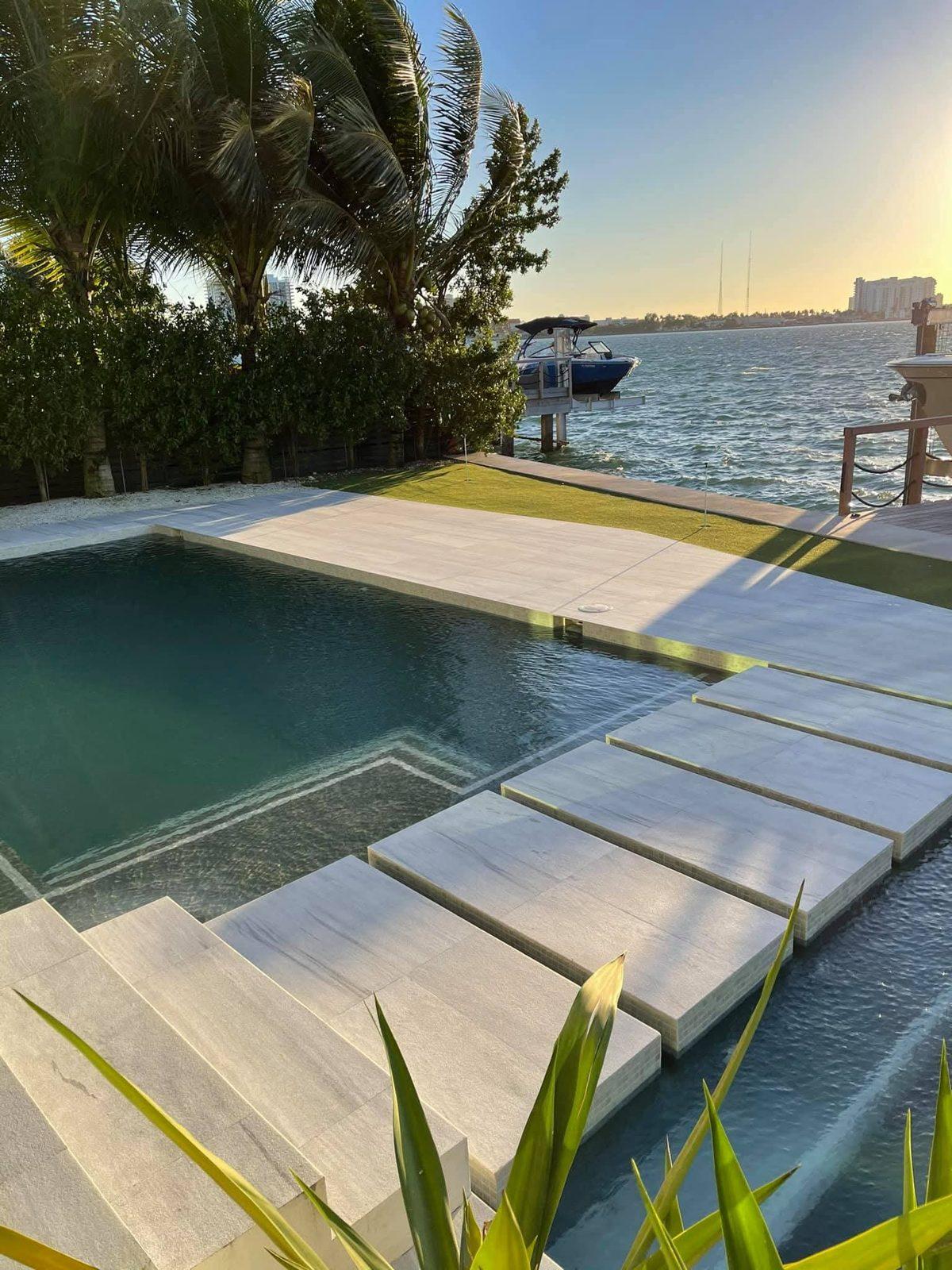
This home on the water in Miami has natural stone running from the covered patio, around the pool and across stepping stones set in the water. Before we started, the patio in front of the sliding doors showed water marks and uneven staining.
We taped and covered the glass and frames, deep cleaned the stone with low-moisture methods, let it dry, then applied a penetrating water and oil repellent sealer across the patio, the pool deck and the steps. The sealer goes into the stone, not on top of it, so the surface keeps its natural texture underfoot.
Stone next to salt water and pool chemistry sees more exposure than any floor indoors, which is why we check it more often.
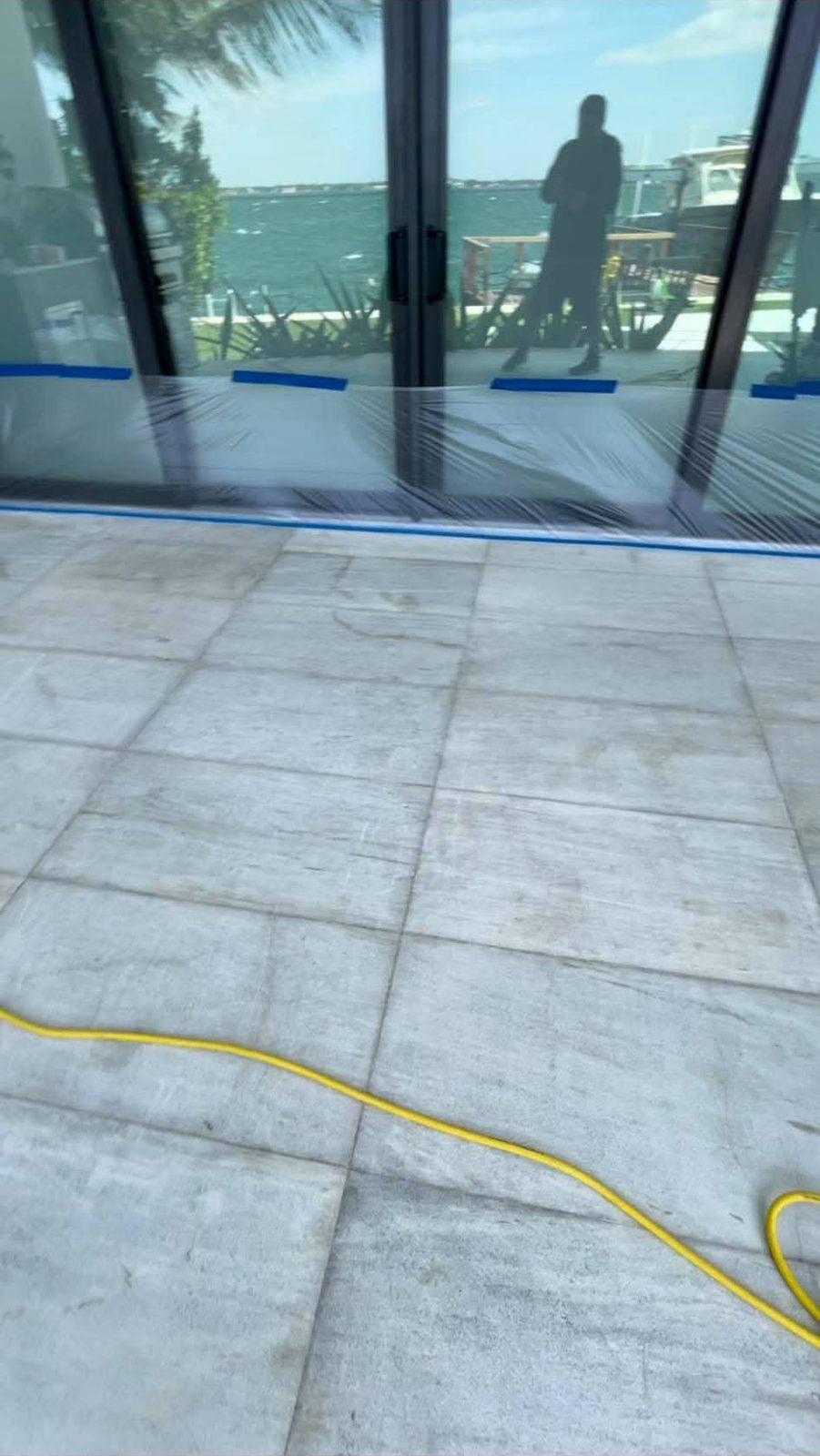
Natural stone patio before cleaning and sealing, Miami
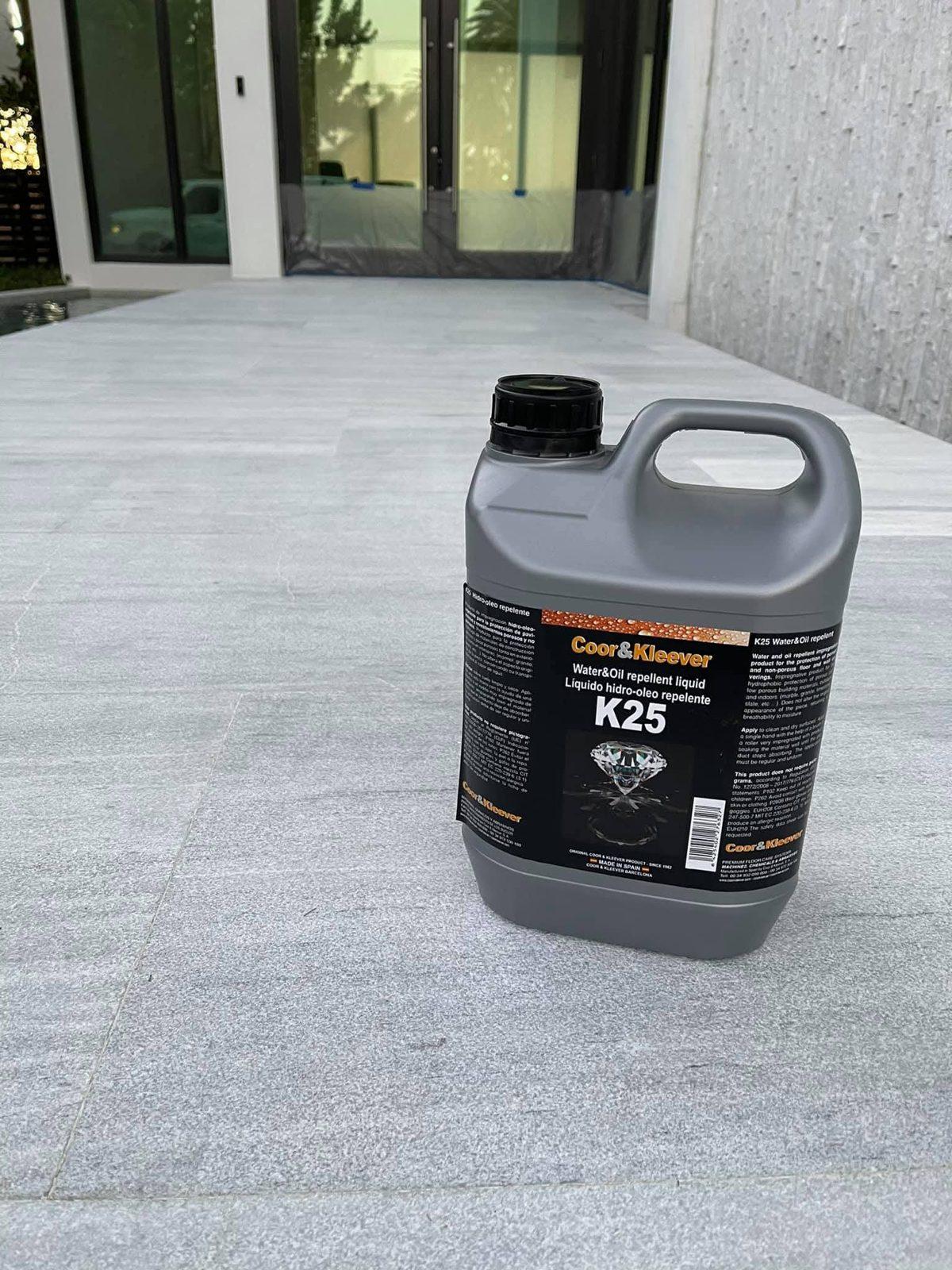
Penetrating water and oil repellent sealer on natural stone, Miami
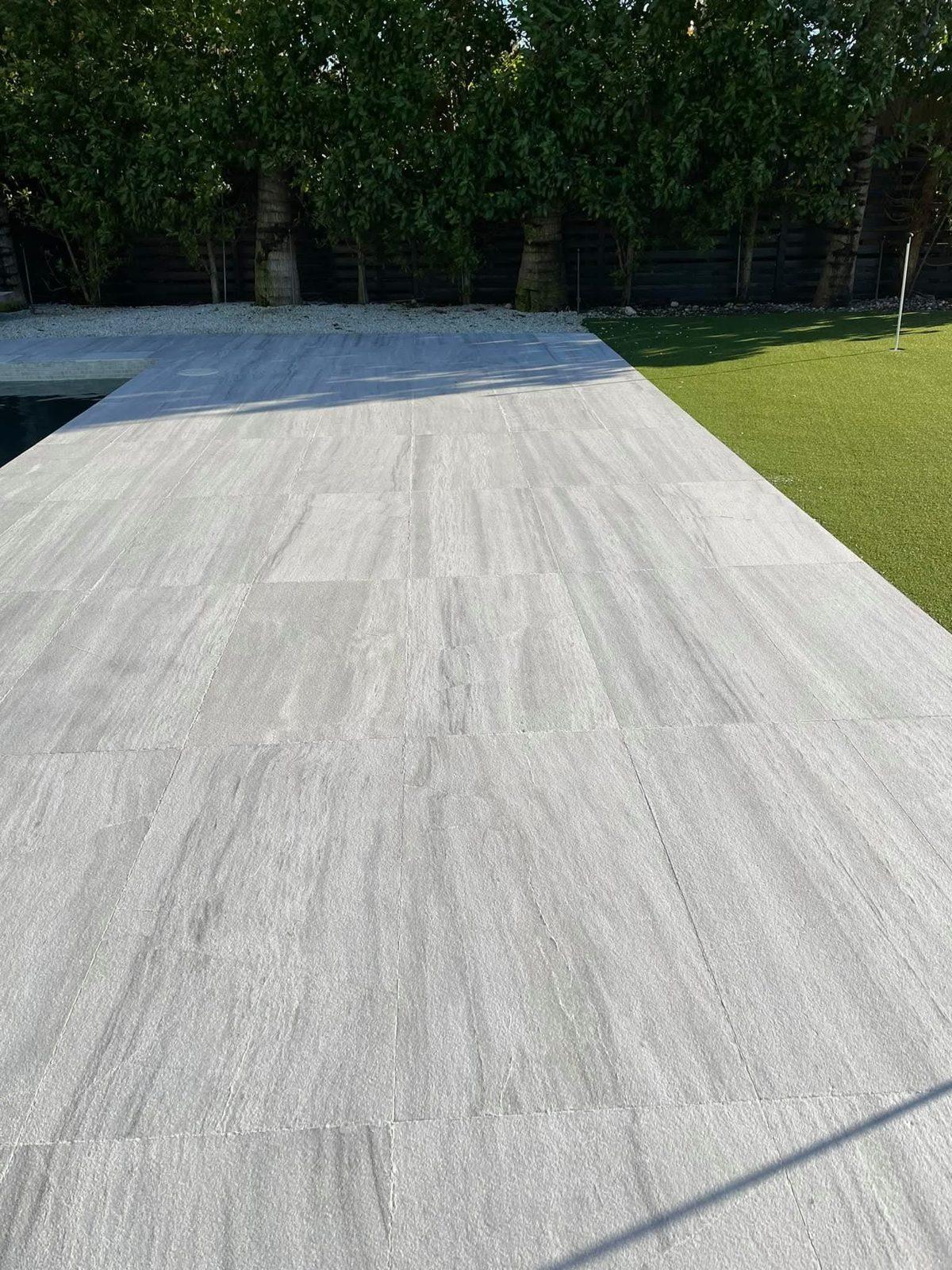
Natural stone pool deck after cleaning and sealing, Miami
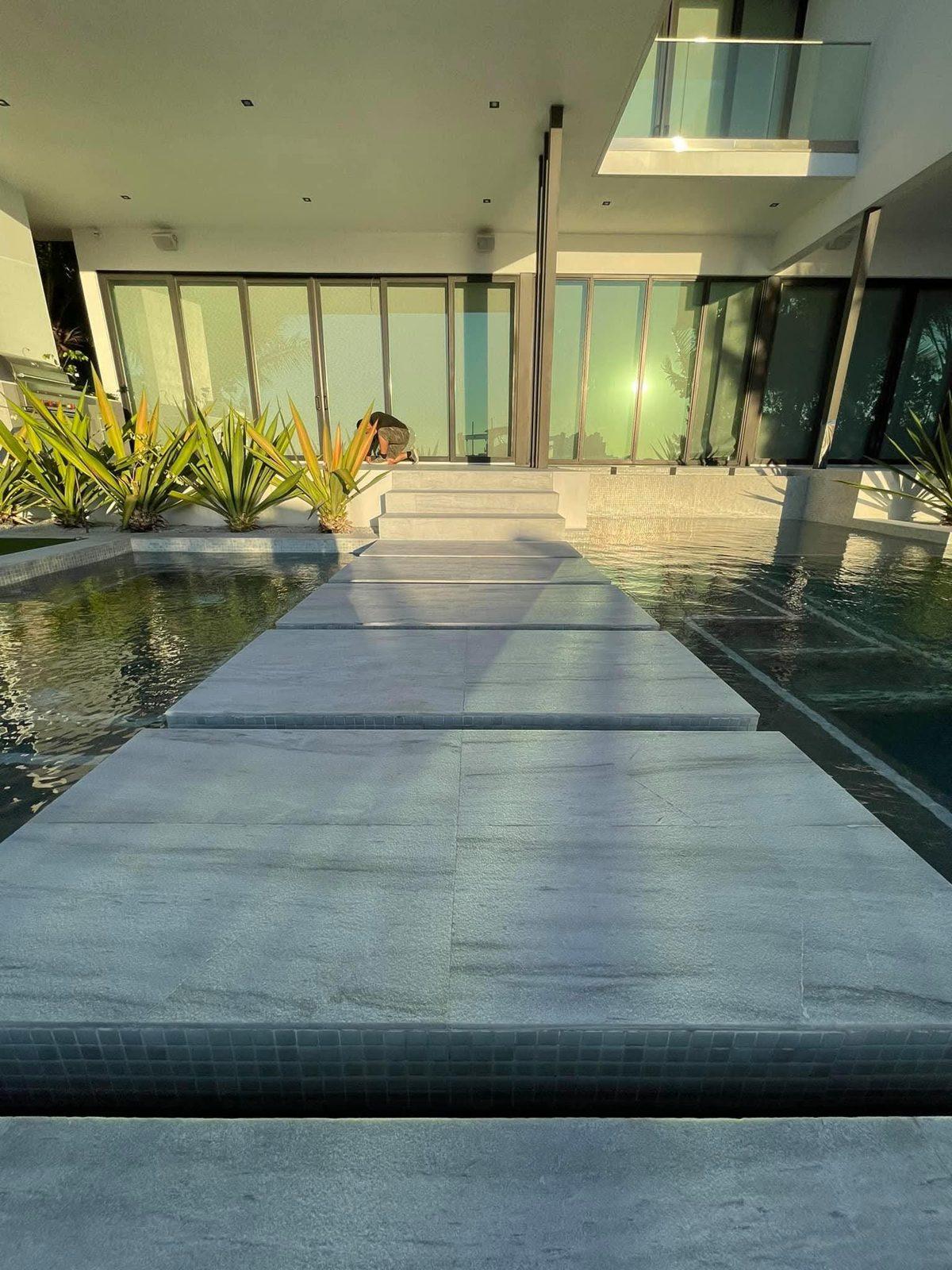
Natural stone pool stepping stones after sealing, Miami
Case Study: Shellstone Shower Sealing in Miami Beach
This bathroom in Miami Beach is finished in shellstone, a fossil limestone, on the floor, the walls and the built-in shower bench. The sealer on it had stopped holding up, the stone looked blotchy near the shower, and the floor got slick when wet, so rubber mats were covering the bench and the shower floor.
We covered the cabinetry and taped off the walls, stripped the old sealer and deep cleaned the stone with low-moisture chemistry and controlled extraction. Shellstone is calcium-based and acid-sensitive, so nothing acidic touched it. Once the stone was dry, we applied an anti-slip treatment for traction, then a penetrating impregnator sealer, and the bathroom stayed closed while it cured.
The small pits and shell marks you see in the photos are part of the stone itself. They are not stains, and cleaning does not take them out.
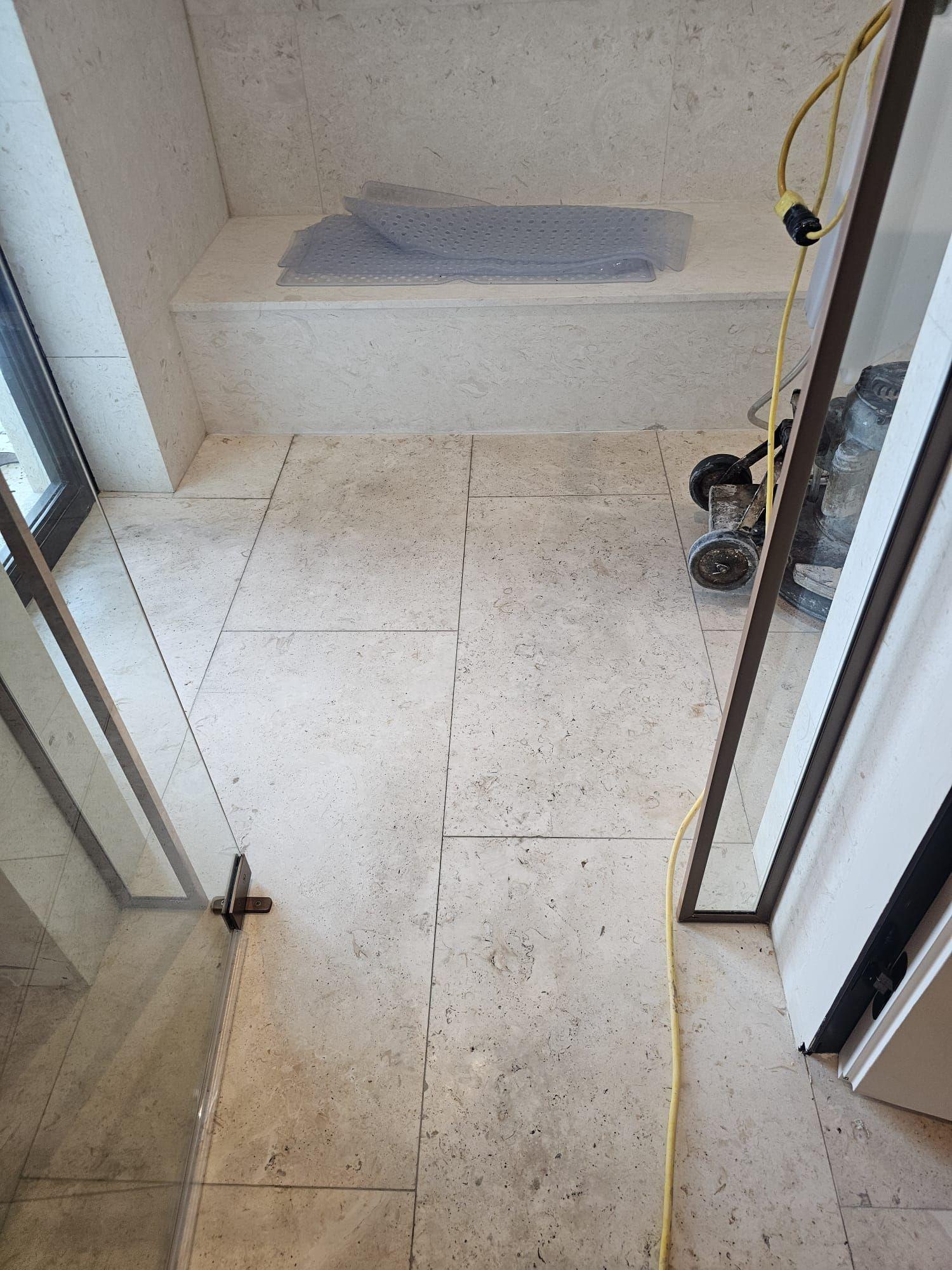
Shellstone shower before sealing, Miami Beach
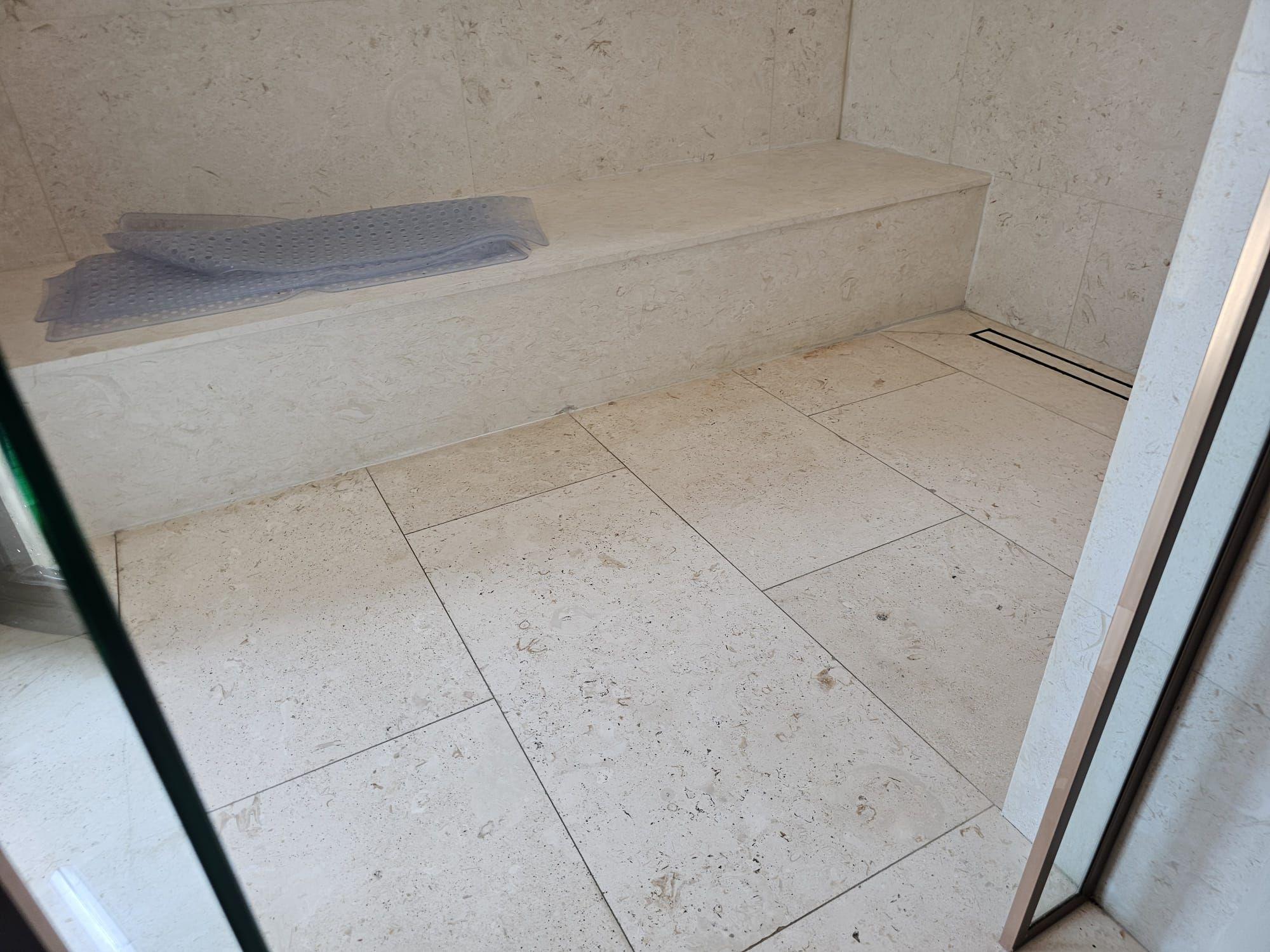
Shellstone shower after anti-slip treatment and sealing, Miami Beach
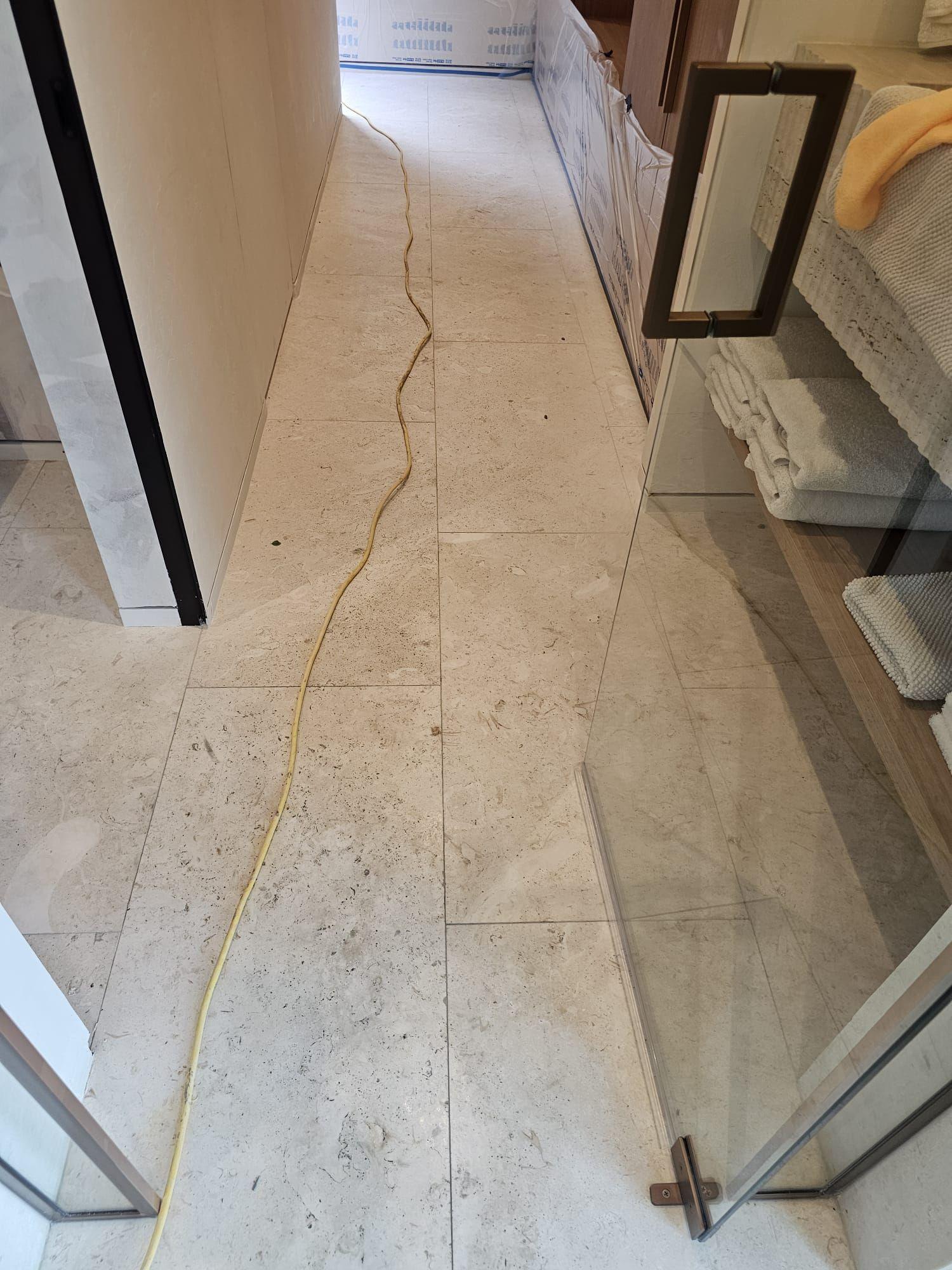
Shellstone bathroom floor before cleaning, Miami Beach
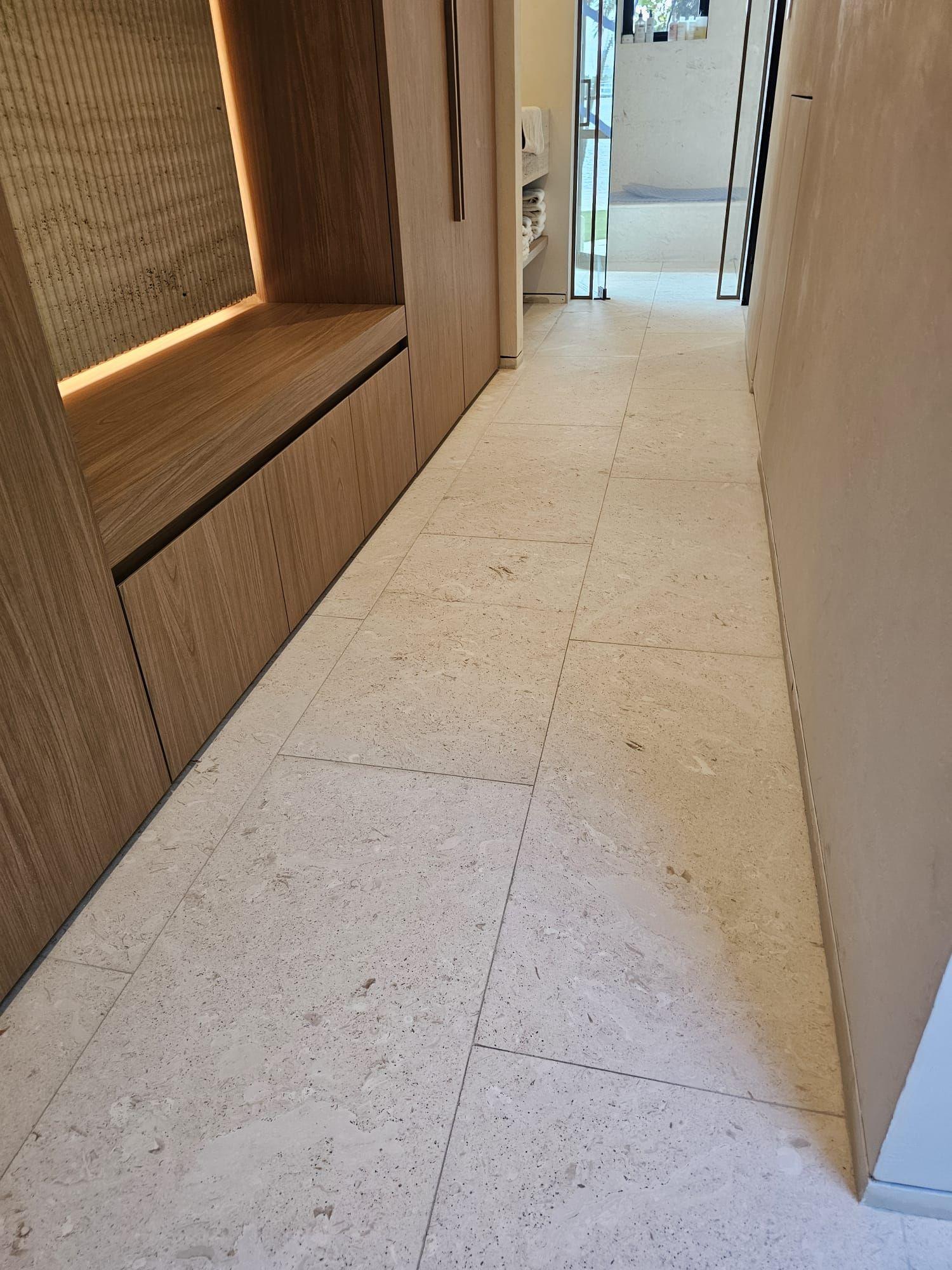
Shellstone bathroom floor after cleaning and sealing, Miami Beach
From Our Google Reviews
★★★★★
"I had an issue with my entrance travertine floor which I put the wrong product and it stain the floor on one side. I was mortified and called Miguel."
Claudia, Google review
★★★★★
"They explained the process, showed incredible attention to detail, and treated our home with respect."
Antonio, Google review
Rated ★★★★★ on Google
Stone Sealing in Miami: Frequently Asked Questions
Do I need to seal natural stone in Miami? Most natural stone in Miami homes absorbs liquid to some degree, including marble, travertine, limestone and coral stone. Sealing slows that down. Some dense stones and most porcelain tile don't take a sealer at all, and sealing them only leaves residue on the surface. The water test tells you which one you have.
How do I know if my stone needs to be sealed? Put a few drops of water on it and wait a few minutes. If it darkens, it's absorbing. If the water beads, the sealer is still working.
What's the difference between a penetrating sealer and a topical coating? A penetrating sealer goes into the pores and leaves no film, so the stone breathes and keeps its texture. A topical coating sits on top, changes the look, wears in walking paths and can trap moisture. We use penetrating sealers on natural stone.
Will sealing change the color or shine of my stone? A penetrating sealer is designed to leave the stone looking like itself. There are enhancing sealers that darken the color on purpose. If that's the look you want, we talk it through at the assessment.
Does sealing stop etching on marble? No. Etching is acid reacting with the stone itself. A sealer slows stains, not etching. Etch marks are a polishing repair.
How often does stone need to be resealed in South Florida? It depends on the stone, the sun, the foot traffic and the pool chemistry. Exterior stone around pools usually needs it sooner than floors indoors. The water test is the honest answer, so we test instead of guessing.
Will a sealed pool deck be slippery? A penetrating sealer leaves no film on the surface, so it doesn't add the slick layer a topical coating can. If traction is a concern on your deck, tell us at the assessment.
Do you pressure wash stone before sealing it? No. Pressure washing pushes water deep into porous stone, which then has to dry before it can be sealed, and it can damage soft stone. We clean with chemistry and controlled extraction instead.
Can you seal over an old sealer? Sometimes. A penetrating sealer can often be refreshed after a deep clean. A topical coating that is peeling, cloudy or patchy has to come off first.
How much does stone sealing cost in Miami? Every job starts with a $250 on-site assessment, credited in full toward your service. The price depends on the stone, the square footage and the condition, including whether it needs restoration before it can be sealed.
What areas do you serve? Miami-Dade County and the Florida Keys in Monroe County.
Request Your Assessment
Every stone sealing job starts with a $250 on-site assessment, credited in full toward your service. We identify the stone, test it, and tell you what it needs before any work is scheduled.
Always Local - Always On Time - Always Honest.