
Case Study | Bay Point, Miami
Pressure washing opened the pores. The growth moved in.
About 746 sq ft of limestone | Two terraces | Upper East Side
Limestone terrace restoration in Bay Point, on Miami's Upper East Side: two terraces at one home, the master bedroom terrace at about 325 square feet and the family room terrace at about 421. Both had been pressure washed heavily for years. That pressure opened up the pores of the limestone, and black growth moved in and lived there. This job is part of our limestone restoration in Miami work. Here is what we found, what we did, and how it was finished.
Watch the job: honing through the black growth, then the finished terraces
The Job at a Glance
Before and After
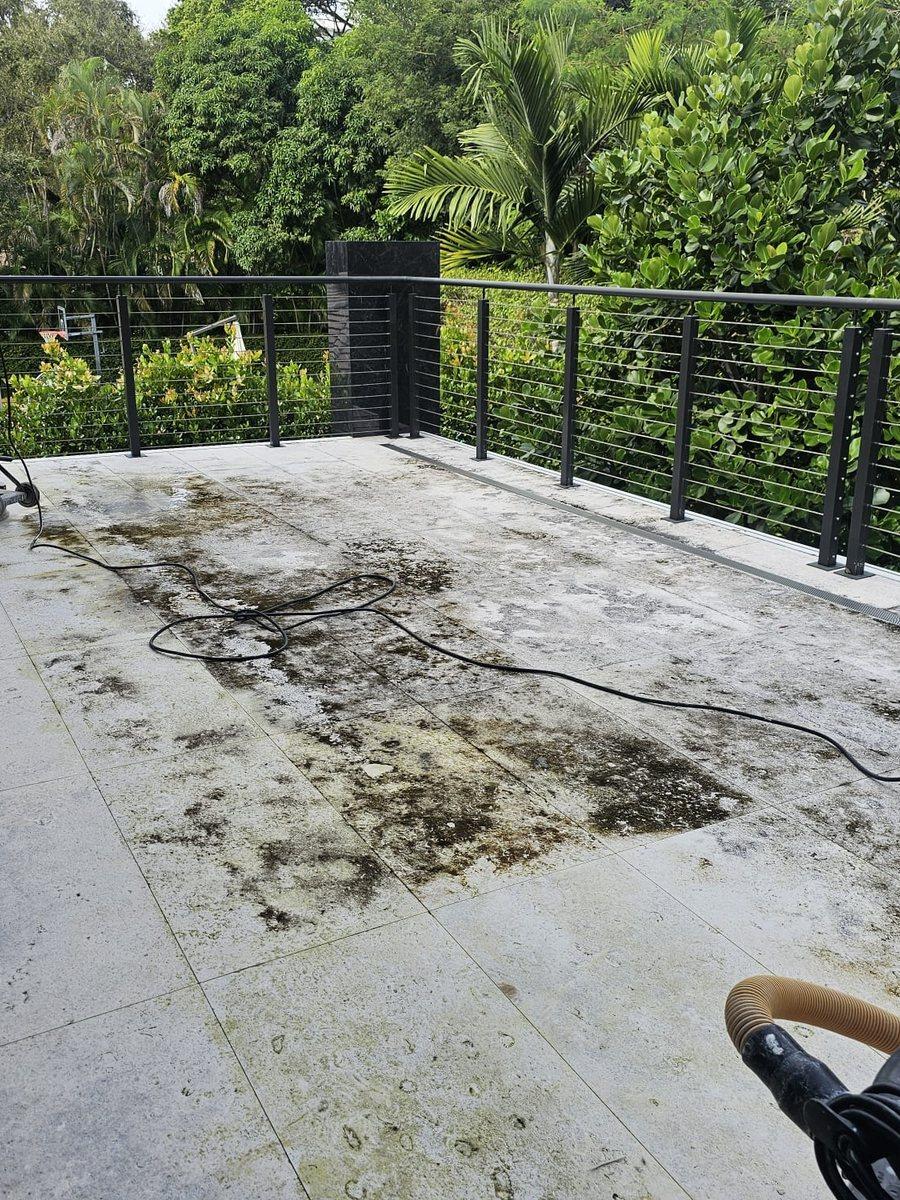
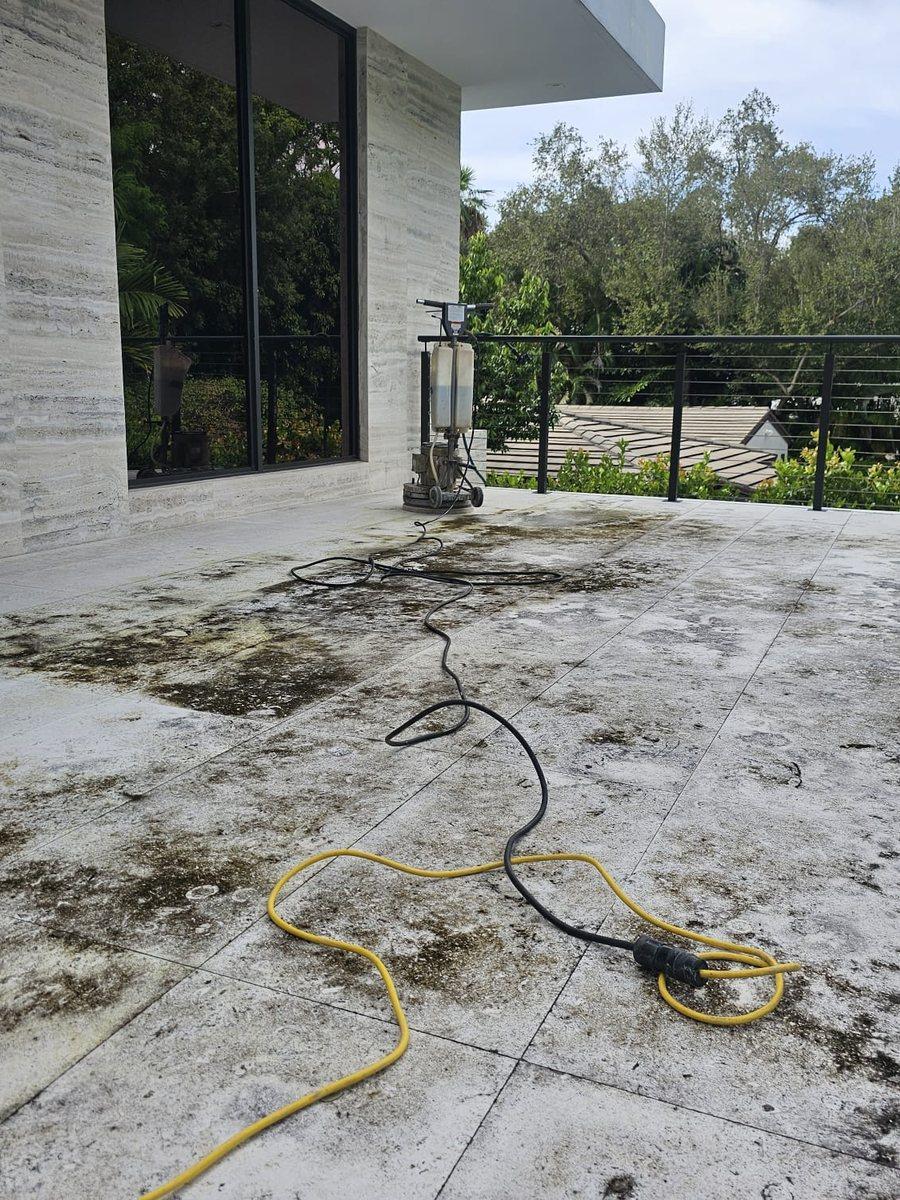 BEFORE
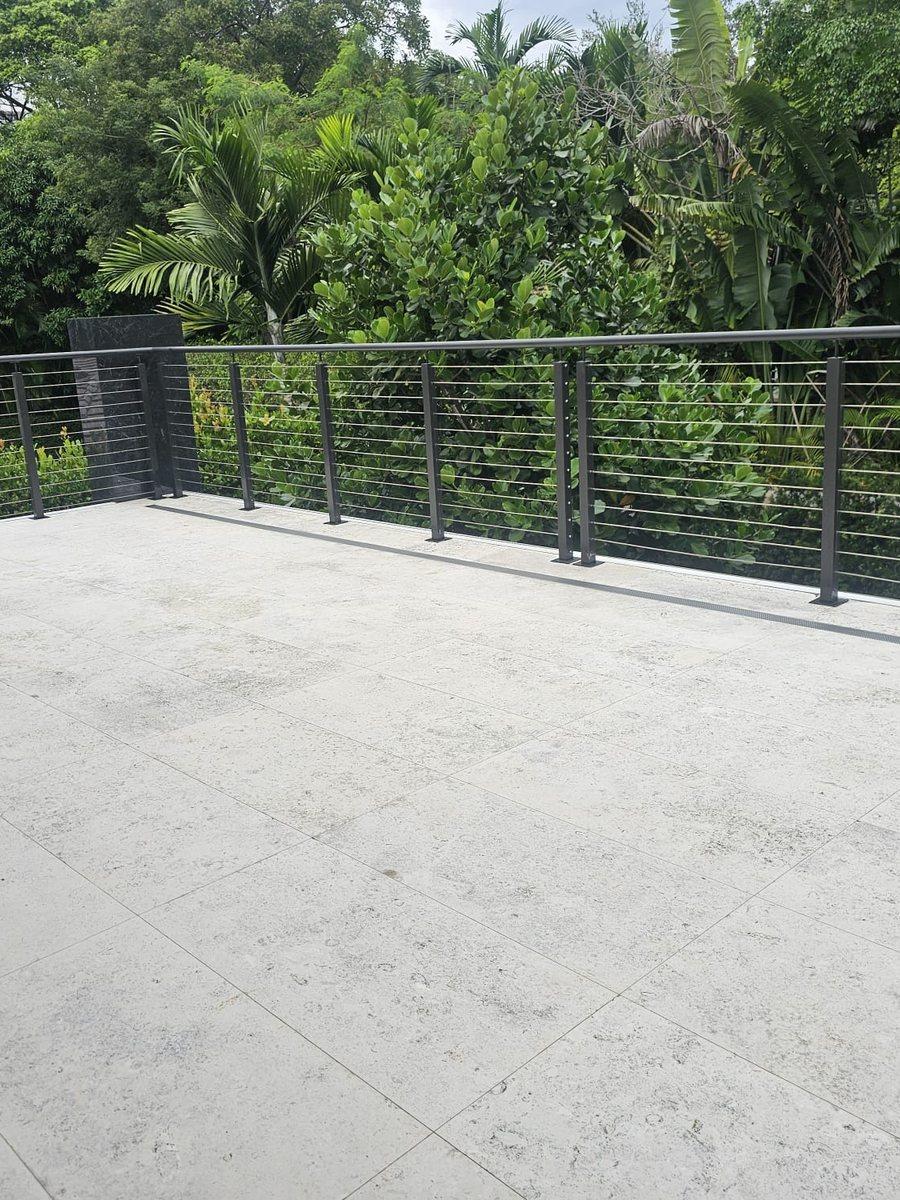
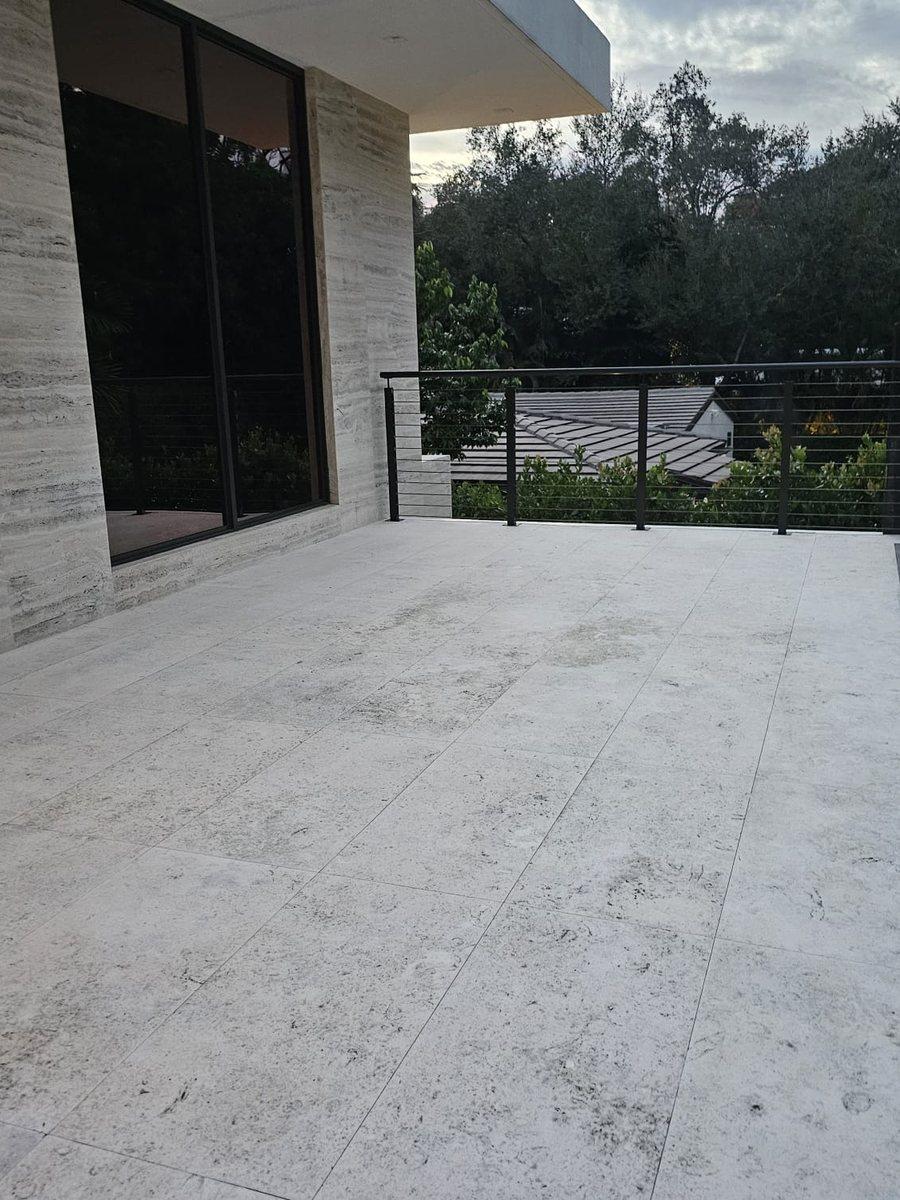 AFTER
Same terrace by the glass doors. The black growth is gone from the shaded center.
Limestone Terrace Restoration in Bay Point: How the Job Went
What We Found
Limestone is a natural, porous, calcium-based stone. On these terraces, years of pressure washing had opened the pores wide, and the dark patches and specks were growth living inside them. The shaded center of the larger terrace was the worst, with black growth running in bands across the pavers. One terrace was well along. The other was showing the early signs: dark specks settling into the pores.
Shade keeps stone damp in Miami's humidity, and damp, open pores are where growth lives.
What We Did
Cleaning the surface alone would have left the growth sitting in the open pores. So Jose and Emilio honed both terraces with water, all the way down to 30 grit, across every paver.
With the pores opened up, they extracted, then finished with a yellow brush at under 50 psi. Not high pressure. Not even close.
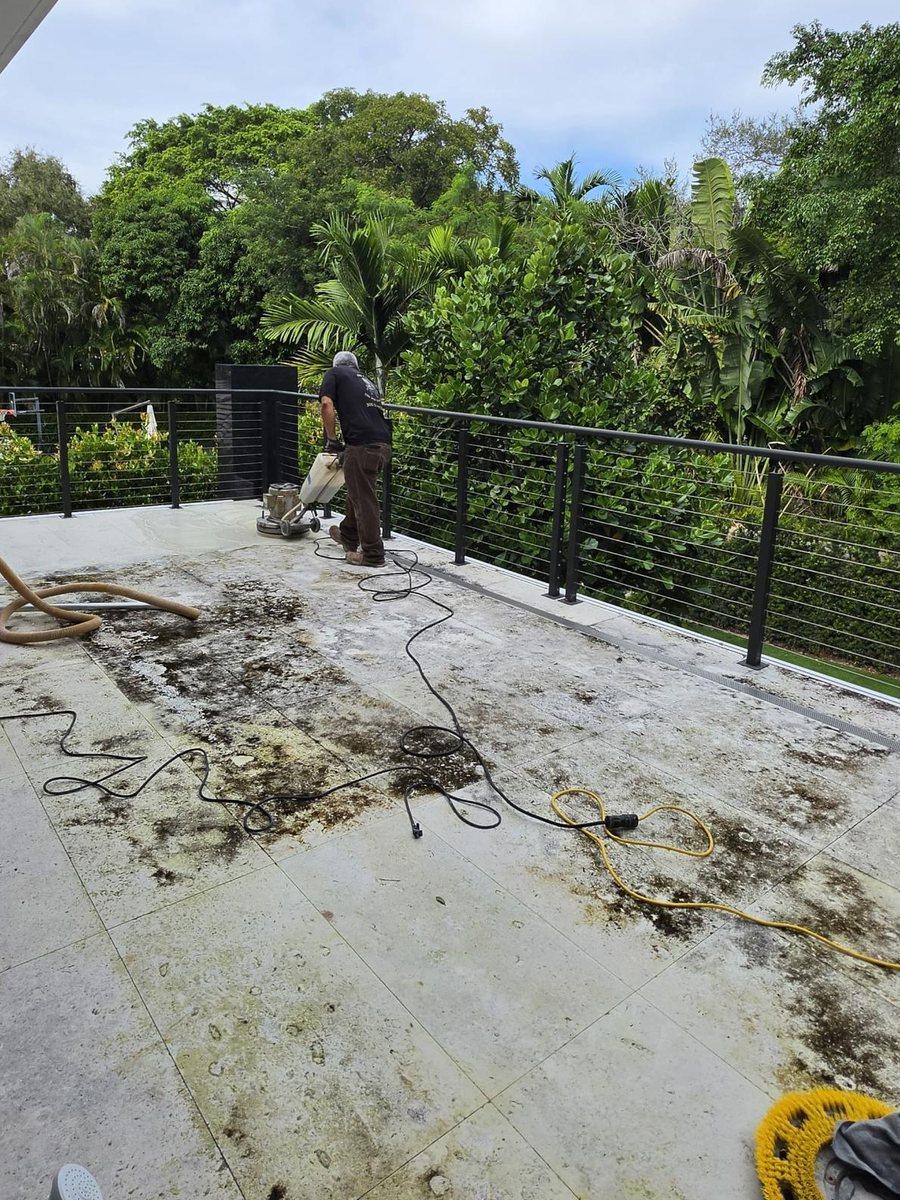 HONING, 30 GRIT
Honing with water down to 30 grit, the extraction hose and yellow brush ready
How It Was Finished
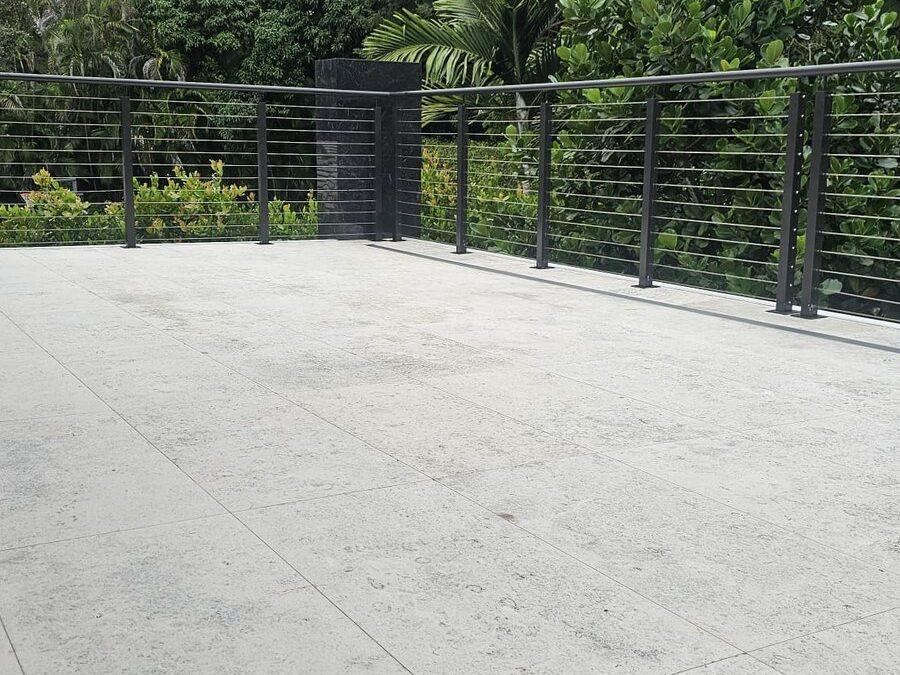
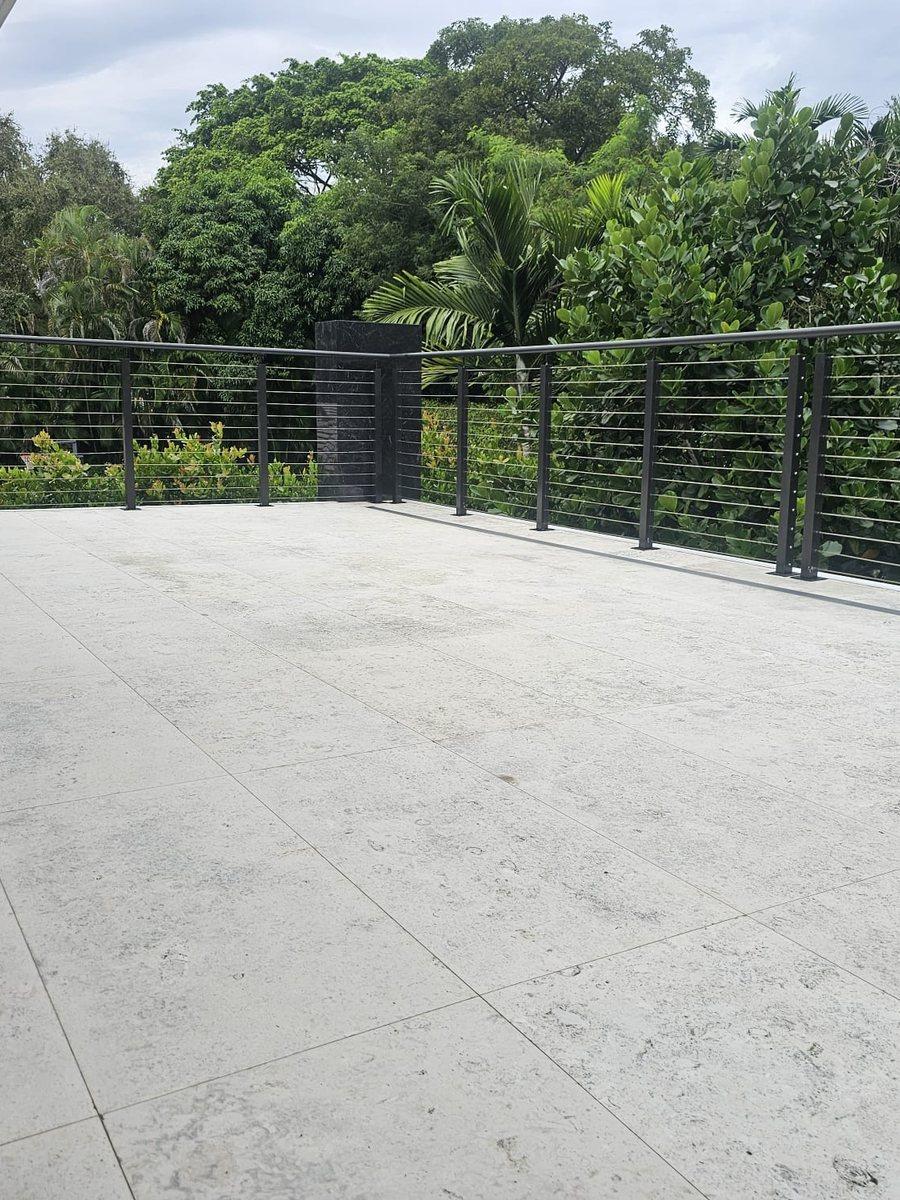
Once the stone was completely dry, both terraces were sealed. The pavers read light and even again, from the glass doors to the cable railing and along the drain line.
Two days, two terraces, about 746 square feet of limestone.
 BEFORE
 AFTER
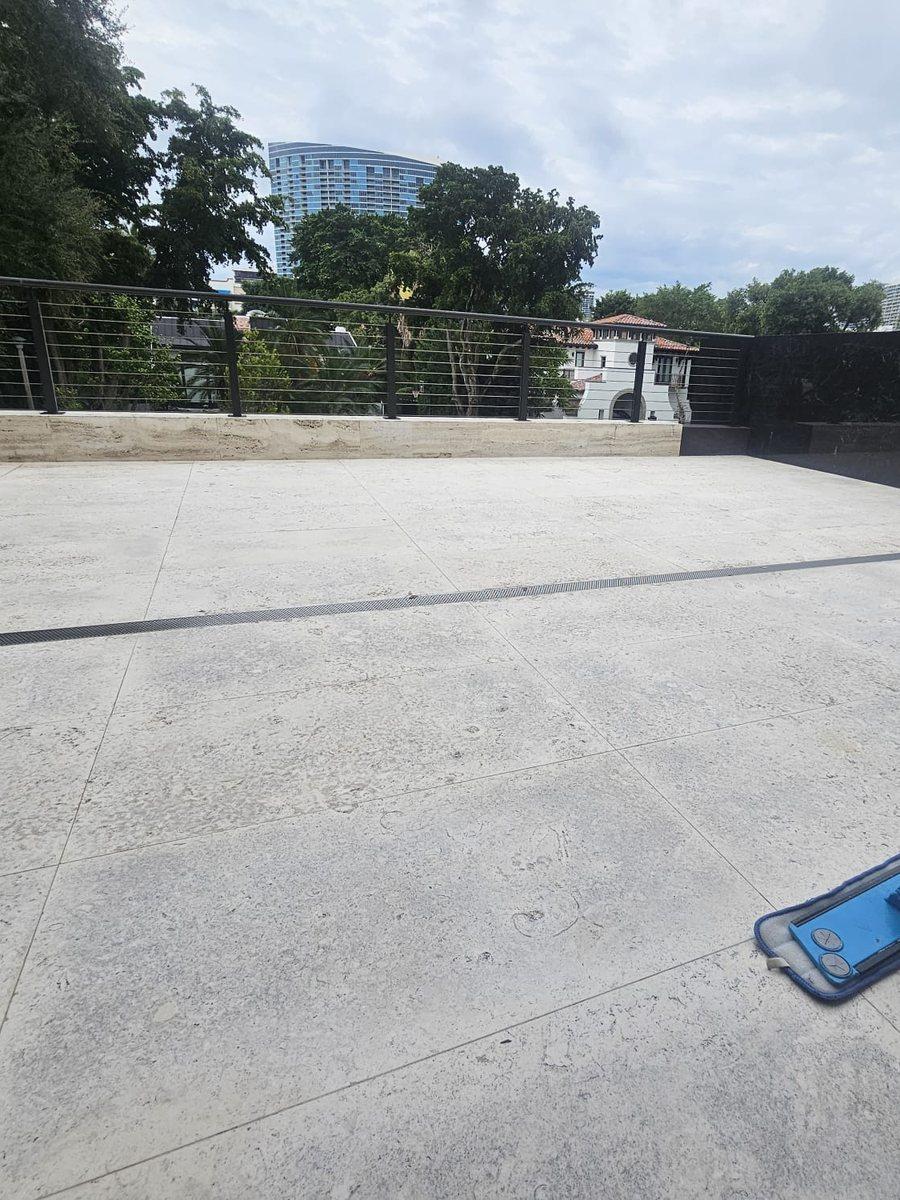 SECOND TERRACE
The second terrace, finished
Why You Should Never Pressure Clean Limestone in Miami
Pressure washing looks like a fast fix for a dirty terrace. On limestone it works against you. The stone is soft and porous, and high pressure cuts into the surface and opens the pores wider. Every opened pore is one more place for water, dirt and growth to settle, and in Miami's shade and humidity, the growth comes back.
That is what happened here. Years of pressure washing left the stone wide open, and the growth was living below the surface where pressure could not reach it anyway. The answer was to work the stone, not blast it: hone it, extract at low pressure, and seal it once it is dry.
For another job of ours in the same part of town, see our tile and grout cleaning in Miami's Upper East Side.
What the client said
"We had been pressure washing our floors for years and it caused tons of buildup over time. The team did such an amazing job, our floors look brand new!! It’s like a whole new house.
Miguel, the owner, was also great to work with. Super helpful, honest, transparent, and just genuinely wanted to make sure we were happy with everything.
10/10 recommend! Very happy with how everything turned out!"
Limestone Restoration in Miami: Questions People Ask Us
Should you pressure clean limestone?
No. Pressure washing opens up the pores in limestone, and open pores hold water, dirt and growth. This Bay Point terrace had been pressure washed for years, and the black growth was living in those opened pores.
What is the black growth on my limestone terrace?
On this job it was growth living inside the stone's pores, worst in the shaded areas where the limestone stays damp.
Why hone limestone down to 30 grit?
On this job the growth was inside pores that years of pressure washing had opened. Honing both terraces with water down to 30 grit reached it across every paver.
What pressure do you use on limestone?
Under 50 psi on this job, for the extraction and the yellow brush pass. Never high pressure.
Should limestone be sealed after restoration?
On this job both terraces were sealed once the stone was completely dry.
How long does limestone terrace restoration take?
This job, two terraces and about 746 square feet, took Jose and Emilio two days.
What does it cost?
Every job starts with a $250 assessment, and that $250 is credited in full toward your service.
Bay Point and all of Miami-Dade
Black Growth on Your Limestone Terrace in Miami?
Text us a photo of your stone
Every job begins with a $250 assessment, credited in full toward your service.
More from us: limestone restoration in Miami, tile and grout cleaning in the Upper East Side, and our Google reviews.
Veteran-Owned | 25+ Years | 185+ Five-Star Reviews