SuperHero Header

Request Your Assessment

This site is protected by reCAPTCHA and the Google Privacy Policy and Terms of Service apply.

Should You Seal Your Grout in South Florida? What Miami Homeowners Should Know

Should You Seal Your Grout in South Florida? What Miami Homeowners Should Know

Sealing gets talked about like it’s automatic, something every floor needs on a schedule. The honest answer is more nuanced. Sealing helps in most Miami homes, but only when it’s done on the right surface, at the right time, for the right reason. Here’s how to think about it.

What a Sealer Actually Does

A penetrating, or impregnating, sealer soaks into the pores of the grout and makes it more resistant to absorbing liquids. That’s the key word: resistant, not proof. A sealer isn’t a force field. It buys you time. When something spills, it beads and sits on top long enough for you to wipe it up instead of soaking straight into the joint. In a climate where grout fights moisture year-round, that head start matters.

Why It Helps More in Miami

Our humidity and hard water are hard on grout. Unsealed joints drink in moisture, mineral deposits, and spills, which is what drives the mold, mildew, and darkening that Miami floors are prone to. Sealing slows all of that down. It won’t stop you from ever needing our Miami tile and grout cleaning service again, but it stretches the time between cleanings and makes the ones you do need easier.

The One Rule That Matters Most

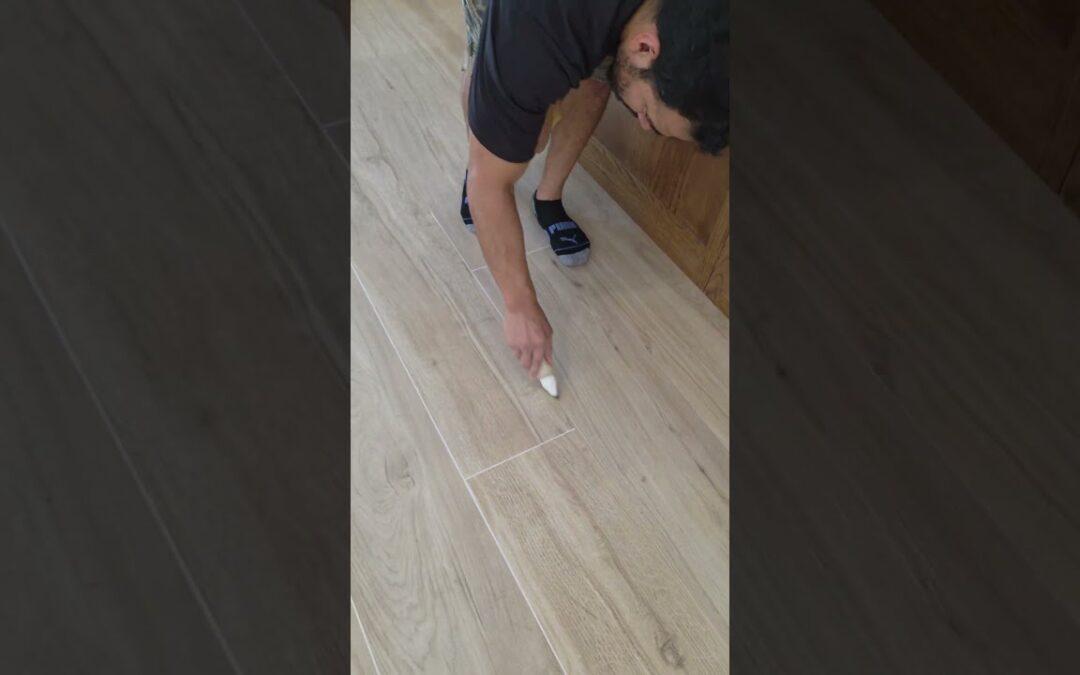
Never seal dirty grout. This is where DIY sealing goes wrong. If you apply sealer over embedded soil or contamination, you lock the problem in permanently, sealing the dirt inside the joint where nothing can reach it. Sealing is the last step after a proper deep cleaning, once the grout is clean and fully dry, never a shortcut to skip the cleaning. We apply our SouthShield sealer as a separate step for exactly this reason.

When Cleaning Won't Be Enough

Sometimes grout is too far gone to seal clear. If the color is permanently stained or blotchy even after a deep clean, a clear sealer just protects an ugly result. In those cases grout color sealing is the better move. It coats the grout in a uniform, stain-resistant color that resists water, mold, and mildew, and it makes a tired floor look new again.

A Note on Natural Stone

If your floor is natural stone rather than ceramic or porcelain, the rules shift. Many stones don’t need sealing at all, and the wrong product or an acidic cleaner can etch or dull the surface. Marble and travertine are especially sensitive. Stone should be assessed on its own terms, not lumped in with tile.

Talk to a Local Tile and Grout Team

Keep It Clean has cleaned and restored floors in Miami’s exact climate since 2002. Veteran-owned, family-operated, and backed by 185+ five-star reviews across Miami-Dade County and the Florida Keys.

Send photos and video of your floors by call or text for a quote. If that’s not practical, a $250 assessment fee applies, paid via Zelle to confirm your appointment and credited in full toward your service.

Call or text: 305-741-9729

Always Local. Always On Time. Always Honest.

Grout Haze or Just Dirty Grout? How to Tell What’s on Your Miami Floor

Grout Haze or Just Dirty Grout? How to Tell What’s on Your Miami Floor

A cloudy, dull film across your tile looks like dirt, so most people try to clean it. When cleaning doesn’t touch it, they clean harder. If that sounds familiar, you may not be dealing with dirt at all. You may be looking at grout haze, and it’s a completely different problem with a completely different fix.

Short answer: If the cloudiness sits in the grout lines and follows your walking paths, it’s dirt, and deep tile and grout cleaning will lift it. If it’s a uniform, chalky film across the whole floor, tile included, and it showed up soon after installation or sealing, it’s grout haze, and haze has to be corrected off the surface, not cleaned.

What Dirty Grout Looks Like

Ordinary soil concentrates in the grout lines. The joints go dark while the face of the tile stays relatively clear. It builds gradually, it’s worse in high-traffic paths, and it responds to proper deep cleaning and extraction. If your problem is confined to the lines and follows the walkways through your home, that’s soil.

What Grout Haze Looks Like

Haze is different. It’s a thin, cloudy film that sits across the whole surface, tile and grout alike, giving the floor a chalky or dull cast even right after you’ve mopped. It’s most common on newer installations, and it’s not dirt. It’s residue left behind when grout or a coating wasn’t cleaned off properly during or after installation. Because it’s bonded to the surface, cleaning doesn’t remove it. You can mop every day and the haze stays exactly where it is.

Why the Difference Matters

If you treat haze like dirt, you’ll spend time and money on cleanings that can’t work, because cleaning and correction are two different services. Soil gets cleaned out. Haze gets corrected off. There’s also more than one kind of haze. Standard cementitious haze is one thing. Polymer or epoxy haze from modern grouts and sealers is tougher, chemically bonded, and needs a specific removal process. Using the wrong approach on the wrong haze can damage the tile.

A Quick Way to Tell Them Apart

Look at where the problem lives. If it’s in the grout lines and follows traffic patterns, it’s probably soil and a good cleaning will help. If it’s a uniform film across the entire floor, tile included, and it showed up after a recent installation or sealing, it’s probably haze and it needs correction rather than cleaning. When you’re not sure, a short video of the floor usually tells us which one you’re dealing with before we ever quote it.

Frequently Asked Questions

Can I remove grout haze by mopping or with a household cleaner?

No. Grout haze is a bonded residue, not loose dirt, so mopping and everyday cleaners don’t touch it. It needs a haze-removal process matched to the type of haze. Using a random acid or scrubbing pad can etch or scratch the tile, which is why it’s worth identifying the haze first.

How can I tell if it’s grout haze or just dirty grout?

Look at where the cloudiness lives. Dirt sits in the grout lines and follows the paths you walk. Haze is a uniform film across the whole floor, tile included, and it usually appears right after a tile install or a sealing job. If the whole floor looks dull even when it’s clean, it’s most likely haze.

Is polymer or epoxy grout haze different from regular haze?

Yes. Standard cementitious haze is relatively straightforward to remove. Polymer and epoxy haze from modern grouts and sealers is chemically bonded and much tougher, so it needs a specific removal method. The wrong approach on the wrong haze can permanently damage the surface.

Do you remove grout haze in Miami?

Yes. Keep It Clean handles grout haze and polymer haze removal across Miami-Dade County and the Florida Keys. Send a short video of the floor and we can usually tell you whether you’re dealing with haze or soil before we quote.

Talk to a Local Tile and Grout Team

Keep It Clean has cleaned and restored floors in Miami’s exact climate since 2002. Veteran-owned, family-operated, and backed by 185+ five-star reviews across Miami-Dade County and the Florida Keys.

Send photos and video of your floors by call or text for a quote. If that’s not practical, a $250 assessment fee applies, paid via Zelle to confirm your appointment and credited in full toward your service.

Call or text: 305-741-9729

Always Local. Always On Time. Always Honest.

How Often Should You Clean Tile and Grout in Miami?

How Often Should You Clean Tile and Grout in Miami?

It’s the question we get more than any other. There’s no single number that fits every floor, but there are clear guidelines, and in Miami the humidity shifts them earlier than they’d fall in a drier place.

Short answer: For most Miami-Dade homes, schedule professional grout cleaning in Miami every 12 to 18 months. High-traffic, high-moisture rooms like kitchens, entryways, and bathrooms usually need it every 6 to 12 months. Miami’s humidity speeds up mold and buildup, so floors here need attention sooner than they would in a drier climate.

The General Rule

For most Miami-Dade homes, professional tile and grout cleaning every 12 to 18 months keeps floors in good shape. That’s the baseline for normal foot traffic in living areas and bedrooms. It’s often enough to clear buildup before it becomes embedded, and not so often that you’re paying for work the floor doesn’t need yet.

High-Traffic Areas Need It Sooner

Kitchens, entryways, hallways, and bathrooms take more abuse and hold more moisture, so they often need attention every 6 to 12 months. Kitchens collect grease that binds to grout. Bathrooms stay damp. Entryways catch everything tracked in from outside. If your home has one or two rooms that always look worse than the rest, those are the rooms driving your schedule.

Why Miami Runs on a Faster Clock

South Florida’s climate accelerates mold and mildew growth in grout, especially in bathrooms and on covered outdoor tile. Humidity keeps grout damp, hard water leaves mineral deposits, and both feed the buildup that darkens your lines. A floor that might go two years between cleanings up north can need attention inside a year here.

Signs You're Overdue

You don’t have to track dates. The floor tells you. Grout lines that are visibly darker than the surrounding tile, a haze or dullness that mopping doesn’t fix, a bathroom that smells musty even when it’s clean, or grout that’s turned from its original color to a uniform gray. Any of these means buildup is outpacing your regular maintenance.

How to Stretch the Time Between Cleanings

A few habits help. Wipe up spills before they soak in, use a neutral pH cleaner instead of harsh or acidic products, and skip the string mop in favor of a well-wrung microfiber for routine cleaning. Sealing your grout after a professional cleaning also buys real time, since a quality sealer slows how fast new soil works its way into the joints. None of this replaces a deep clean, but it lengthens the gap between them.

Frequently Asked Questions

How often should tile and grout be cleaned in Miami?

For most Miami-Dade homes, every 12 to 18 months for normal living areas. Kitchens, entryways, and bathrooms take more traffic and moisture, so they often need it every 6 to 12 months.

Why does Miami tile need cleaning more often than other places?

Humidity keeps grout damp, which speeds up mold and mildew growth, and hard water leaves mineral deposits. A floor that might go two years between cleanings up north can need attention inside a year here.

How do I know when my grout is overdue for cleaning?

The floor tells you. Grout lines darker than the tile, a haze that mopping will not fix, a bathroom that smells musty even when clean, or grout faded to a uniform gray all mean buildup is outpacing your regular cleaning.

Can I make a professional cleaning last longer?

Yes. Wipe spills before they soak in, use a neutral pH cleaner instead of harsh or acidic products, skip the string mop for a well-wrung microfiber, and have your grout sealed after a deep clean to slow how fast new soil settles into the joints.

Talk to a Local Tile and Grout Team

Keep It Clean has cleaned and restored floors in Miami’s exact climate since 2002. Veteran-owned, family-operated, and backed by 185+ five-star reviews across Miami-Dade County and the Florida Keys.

Send photos and video of your floors by call or text for a quote. If that’s not practical, a $250 assessment fee applies, paid via Zelle to confirm your appointment and credited in full toward your service.

Call or text: 305-741-9729

Always Local. Always On Time. Always Honest.

Steam Cleaning vs. Low-Moisture Tile Cleaning: What Miami’s Humidity Changes

Steam Cleaning vs. Low-Moisture Tile Cleaning: What Miami’s Humidity Changes

If you’ve searched for tile cleaning in Miami, you’ve seen both pitches. One company leads with high-pressure steam. Another talks about a low-moisture process. They sound like marketing distinctions, but the difference actually matters, and in a humid climate like ours it matters more than most homeowners realize.

Short answer: For most Miami homes, low-moisture tile and grout cleaning in Miami is the safer choice. High-pressure steam can force water under the tile and into the substrate, and in our humidity that trapped moisture feeds mold and can loosen aging tile. Low-moisture cleaning uses far less water, dries in 30 to 60 minutes, and reaches the same deep result without the risk.

What High-Pressure Steam Does

Steam and high-pressure spinners blast hot water at the floor and vacuum most of it back up. On a newer, well-installed floor it can produce a good result. The trouble is what “most of it” leaves behind. High pressure can force water under the tile and into the substrate, and in older Miami homes where the adhesive has already been softened by decades of humidity, that water can contribute to loosening and delamination over time. High pressure can also chip or erode aging grout.

Why Moisture Is a Bigger Deal Here Than Elsewhere

In a dry climate, leftover moisture evaporates fast and does little harm. In Miami, it lingers. Grout that stays damp is grout that grows mold and mildew, which is the exact problem you were trying to solve. Flood a floor with water in South Florida humidity and you can end up with lines that look clean for a week and then darken again as the trapped moisture feeds new growth.

What Low-Moisture Cleaning Does Differently

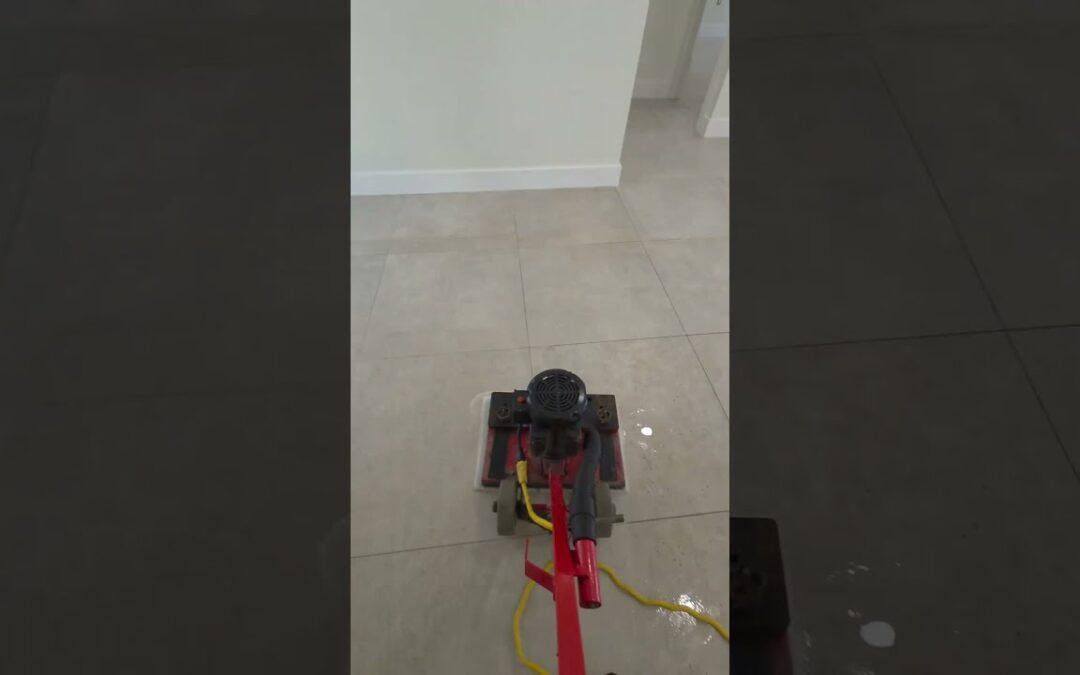
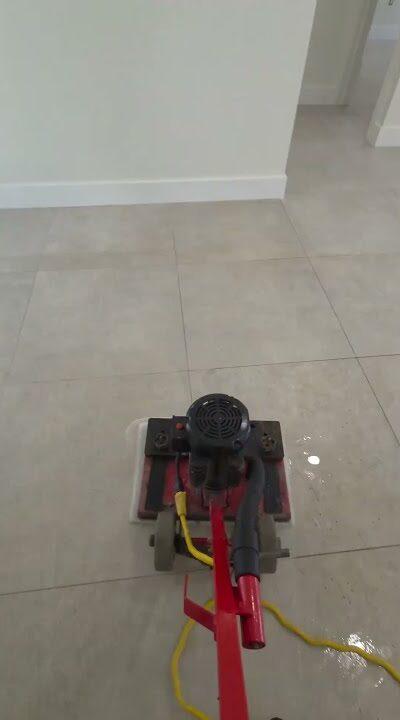
Our process uses far less water and relies on chemistry and extraction instead of brute force. We apply a low-moisture oxidation system, powered by Boost O2, that breaks organic grime down at the molecular level, agitate the grout lines with soft brushes, then extract the loosened soil. Floors typically dry in 30 to 60 minutes rather than staying wet for hours. Less water in the grout means less risk of trapped moisture, faster drying, and results that hold up in our climate.

It’s also gentler on the surfaces that can’t take abuse. Natural stone in particular does not react well to high pressure or acidic cleaners. If you have travertine, marble, or another calcareous stone, the wrong method can etch or dull it permanently, which is why stone needs its own approach.

Which One Should You Ask For

For most Miami homes, especially condos, older properties, and anything with natural stone, low-moisture is the safer call. If a company only offers high-pressure steam, ask how they manage drying time and water intrusion in our humidity. The answer tells you how much they’ve thought about the climate they’re working in.

Frequently Asked Questions

Is steam cleaning bad for tile and grout?

Not always, but in Miami it carries more risk. High-pressure steam can drive water under the tile and erode aging grout, and our humidity keeps that moisture trapped where it feeds mold. On newer, well-installed floors steam can work, but low-moisture cleaning is the safer default here.

What is low-moisture tile and grout cleaning?

It relies on cleaning chemistry and extraction instead of brute-force water. We apply a low-moisture oxidation system, agitate the grout lines, then extract the loosened soil, so floors dry in 30 to 60 minutes instead of staying wet for hours.

Which method is better for natural stone like travertine or marble?

Low-moisture cleaning with gentle chemistry. High pressure and acidic cleaners can etch or dull calcareous stone permanently, so travertine, marble, and similar surfaces need a stone-safe approach.

How long does the floor take to dry?

With our low-moisture process, usually 30 to 60 minutes. High-pressure steam can leave floors damp for hours, which matters a lot in South Florida humidity.

Talk to a Local Tile and Grout Team

Keep It Clean has cleaned and restored floors in Miami’s exact climate since 2002. Veteran-owned, family-operated, and backed by 185+ five-star reviews across Miami-Dade County and the Florida Keys.

Send photos and video of your floors by call or text for a quote. If that’s not practical, a $250 assessment fee applies, paid via Zelle to confirm your appointment and credited in full toward your service.

Call or text: 305-741-9729

Always Local. Always On Time. Always Honest.

Steam Cleaning vs. Low-Moisture Tile Cleaning: What Miami’s Humidity Changes

Why Your Grout Stays Dark No Matter How Much You Mop (A Miami Explainer)

You mop every week. The floor still looks tired, the grout lines are darker than the tile, and the mop bucket comes back gray no matter how many times you fill it. That’s not a sign you’re doing something wrong. It’s a sign that the dirt isn’t on the floor anymore. It’s in the grout.

Short answer: If mopping isn’t fixing dark grout, it’s because the dirt is no longer on the surface. It has soaked into the porous grout below, where a mop can’t reach. Clearing it takes the right chemistry to break the buildup loose plus extraction to pull it out, which is what professional tile and grout cleaning does.

Grout Is Porous, and That Changes Everything

Tile is dense and sealed at the factory, so it wipes clean. Grout is the opposite. It’s a cement-based material full of tiny pores, and those pores act like a sponge. Every time you mop, a little dirty water gets pushed down into the joints and dries there. Over months and years, that builds into a layer of embedded soil sitting below the surface, out of reach of anything you drag across the top.

This is why store-bought cleaners disappoint. They’re built to lift soil off a hard surface, not to pull it out of a porous one. You can scrub until your arm gives out and still be cleaning the wrong layer.

Miami Makes It Worse

South Florida’s humidity keeps grout damp longer than it would stay in a dry climate, and damp grout is exactly what mold and mildew want. That’s part of why the lines look darker here, and why they darken faster after a cleaning if the job wasn’t done right. Hard water adds mineral deposits on top of the organic buildup. Between the two, a Miami floor collects grime in ways a floor in Phoenix or Denver simply doesn’t.

Mopping Can Actually Set the Problem

Here’s the part most people don’t hear. Mopping a dirty grout line doesn’t just fail to clean it, it can make it worse. You’re spreading dirty water across the floor and letting it wick into the joints, so the grout keeps getting fed. A string mop is a fine tool for a quick surface wipe and a poor one for anything below the surface.

What Actually Reaches the Buildup

Getting soil out of grout takes two things a mop can’t provide: the right chemistry to break the buildup loose, and extraction to physically pull it up and off the floor. We use a low-moisture oxidation system that breaks down organic grime without flooding your floors, then extract the loosened soil instead of leaving it to settle back in. The grout comes back to its actual color, which is usually a few shades lighter than clients expect.

If your grout still looks off after a proper cleaning, the problem may not be dirt at all. Post-install film and grout haze can leave a cloudy cast that no amount of cleaning removes, and that’s a different fix entirely.

Frequently Asked Questions

Why is my grout darker than the tile even after mopping?

Grout is porous and holds dirt below the surface. Mopping only cleans the top of the floor, and it can actually push more dirty water down into the joints, so the lines stay dark no matter how often you mop.

Can dark grout be restored to its original color?

Usually, yes. Deep cleaning and extraction lift embedded soil and bring grout back to its true color, which is often lighter than people expect. If the grout is permanently stained, color sealing can restore a clean, uniform look.

Why does grout get darker faster in Miami?

Humidity keeps grout damp, which feeds mold and mildew, and hard water leaves mineral deposits. Both darken grout lines faster here than in a dry climate.

Do store-bought grout cleaners actually work?

They can lift surface soil, but they’re not built to pull embedded dirt out of porous grout, so the results are limited and usually temporary.

Talk to a Local Tile and Grout Team

Keep It Clean has cleaned and restored floors in Miami’s exact climate since 2002. Veteran-owned, family-operated, and backed by 185+ five-star reviews across Miami-Dade County and the Florida Keys.

Send photos and video of your floors by call or text for a quote. If that’s not practical, a $250 assessment fee applies, paid via Zelle to confirm your appointment and credited in full toward your service.

Call or text: 305-741-9729

Always Local. Always On Time. Always Honest.