Keep It CleanTile and Grout
SuperHero Header

Request Your Assessment

This site is protected by reCAPTCHA and the Google Privacy Policy and Terms of Service apply.

Tile and Grout Cleaning in Islamorada

Tile and Grout Cleaning in Islamorada

Case Study | Islamorada, Florida Keys

Tile and grout cleaning in Islamorada for a Keys property manager: two condo units in one building, ceramic tile throughout, two screened balconies, and a one-day window before both units were occupied again. No beds or furniture moved. Here is what we found, what we did and how we worked around the schedule.
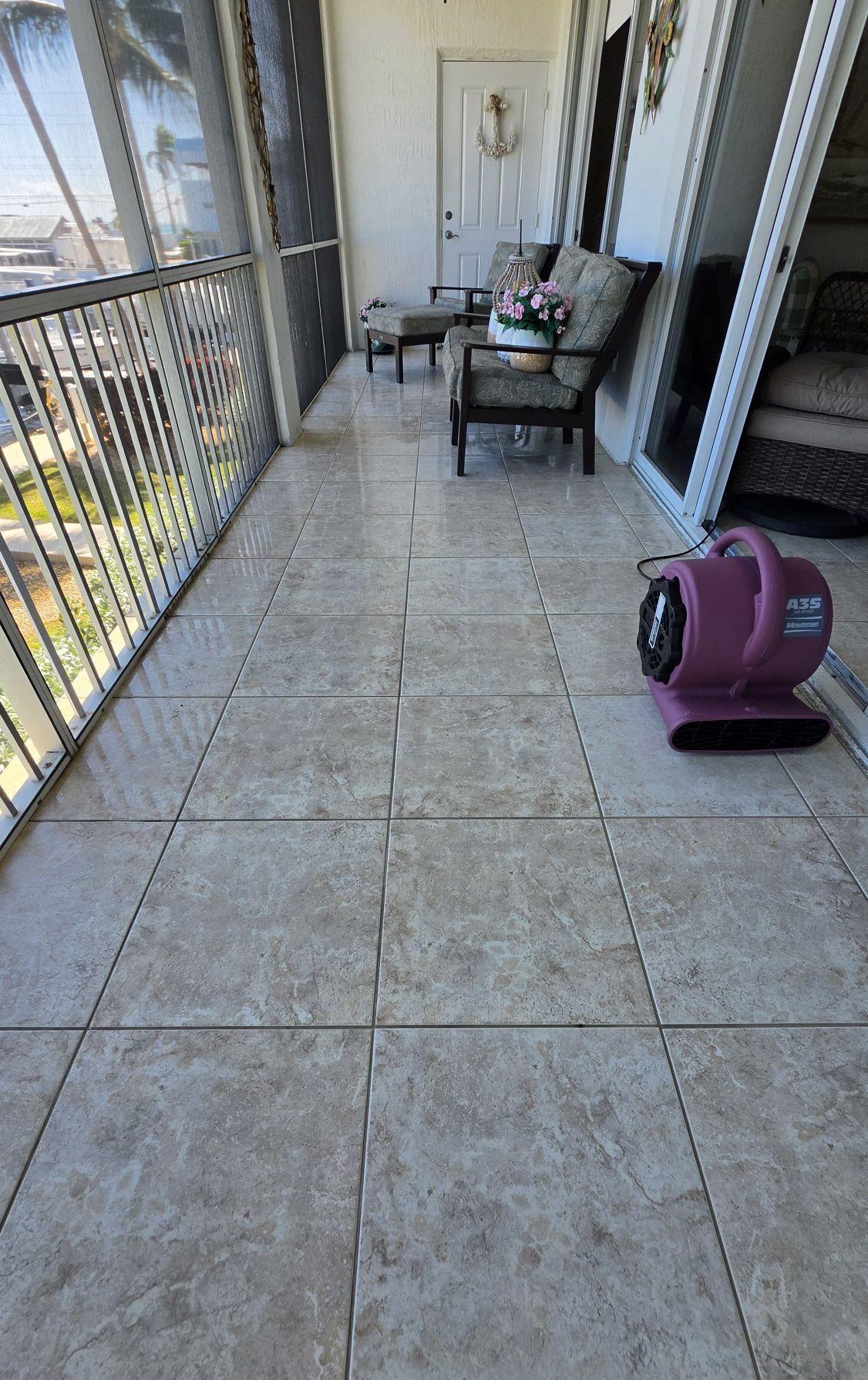
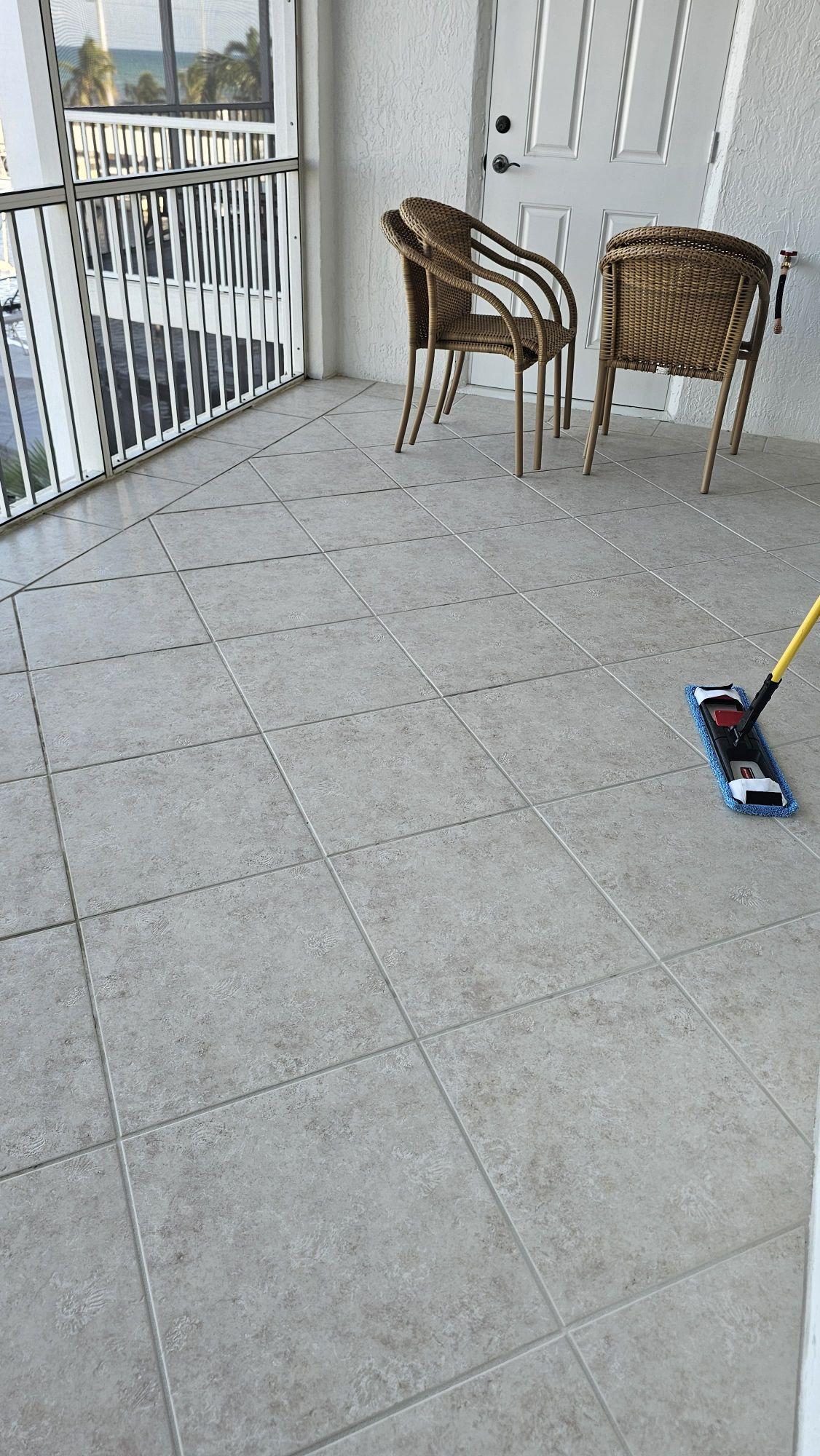
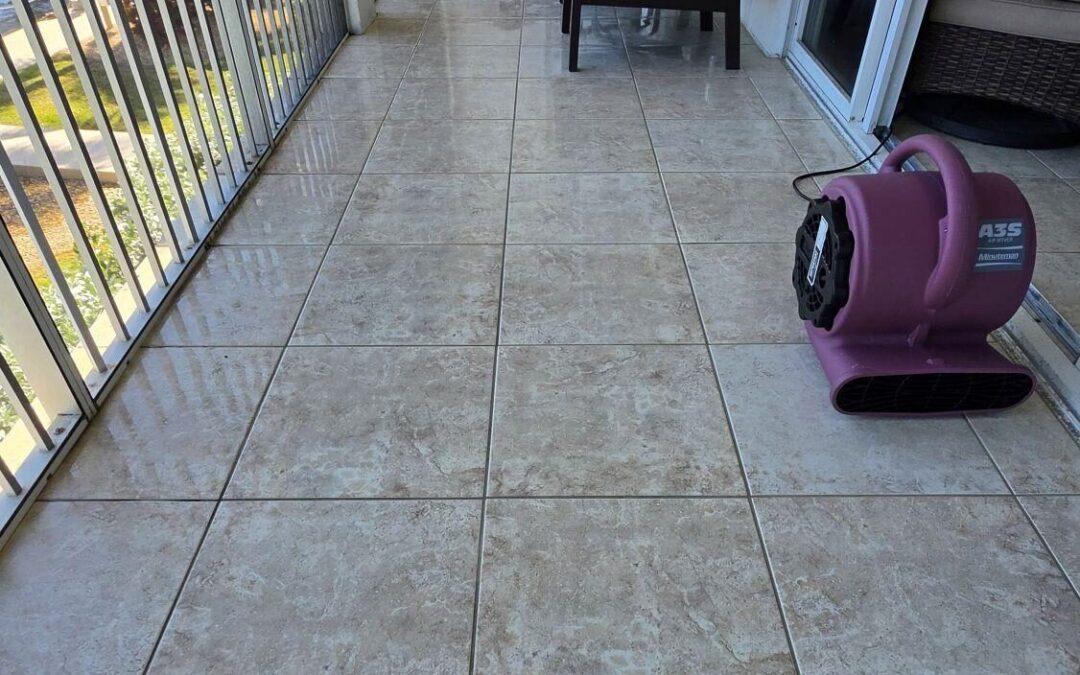
Ceramic tile on a screened balcony in an Islamorada condo, with an air mover drying the floor after cleaning
BALCONY
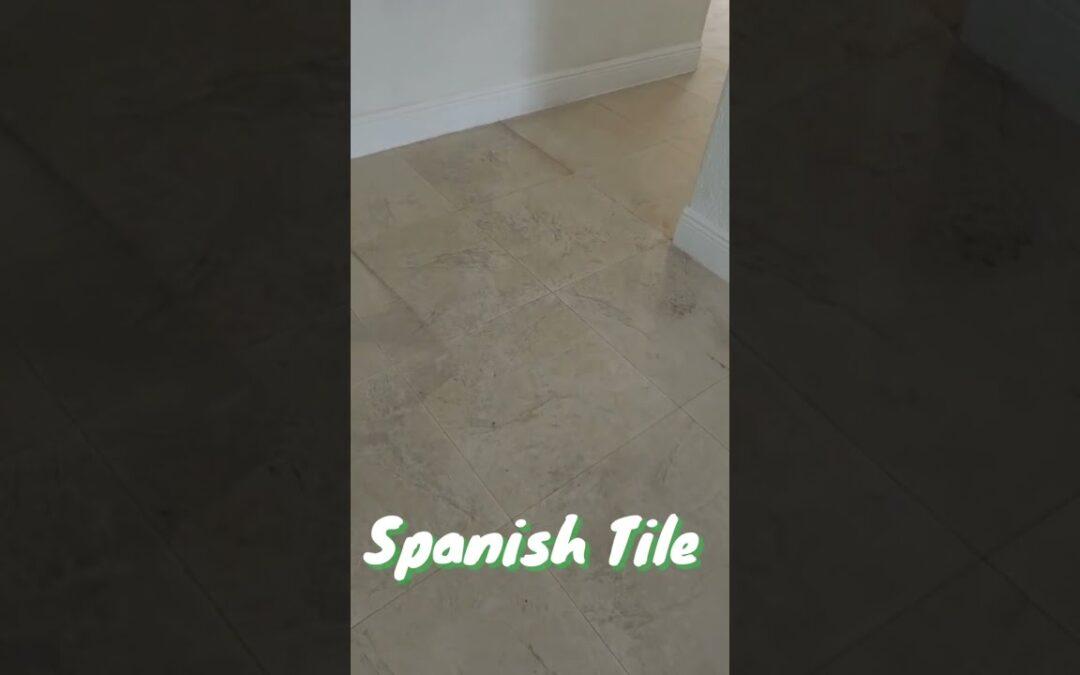
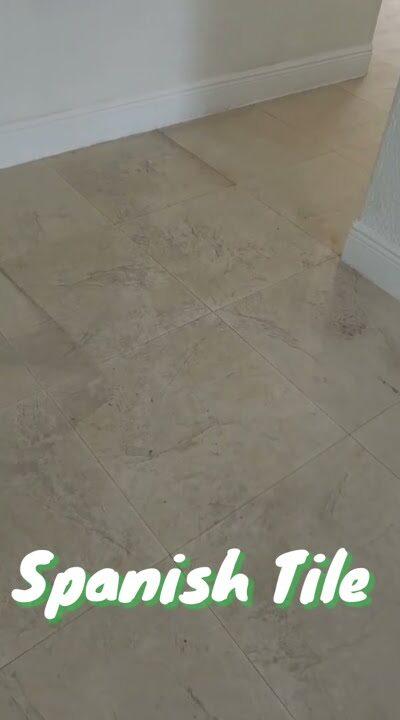
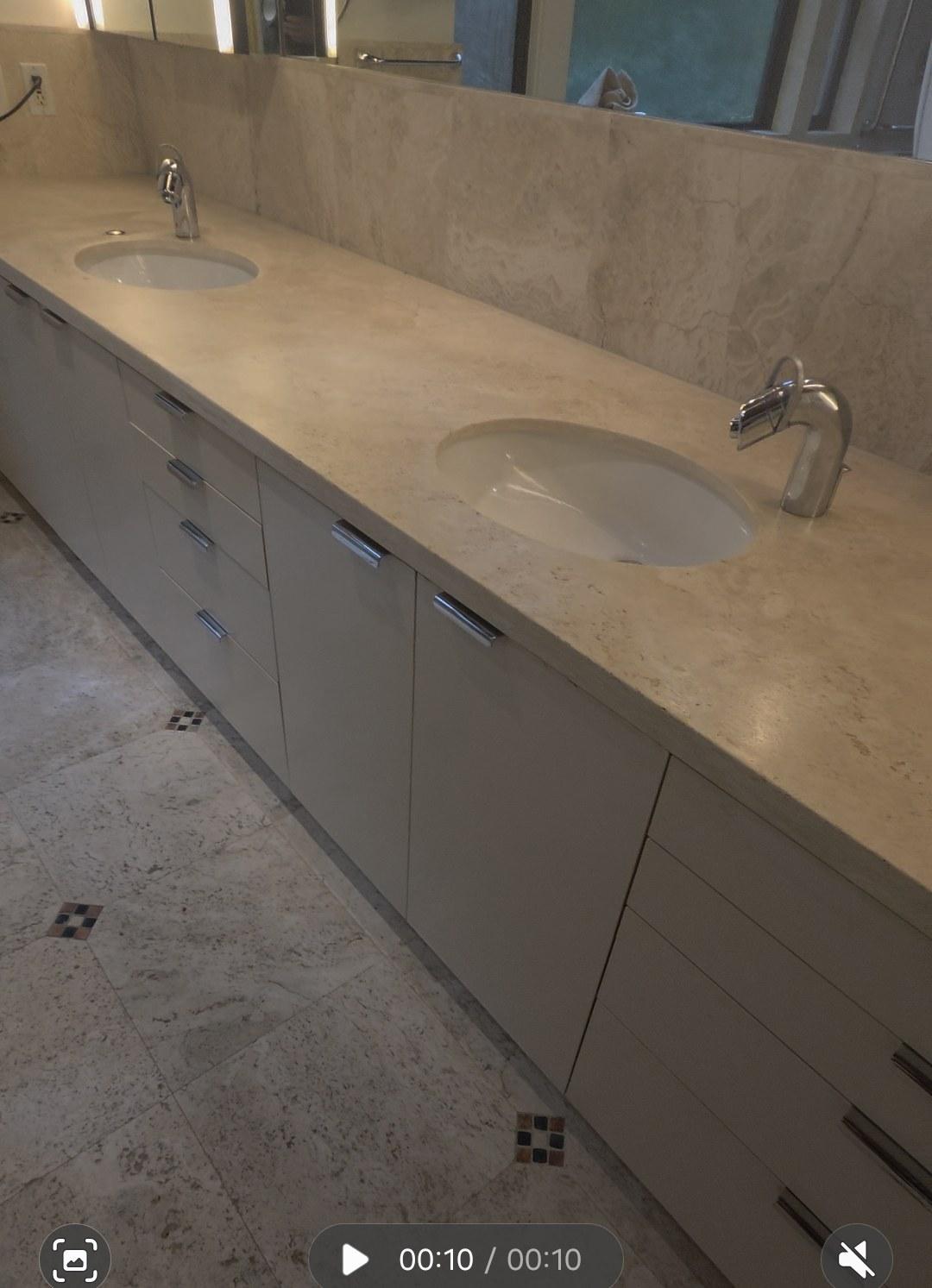
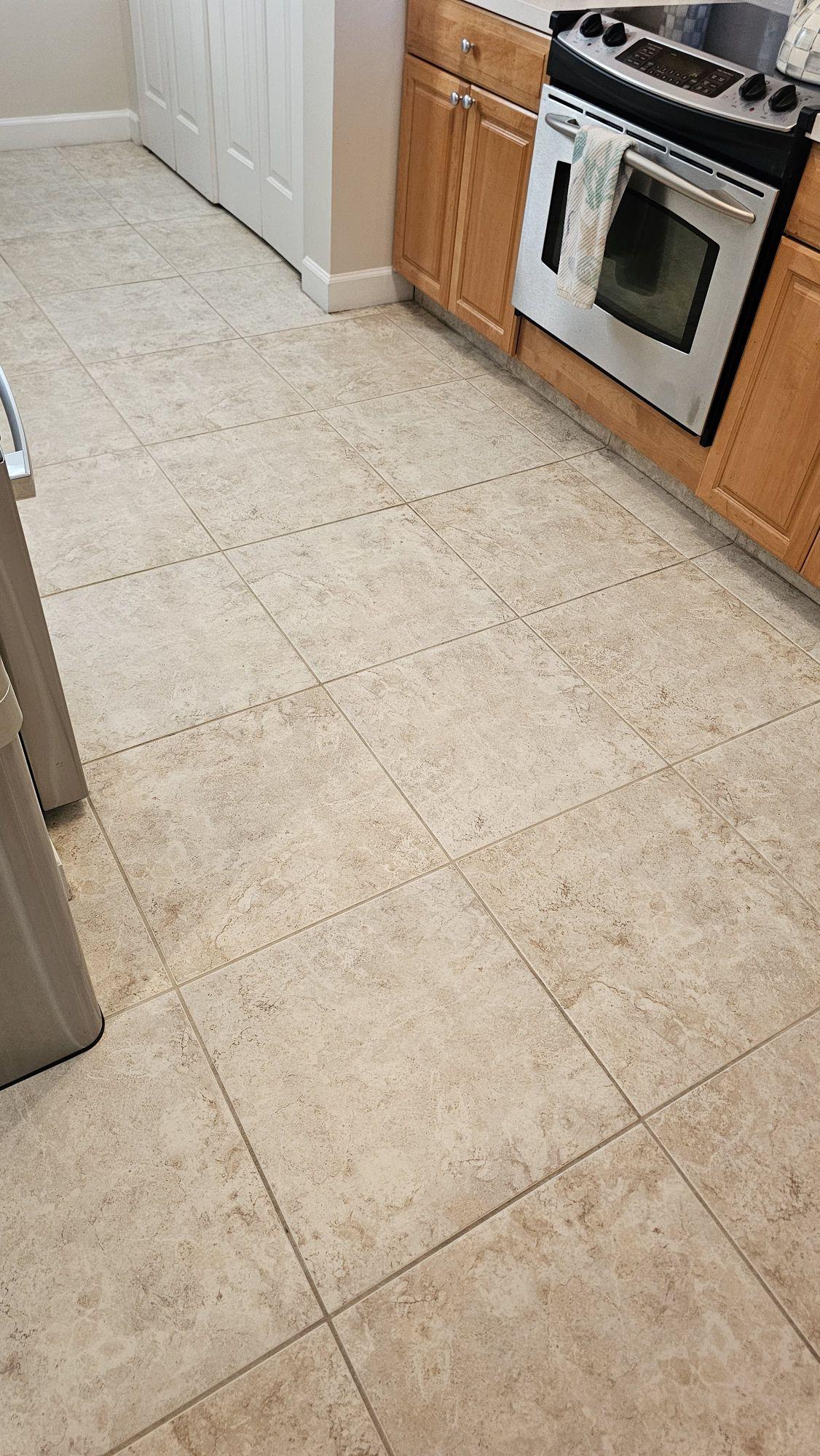
Beige stone-look ceramic tile in an Islamorada condo kitchen after tile and grout cleaning
KITCHEN

The Job at a Glance

2
condo units in one Islamorada building
2
screened balconies
0
beds or furniture moved
1 day
window before both units were occupied again

Islamorada | Ceramic tile | Work by Franco and Javi

Watch the Balcony | 22 seconds

STEP 1 OF 3

What We Found

Both units have beige, stone-look ceramic tile. The property manager wanted the traffic paths done, the walkways that take the most foot traffic in a rental: the kitchen, the hallways and the main routes through each unit.

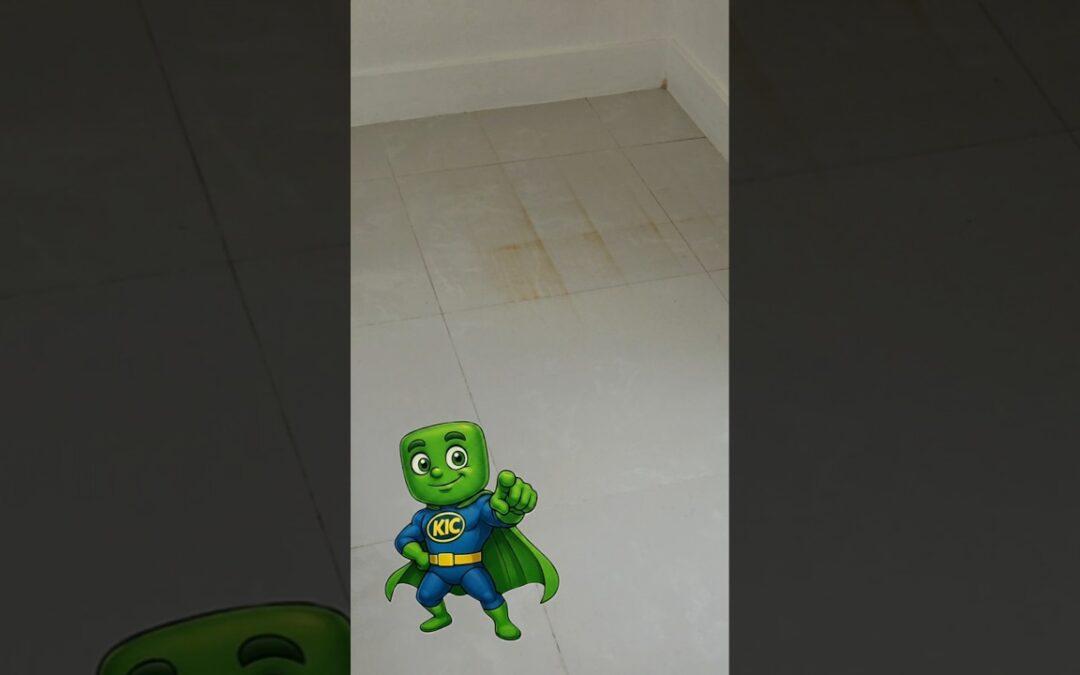
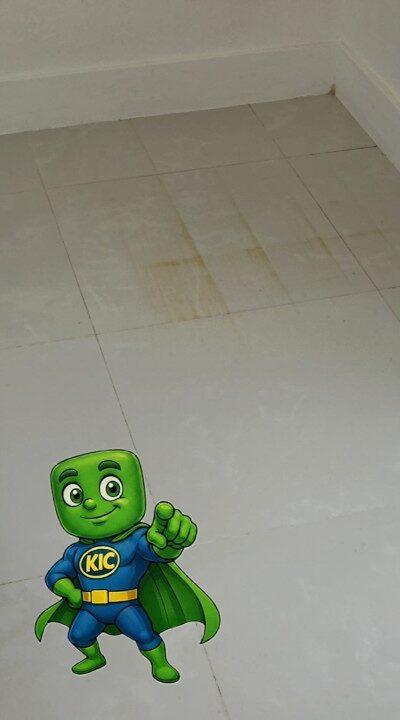
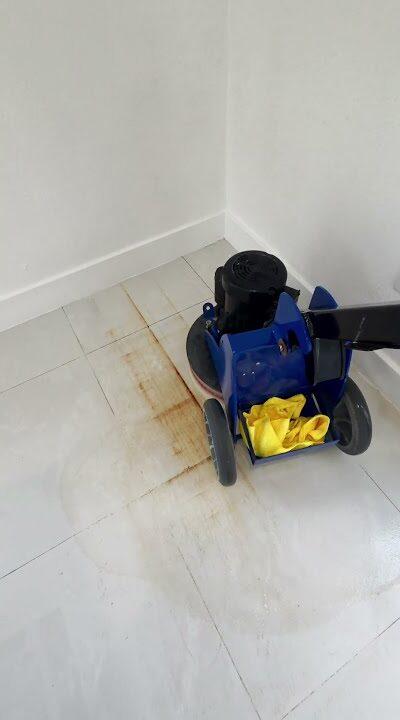
In the kitchen there was a rust stain on the tile next to the refrigerator. There were also two screened balconies, tiled in the same ceramic, and both needed the work. One just looks worse than the other on camera because of the light.

STEP 2 OF 3

What We Did

Franco and Javi cleaned the tile and grout along the traffic paths in both units with our low-moisture method: chemistry first, then controlled extraction. No high pressure and no steam, so the grout lines are not flooded with water.

They treated the rust stain by the refrigerator, cleaned both screened balconies, and set air movers on the floors to help them dry.

STEP 3 OF 3

How We Worked Around the Rental Schedule

We had a one-day window before both units were occupied again, and we finished inside it. We focused on the high-traffic areas, and both clients were fine leaving the furniture where it was, so no beds or furniture had to be moved and each unit stayed set up for the next stay.

That is the kind of job we are set up for in the Keys: get in, clean the tile and grout that takes the foot traffic, and get out of the way before the next arrival.

More From This Job
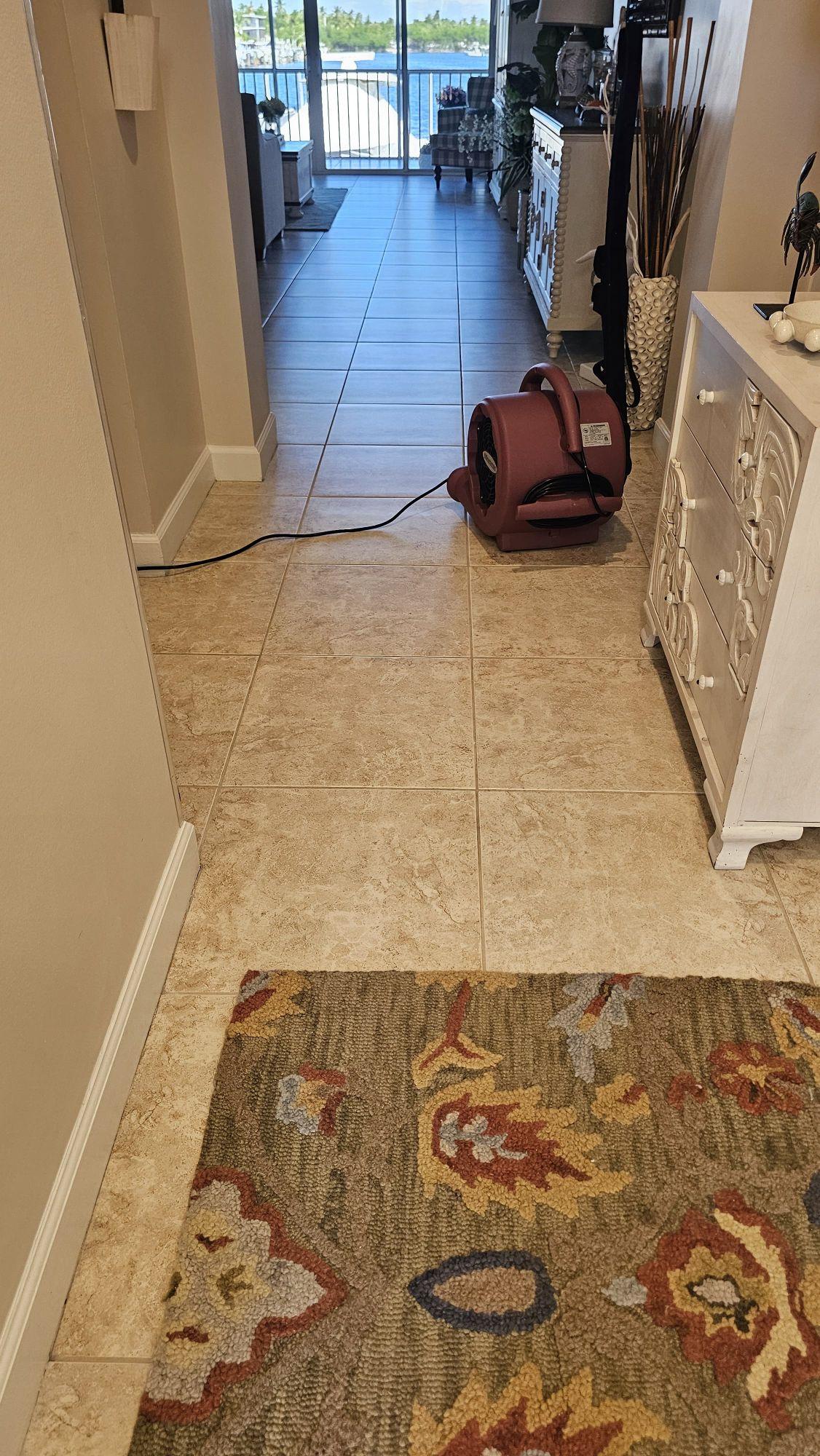
Hallway ceramic tile in an Islamorada condo, cleaned along the traffic path with an air mover drying the floor
TRAFFIC PATH
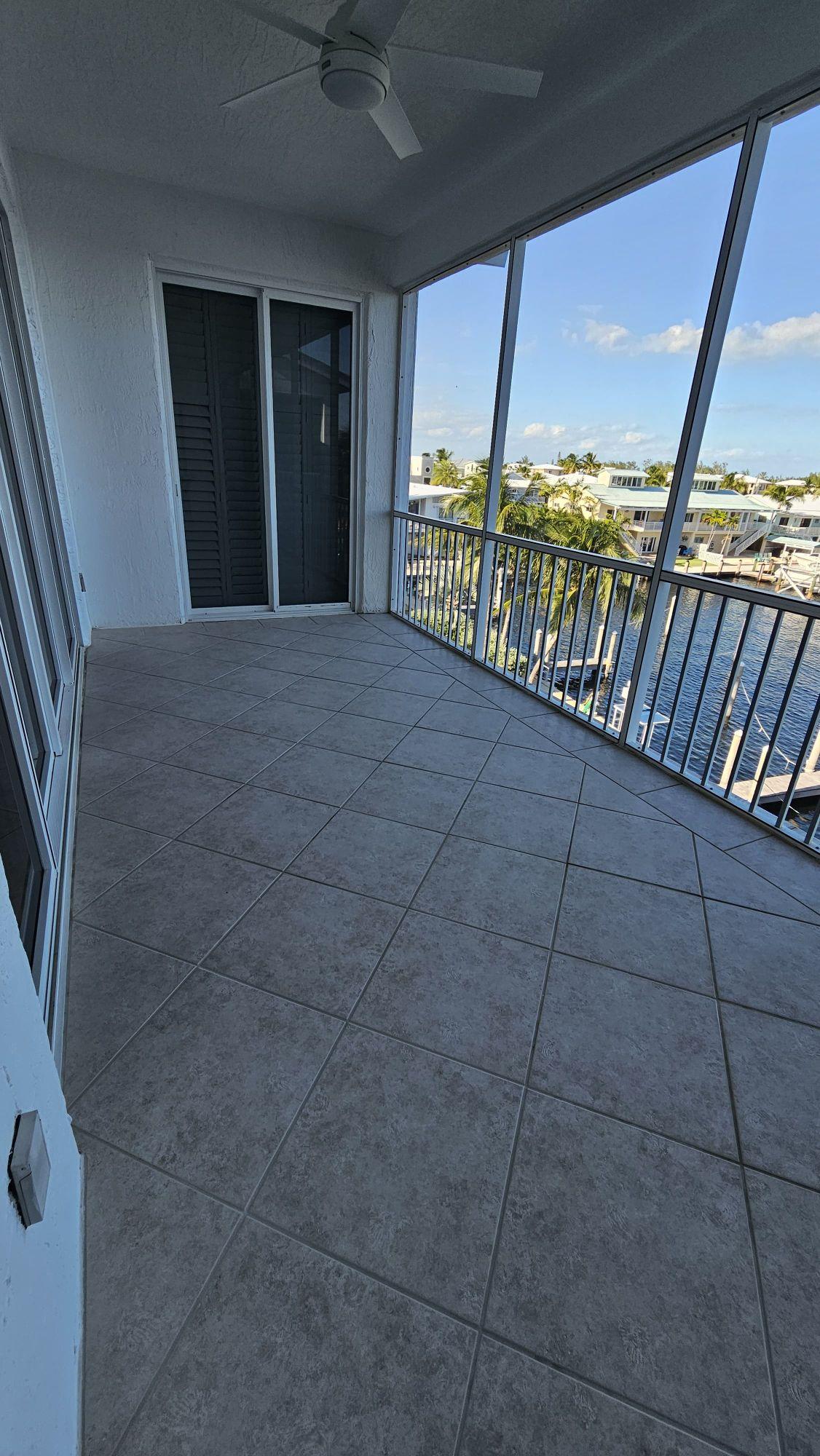
Diagonal ceramic tile on a screened condo balcony in Islamorada during tile and grout cleaning
BALCONY
Screened balcony ceramic tile with a water view in Islamorada, Florida Keys, after cleaning
WATER VIEW

Who We Clean For in the Keys

Airbnb and vacation rental hosts

Tile and grout cleaning scheduled between bookings, like this Islamorada job.

Property managers

More than one unit in the same building, handled in one visit.

Snowbirds

Floors cleaned before you come down for the season, or after you head back north.

Full-time locals

Kitchens, hallways, balconies and lanais, from Key Largo down through the Keys.

Tile Cleaning in the Keys: Questions People Ask Us

Do you clean tile and grout in Islamorada and the rest of the Florida Keys?

Yes. We work across Miami-Dade and the Florida Keys. This job was two condo units in one Islamorada building, done in one visit.

Can you clean a vacation rental between guests?

Yes. On this job we had a one-day window before both units were occupied again, and we finished inside it. Tell us your check-in and check-out times when you book.

Do you have to move the furniture?

Not always. On this job we cleaned the high-traffic areas, and both clients were fine leaving the furniture in place, so no beds or furniture were moved. If you want full rooms done, we will talk through it at the assessment.

Can you treat rust stains on ceramic tile?

Yes. We treated a rust stain next to the refrigerator on this job. How much comes out depends on the tile and how long the metal sat there, and we tell you what is realistic before we start.

How do you clean ceramic tile and grout?

Low-moisture: chemistry plus controlled extraction. We do not use high pressure or steam on tile and grout.

What does it cost?

Every job starts with a $250 assessment, and that $250 is credited in full toward your service.

Tile and Grout Cleaning in Islamorada or Anywhere in the Keys?

Text a photo of your floor to 305-741-9729 and tell us your dates. Every job begins with a $250 assessment, credited in full toward your service.

More work in the Keys: grout haze removal in Key Largo, grout haze removal in Tavernier and travertine cleaning and sealing in the Florida Keys. Dealing with rust? Read our rust stain removal case study.

Veteran-Owned | 25+ Years | 185+ Five-Star Reviews

Saltillo Tile Cleaning in Pinecrest

Saltillo Tile Cleaning in Pinecrest

Case Study | Pinecrest

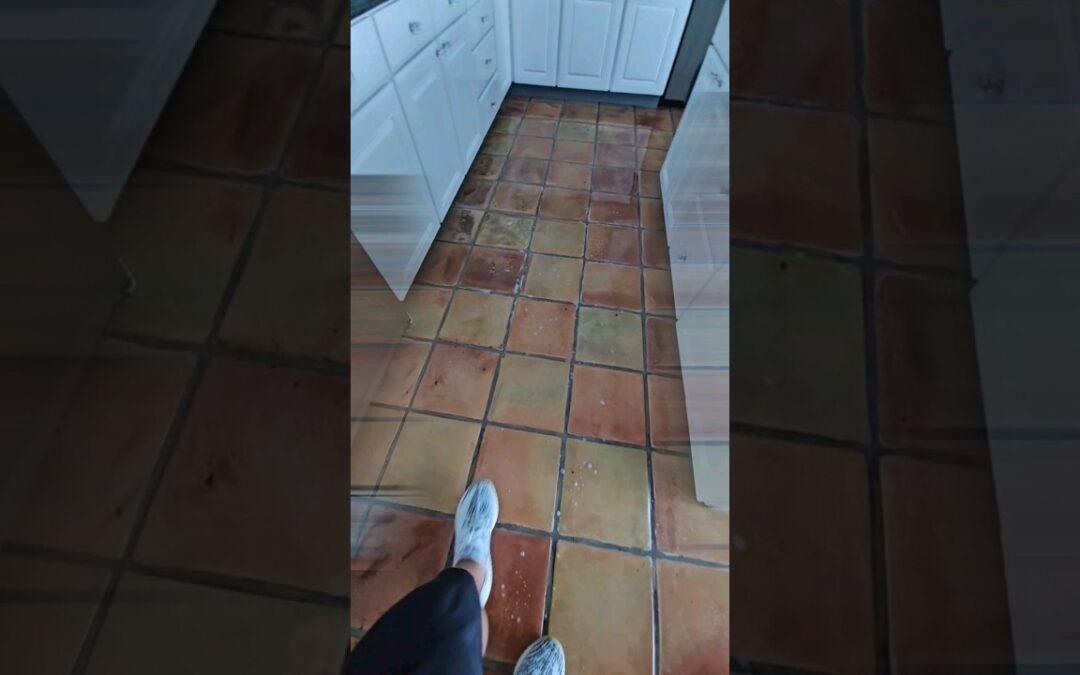
Saltillo tile cleaning in Pinecrest, not a full restoration, was what this owner asked for. The aged Mexican Saltillo kitchen floor carried buildup, embedded dirt and discoloration, and there was a budget in mind. This job was about getting the most out of the clay while respecting that budget.

Aged Saltillo tile kitchen floor in a Pinecrest home
THE FLOOR

What was on the clay

Buildup on the surface

Embedded dirt

Discoloration

A budget to respect

The Job at a Glance

4
hours, start to finish
1
on the job, Miguel himself
0
harsh acids on the clay
Clean
not a full strip, within budget

Pinecrest | Mexican Saltillo | Clay-safe, low moisture

STEP 1 OF 3

What We Found

Saltillo is handmade clay, and this kitchen floor had aged the way Saltillo does: buildup on top, dirt worked down into the surface, and discoloration across the tiles.

Saltillo needs a very specific approach. The wrong chemicals or too much pressure can damage the clay, so before anything touches the floor, the method has to fit the material.

Watch the job | 17 seconds

STEP 2 OF 3

What We Did

Miguel handled this one himself, in about 4 hours.

1Clay-safe chemistry. No harsh acids and no shortcuts on handmade clay.
2Low-moisture deep clean. The buildup, embedded dirt and discoloration were worked out of the surface without flooding the clay.
3Ready for sealing. A clean floor is a surface that can take a proper sealer later, when the owner wants one.

STEP 3 OF 3

Cleaning or Full Restoration?

Not every Saltillo floor needs a full strip. This owner wanted the floor clean and wanted to stay within a budget, so that is the job we did. A full Saltillo restoration is a different, longer process, and we tell you which one your floor actually needs at the assessment.

Not sure it is Saltillo at all? Read terracotta vs. Saltillo. They are not the same tile.

The right job for the floor, and for the budget.

Saltillo: Questions People Ask Us

Can Saltillo be cleaned without a full restoration?

Yes. This Pinecrest kitchen got a deep clean, not a full strip, because that is what the owner wanted and what fit the budget.

Why not use acid or pressure on Saltillo?

Saltillo is handmade clay. Incorrect chemicals or pressure can damage it, so we use clay-safe, low-moisture methods with no harsh acids.

Does Saltillo need sealing after cleaning?

When needed, yes. A clean floor is a surface that can take a proper sealer, and we will tell you whether yours needs one.

Saltillo Floor in Pinecrest?

Text a photo of the floor to 305-741-9729 and we will tell you whether it needs a clean or a full restoration. Every job begins with a $250 assessment, credited in full toward your service.

See our Saltillo restoration in Miami, more on tile and grout cleaning in Pinecrest, or the grout color and pool deck case studies.

Veteran-Owned | 25+ Years | 185+ Five-Star Reviews

Pool Deck Grout Haze and Rust Removal in Pinecrest

Pool Deck Grout Haze and Rust Removal in Pinecrest

Case Study | Pinecrest

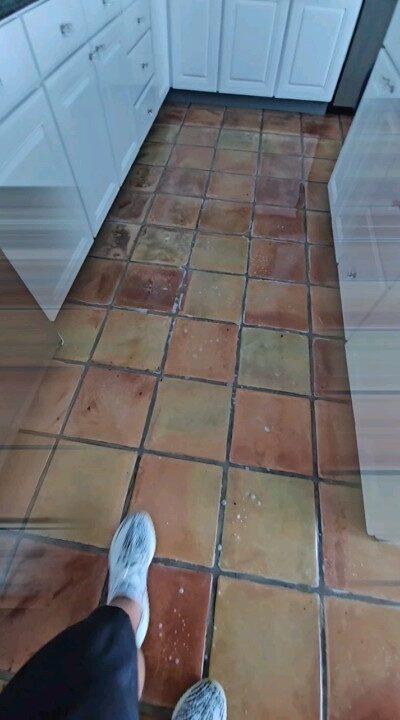
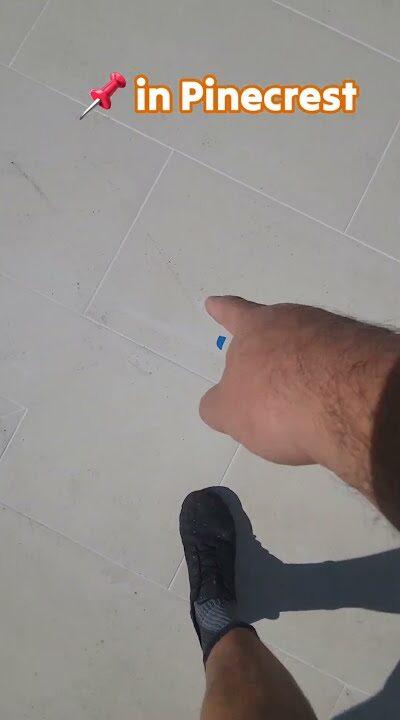
Pool deck grout haze and rust removal in Pinecrest, on one deck with two problems: cloudy haze left behind after installation, and rust from irrigation overspray and outdoor metal furniture. The pool contractor on the project called us in, the way they do whenever they run into a surface problem like this.

Pointing out grout haze and rust on a pool deck in Pinecrest
ON SITE

What was on the deck

Grout haze from installation

Rust from irrigation overspray

Rust from metal furniture

No protection against sun, chlorine and moisture

The Job at a Glance

6
hours, start to finish
2
on the crew, Miguel and Franco
2
problems, two different chemistries
Pro
referral: the pool contractor called us

Pinecrest | Outdoor pool deck | Cleaned and sealed

STEP 1 OF 3

What We Found

Problem 1: grout haze. Cloudy residue left behind after installation, sitting on the face of the tile and hiding its true color and texture.
Problem 2: rust. Irrigation overspray and outdoor metal furniture had caused oxidation on the deck.

They can be treated in the same visit, but they need different chemistry. Each one gets its own process rather than a one-size-fits-all treatment.

Watch the job | 1.5 minutes

STEP 2 OF 3

What We Did

Miguel and Franco did this deck in about 6 hours.

1Haze. The installation residue was removed to bring back the tile's true color and texture. More on grout haze removal in Pinecrest.
2Rust. The oxidation was neutralized and removed without damaging the tile.
3Clean. A deep pool deck cleaning with mechanical agitation and controlled chemistry made for outdoor surfaces.
4Seal. An outdoor sealer for moisture, UV, chlorine and mold, which also helps slow the rust from coming back. See our sealing in Miami.

STEP 3 OF 3

Why Rust Keeps Coming Back on Pool Decks

Usually it is irrigation overspray or metal furniture left in place, which is exactly what this deck had. Sealing helps slow it down, but the source often needs addressing too. The sealer is not the whole answer on its own.

Outdoor sealing is also its own thing. A pool deck faces UV, chlorine and constant moisture that indoor tile never sees, so it needs a sealer made for that.

Treat the haze and the rust separately. Then protect the deck.

Pool Contractors and Builders

This job came from a pool contractor who calls us whenever they run into a surface problem on a deck. If you build or service pools in Miami-Dade and you hit haze, rust or staining after an install, call or text us at 305-741-9729.

Pool Decks: Questions People Ask Us

Can grout haze and rust stains be treated in the same visit?

Yes, though they need different chemistry. We address each issue with the correct process rather than a one-size-fits-all treatment.

Why does rust keep coming back on pool decks?

Usually irrigation overspray or metal furniture left in place. Sealing helps slow recurrence, but the source often needs addressing too.

Is pool deck sealing different from indoor tile sealing?

Yes. Outdoor sealers need to handle UV, chlorine and constant moisture exposure that indoor tile never faces.

Haze or Rust on Your Pool Deck in Pinecrest?

Text a photo of the deck to 305-741-9729. Every job begins with a $250 assessment, credited in full toward your service.

See our grout haze removal in Pinecrest, more on tile and grout cleaning in Pinecrest, or the grout color and indoor rust stain case studies.

Veteran-Owned | 25+ Years | 185+ Five-Star Reviews

Grout Color Sealing in Pinecrest

Grout Color Sealing in Pinecrest

Case Study | Pinecrest

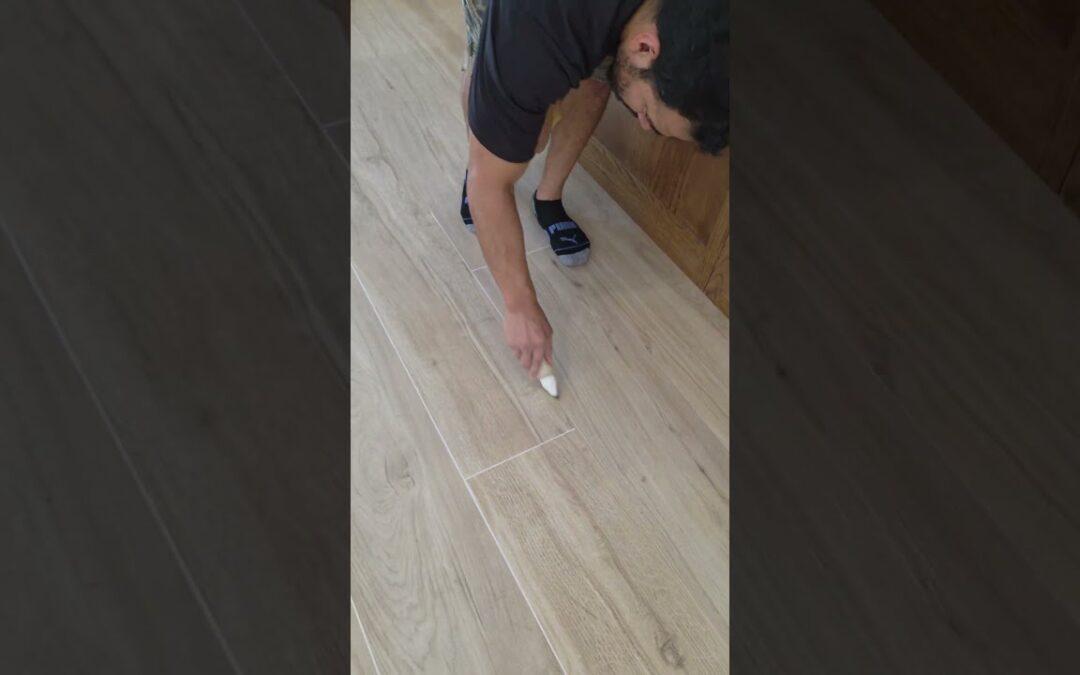
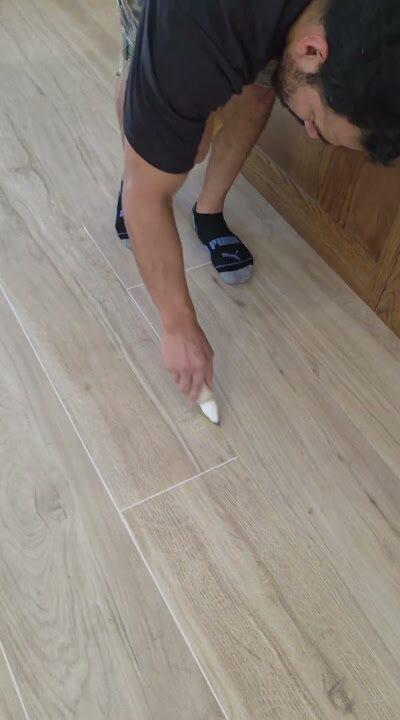
Grout color sealing in Pinecrest was the call for new owners who walked into stark white grout against wood-look tile. It was not their style at all. Instead of ripping out the floor, we color-matched the grout directly into the tile. No demo, no new flooring.

Crew applying grout color sealer to white grout on wood-look tile in a Pinecrest home
THE WORK
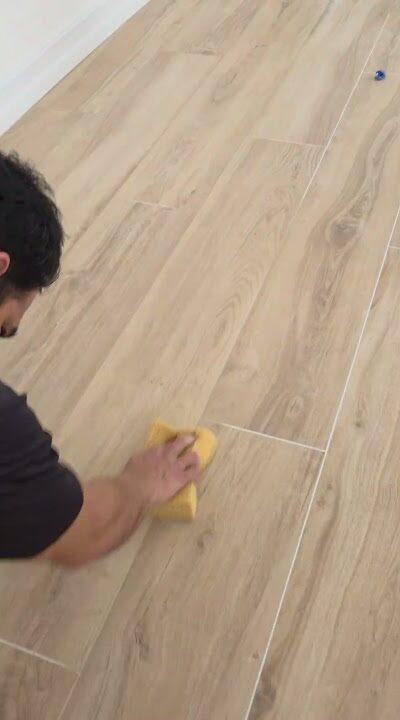
Wiping down wood-look tile during grout color sealing in Pinecrest
DETAIL

The Job at a Glance

5
days on the job
4
on the crew: Miguel, Javi, Franco and Gian
0
tiles replaced, no demo
Empty
home, this job needs a vacant space

Pinecrest | Wood-look tile | Grout color sealing

STEP 1 OF 3

What We Found

The tile itself was fine. The problem was the look: bright white grout lines cutting across a wood-look floor, so every joint stood out. The new owners did not want to live with it, and they did not want to tear out a floor that was otherwise in good shape.

The grout color can be changed without replacing the tile. Grout color sealing recolors the existing grout lines to match or contrast with the tile, without touching the tile itself.

Watch the job | 53 seconds

STEP 2 OF 3

What We Did

Miguel, Javi, Franco and Gian worked this floor over 5 days.

1Clean. The grout was deep cleaned before anything was applied. Otherwise you seal the soil in.
2Match. The grout color was matched to the wood-look tile, so the joints disappear into the floor instead of cutting across it.
3Color seal. A pigmented sealer was bonded into the grout lines, without touching the tile. See our grout refresh and color sealing.

STEP 3 OF 3

Color Sealing Is Not Painting the Grout

Paint sits on top of the grout and wears off. Color sealing bonds a pigmented sealer into the grout itself. Because the grout is recolored, you can go either direction: take stark white down to something that disappears into the tile, or go the other way for contrast.

It costs a fraction of what a floor replacement does, and the tile you already paid for stays where it is.

Change the grout. Keep the floor.

Already Living There?

This job needs an empty space, so it is done on vacant homes, new listings, or between move-out and move-in. If you are still living there, a short-term portable storage rental clears the room enough to get it done.

Grout Color Sealing: Questions People Ask Us

Can grout color be changed without replacing the tile?

Yes. Grout color sealing recolors the existing grout lines to match or contrast with the tile, without touching the tile itself.

Is grout color sealing the same as painting the grout?

No. Paint sits on top and wears off. Color sealing bonds a pigmented sealer into the grout itself.

Can you go darker and lighter, or only darker?

Both. The grout is recolored, so you can take stark white down to something that disappears into the tile, or go the other direction for contrast.

Does the tile have to be cleaned first?

Yes. The grout is deep cleaned before anything is applied, otherwise you seal the soil in.

Grout You Cannot Stand in Pinecrest?

Text a photo of the floor to 305-741-9729. Every job begins with a $250 assessment, credited in full toward your service.

See our grout refresh and color sealing in Miami, more on tile and grout cleaning in Pinecrest, or the pool deck and Saltillo case studies.

Veteran-Owned | 25+ Years | 185+ Five-Star Reviews

Grout Haze Removal and Tile Cleaning in Miami Lakes

Grout Haze Removal and Tile Cleaning in Miami Lakes

Case Study | Miami Lakes

Grout haze removal and tile cleaning in Miami Lakes were two separate jobs on one floor, in a newly purchased home that sat empty before move-in. The new owner saw a dull, patchy floor across the large-format concrete-look porcelain and assumed it was dirty or worn out. The two problems do not have the same fix.

Cleaning machine on large-format porcelain tile in an empty Miami Lakes home
THE WORK
Crew working on porcelain tile near the patio doors in a Miami Lakes home
ON SITE

The Job at a Glance

5
hours, start to finish
2
on the crew, Miguel and Javi
2
problems on one floor: soil and haze
Empty
home, done before move-in

Miami Lakes | Large-format porcelain | Low moisture

STEP 1 OF 3

What We Found

Problem 1: soil in the grout. Embedded soil down in the grout lines. That is a cleaning problem, and controlled extraction handles it.
Problem 2: haze on the tile. A thin cement film left behind when installation residue was never fully washed off. It bonds to the surface. That is a chemistry problem, and no amount of cleaning removes it.

The previous owner most likely spent years assuming the cloudiness was simply how the floor looked. Matte porcelain like this holds haze worse than polished, because the surface texture gives the film something to grip.

Watch the job | 31 seconds

STEP 2 OF 3

What We Did

Miguel and Javi did this one together, in about 5 hours. Low moisture throughout: chemistry plus controlled extraction, no high pressure, no steam.

1Clean. Tile and grout cleaning first, with controlled extraction pulling the soil out of the grout lines.
2Identify. With the floor clean, the haze could finally be seen for what it was.
3Remove the haze. Chemistry matched to the haze on this porcelain. See our grout haze removal in Miami.

STEP 3 OF 3

Why the Order Matters

Sequence is the part that gets missed. You clean first, because you cannot judge how much haze is present while soil is still sitting on top of it. Only once the floor is clean can the haze be identified and matched to the right chemistry.

Reverse that order and you are guessing. Guessing on the face of a tile is how floors get damaged.

Clean first. Then you can see the haze.

Just Bought a Home?

If you are not sure what you inherited, deal with it while the rooms are still empty. It goes faster, it costs less, and you will never have better access to the floor than before the furniture arrives.

Grout Haze: Questions People Ask Us

What is grout haze?

A thin cement film left on the face of the tile when installation residue was never fully washed off. It bonds to the surface, so it is not dirt.

Can regular cleaning remove grout haze?

No. Haze is a chemistry problem. Cleaning handles the soil in the grout, but the haze needs chemistry matched to it.

Why does my porcelain floor look dull and patchy?

It can be soil in the grout, haze on the tile, or both at once, like this Miami Lakes floor. We clean first so we can see which one you have.

Does matte porcelain hold haze more than polished?

Yes. The surface texture of matte porcelain gives the film something to grip.

Cloudy or Patchy Tile in Miami Lakes?

Text a photo of the floor to 305-741-9729 and we will tell you whether it is soil, haze or both. Every job begins with a $250 assessment, credited in full toward your service.

See our tile and grout cleaning in Miami and grout haze removal in Miami, or read the rust stain, acrylic sealer and terrazzo case studies.

Veteran-Owned | 25+ Years | 185+ Five-Star Reviews

Terrazzo Floor Restoration in Cutler Bay

Terrazzo Floor Restoration in Cutler Bay

Case Study | Cutler Bay

Terrazzo floor restoration in Cutler Bay took 5 days on this home, where deep scratches, worn spots and years of dullness were past anything regular cleaning could fix. It needed real correction, not a mop and a coat of wax. Here is how the floor came back, and why there is no acrylic coating on it.

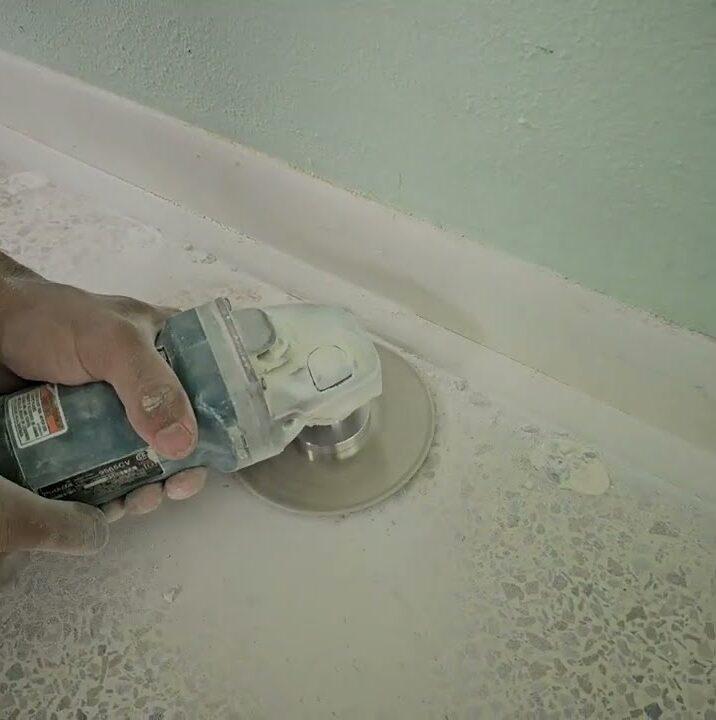
Grinding the edge of a terrazzo floor along the baseboard in Cutler Bay
THE WORK
Terrazzo floor in a Cutler Bay home after honing, polishing and sealing
AFTER

The Job at a Glance

5
days on the job
2
on the crew, Miguel and José
4
stages: hone, repair, polish, seal
0
acrylic coatings or wax

Cutler Bay | Residential terrazzo | Penetrating sealer

STEP 1 OF 3

What We Found

The floor showed visible surface wear, deep scratches, and years of dullness. That kind of damage lives in the surface of the terrazzo itself, so no amount of mopping or cleaning product was going to bring it back.

There were also cracks and chips that had to be repaired before any polishing, or they would have stayed in the finished floor.

Watch the job | 3 minutes

STEP 2 OF 3

What We Did

Miguel and José worked this floor over 5 days, in four stages.

1Hone. Diamond honing took off the damaged surface layer and exposed clean aggregate.
2Repair. Cracks and chips were patched with color-matched matrix.
3Polish. Progressive polishing, step by step, so the shine comes from the stone itself.
4Seal. A breathable penetrating sealer, with no film-forming coating on top.
Slurry on a terrazzo floor during diamond honing in Cutler Bay
HONING

STEP 3 OF 3

Why There Is No Acrylic on This Floor

We did not put wax or acrylic on this floor. No acrylic coatings, no shortcuts, no temporary treatments. The floor was corrected mechanically, then sealed with a breathable penetrating sealer that goes into the stone instead of sitting on top of it.

If you want to see what a failing acrylic looks like on a floor, read our acrylic sealer case study, also in Cutler Bay.

The shine comes from the stone, not from a coating on top of it.

What the Client Said

★★★★★

"Very happy with everything."

ResponsivenessPunctualityQualityProfessionalismValue

Joel R. | Google review

Terrazzo Restoration: Questions People Ask Us

Can a scratched terrazzo floor be fixed without replacing it?

On this Cutler Bay floor, yes. Diamond honing took off the damaged surface layer, and progressive polishing brought the finish back from the stone itself.

Can you repair cracks and chips in terrazzo?

Yes. We patch them with color-matched matrix before polishing, so the repair is part of the finished floor.

Why not just wax or coat the terrazzo?

Wax and acrylic sit on top of the floor. We correct the stone mechanically and finish with a breathable penetrating sealer, with no film-forming coating on top.

How long does a terrazzo restoration take?

This one took 5 days with a two-person crew. Every floor is different, so we tell you at the assessment.

Dull or Scratched Terrazzo in Cutler Bay?

Text a photo of the floor to 305-741-9729. Every terrazzo job begins with a $250 assessment, credited in full toward your service.

See our terrazzo restoration in Miami, more jobs on our tile and grout cleaning in Cutler Bay page, or the rust stain case study.

Veteran-Owned | 25+ Years | 185+ Five-Star Reviews

Acrylic Sealer Removal and Ceramic Coating in Cutler Bay

Acrylic Sealer Removal and Ceramic Coating in Cutler Bay

Case Study | Cutler Bay

Acrylic sealer removal came first on this Cutler Bay porcelain floor, because the coating someone had put down was failing and ripping apart. The tile came from Spain, so the owner called it Spanish tile, but it is porcelain. Here is why we stripped it instead of cleaning over it, and why porcelain gets a coating at all.

Failing acrylic sealer on a porcelain tile floor in Cutler Bay, before stripping
BEFORE

What the sealer was doing

Hazing over

Building up along the edges

Wearing through in the walking paths

Ripping apart

The Job at a Glance

6
hours, start to finish
2
on the crew, Miguel and Franco
Bare
tile, acrylic stripped before anything else
5★
Google review from the owner

Cutler Bay | Porcelain tile made in Spain | Ceramic coating

STEP 1 OF 3

What We Found

The floor had the wrong product on it. An acrylic coating had been applied over the porcelain, and in this climate it was not holding. It had hazed over, built up along the edges and corners, worn through where people walk, and in places it was ripping apart.

A floor in that condition cannot be cleaned back. Scrubbing over a failing acrylic just seals the problem in underneath it. The coating had to come off first.

Watch the job | 1 minute

STEP 2 OF 3

What We Did

Miguel and Franco did this one together, and it took about 6 hours from start to finish.

1Strip. We took the acrylic off, down to bare tile.
2Clean. We deep cleaned the tile and grout, then let the floor dry.
3Coat. We applied a ceramic floor coating over the clean, dry porcelain.

STEP 3 OF 3

Why Porcelain Gets a Coating

Porcelain is dense. It cannot be honed or polished the way natural stone can, so a coating is how you change its finish. The ceramic coating we use is one part and silane based, and it is rated for tile and grout, concrete, masonry, epoxy, natural stone, VCT, LVT and LVP.

Stone is a different story. On marble, travertine, limestone and Saltillo in South Florida, we refinish the stone and use a penetrating sealer, so the stone can still release moisture.

The right product for the surface matters more than how hard you scrub.

What the Client Said

★★★★★

George P. | 5-star Google review

Failing Sealers: Questions People Ask Us

How do I know if my floor has a coating on it?

It usually shows as an uneven sheen, cloudiness, or buildup along the edges and corners. A shine that looks patchy is often a coating rather than the tile itself.

Can you clean over an old acrylic sealer?

No. Cleaning on top of a failing coating traps the problem underneath it. The coating has to be stripped first.

Why do acrylic sealers fail in South Florida?

Acrylic is a common choice, and it does not hold up well to South Florida humidity and foot traffic.

Hazy or Peeling Sealer on Your Floor in Cutler Bay?

Text a photo of the floor to 305-741-9729 and we will tell you whether it is the tile or a coating on top of it. Every job begins with a $250 assessment, credited in full toward your service.

More real jobs on our tile and grout cleaning in Cutler Bay page, or read our rust stain and terrazzo case studies.

Veteran-Owned | 25+ Years | 185+ Five-Star Reviews

Rust Stain Removal on Tile in Cutler Bay

Rust Stain Removal on Tile in Cutler Bay

Case Study | Cutler Bay

Rust stain removal on tile in Cutler Bay, after metal dog crates sat in the same spot on this floor for close to two years. The rust they left behind had gone deep into the tile. Here is how the job went, and why we told the owner to expect about 90 percent, not 100.

Rust stains from metal dog crates on a Cutler Bay tile floor, before the work
BEFORE
Machine working on rust stains on a Cutler Bay tile floor
THE WORK

The Job at a Glance

2
years, or close to it, under metal dog crates
30-45
minutes of work on the stains
90%
about that much of the staining removed
0
tiles replaced

Cutler Bay | Tile floor | Work by Miguel

STEP 1 OF 3

What We Found

This was not surface dirt, and it was not ordinary discoloration. Metal that sits in one place for months oxidizes, and the rust bonds into the surface of the tile. After close to two years under the crates, the staining had worked its way into the floor itself.

So the real question was not just how to clean it. It was how much of it the tile would give back.

Watch the job | 28 seconds

STEP 2 OF 3

What We Did

Miguel handled this one himself. He worked the stained areas with a rust and oxidation treatment, and the work on the stains took about 30 to 45 minutes. No tiles were pulled up and nothing was replaced.

STEP 3 OF 3

What Was Realistic

We removed roughly 90 percent of the staining. After years of rust, some shadowing can stay, because long exposure can change certain tile surfaces for good.

We give you the real number before we start, not after.

What the Client Said

★★★★★

"Miguel is fantastic. He did a great job cleaning my floor and went above and beyond. He is honest and that is rare to find, especially in Miami. Will use him again and will recommend him to anyone who needs this type of service."

Rebecca E. | Google review

Rust Stains on Tile: Questions People Ask Us

Can rust stains come out 100 percent after sitting for years?

Sometimes, but not always. Long-term rust exposure can change some tile surfaces for good, so we tell you what to expect before we start rather than overpromising.

What causes rust stains like this on tile?

Metal left in one place for a long time. Dog crates, furniture legs and appliances can oxidize and bond rust into the tile surface over months or years.

Do you have to replace the tile to fix rust damage?

Usually not. On this Cutler Bay floor we removed roughly 90 percent of the staining without replacing a single tile.

Rust or Stains on Your Tile in Cutler Bay?

Text a photo of the stain to 305-741-9729 and we will tell you what is realistic before we start. Every job begins with a $250 assessment, credited in full toward your service.

More real jobs on our tile and grout cleaning in Cutler Bay page, or read our acrylic sealer and terrazzo case studies.

Veteran-Owned | 25+ Years | 185+ Five-Star Reviews

Honed vs. Polished Marble in Miami: Which Finish Fits Each Room

Honed vs. Polished Marble in Miami: Which Finish Fits Each Room

Honed vs polished marble is one of the first questions on a marble job, and it comes down to this: do you want it to shine, or do you want it soft? Polished and honed are two finishes on the same stone, and in Miami the right one depends on the room, the water, and the sun. This guide covers which finish fits pool decks, bathrooms and kitchens, what to do about etching, and what sealing can and cannot do.

By Miguel Cedeno, owner of Keep It Clean Tile and Grout. Veteran-owned, 25+ years restoring tile and stone in Miami-Dade County and the Florida Keys.

Short answer: A polished finish has a glossy, mirror-like shine. A honed finish has a smooth matte or satin look that does not reflect light. In Miami, go honed anywhere the stone gets wet underfoot, like pool decks and bathroom floors. In kitchens it comes down to your habits. And whichever you choose, sealing stops stains, not etching.

Honed vs Polished Marble: What Is the Difference?

It is the same marble either way. What changes is how far the surface is taken. Polished stone is buffed until the surface pores are tightly compressed and practically closed, which is what gives it that mirror shine. Honed stone stops earlier, so it keeps a smooth, flat, matte or satin look with its pores left open.

That one difference drives almost everything else: grip, glare, how well the stone hides etching, and how much sealer it needs. You can see both finishes in our marble polishing work in Coral Gables.

At a glanceHonedPolished
LookSmooth matte or satin, no reflectionGlossy, mirror-like shine
Grip when wetGood gripSlippery, like ice
Etching and scratchesHides them betterShows dull spots and scratches
Food stains like wine or oilAbsorbs fasterResists liquids better
Glare from big windowsNo glareCan glare
Pool decks and outdoorsRecommended, and light colors stay coolerNot recommended, slick when wet
Surface poresLeft openTightly closed
SealingNeeds sealing more oftenNeeds sealing less often
Honed vs polished marble: honed marble at a church we worked on, a matte finish with no reflection
Honed: matte, no reflection.
Polished marble at a church we worked on, a glossy finish that reflects the light
Polished: glossy, reflects the light.

Both finishes on marble at a church we worked on.

Which Finish for Each Room in Miami

Pool decks: always honed. Or a textured finish like tumbled or brushed. Polished stone turns into ice when it gets wet from rain or pool splashes. Light-colored honed stone also stays much cooler under the Miami sun.

Bathrooms: honed for floors, polished for walls. Honed floors give you grip so you do not slip stepping out of the shower, and they hide the water spots and condensation that come with Miami humidity. Polished looks great on walls, where nobody walks.

Kitchens: it is a tie, so choose based on your habits. Choose honed if you hate seeing scratches and dull spots from acidic foods like citrus or vinegar. It also cuts the glare from big windows. Choose polished if you worry more about food stains like wine or oil, because polished stone resists liquids better. For marble counters and vanities, see our countertop and vanity restoration page.

A Real Job: Polished Marble Taken to Honed in Coral Gables

Most people call us to bring the shine back. This Coral Gables homeowner wanted it gone, on every counter in the house. There was nothing wrong with the stone. She chose the polished finish years ago, lived with it, and decided she was done with it.

We used diamond abrasives on a variable speed polisher to work the polished tops down to a flat, even matte. Nothing was stripped and nothing was laid on top. Polished and honed are the same stone worked to a different grit, which is why the finish can go in either direction. A penetrating sealer went down at the end. Taste is reversible on natural stone, so you are not stuck with a finish you picked years ago.

Honed vs polished marble, before: polished marble countertop in Coral Gables with a glossy finish

Before: polished, glossy, reflecting the room.

Same marble countertop in Coral Gables after honing to a flat matte finish with no reflection

After: honed to a flat, even matte.

Watch the polished counter go matte, then see the full job on our countertop and vanity restoration in Coral Gables page.

Not sure which finish your marble has, or should have? We look at the stone in person, tell you whether it needs polishing, honing, or both, and walk you through it before any work begins. The $250 assessment is credited in full toward your service. Call or text 305-741-9729.

Etching: Do You Have to Switch to Honed?

No. Etching does not mean you have to change your marble to a matte look. Think of it like a scratch on a car.

Light etching is a minor smudge. It is a faint, cloudy mark, and the stone still feels perfectly smooth. Polishing alone fixes it. We buff it out with stone polishing powder and the shine comes right back.

Deep etching is a deep scratch. It is a rough, chalky or white spot you can feel with your fingernail. That spot has to be honed first, sanded flat, before it can be polished back to a shine.

The bottom line: if the etch mark feels smooth, it gets polished. If it feels rough, it gets honed and then polished. Our marble restoration in Miami page covers the full process. Travertine and limestone are calcium-based stones too, so they etch the same way. See travertine restoration in Miami and limestone restoration in Miami.

What Sealing Does, and What It Does Not

Sealing does not stop etching or scratching. A penetrating sealer is an invisible sponge, not a shield. It soaks into the stone to slow liquids like wine, oil and coffee from causing deep stains. It does nothing to protect the surface from acids like lime juice or vinegar, and it does nothing against scratches. Sealer stops stains, not chemical burns. Spill lemon juice on a sealed, polished marble counter and it will still leave a dull etch mark. The sealer only keeps that lemon juice from turning into a deep, permanent discoloration.

Honed stone needs more sealer than polished stone. Honed stone is thirsty and polished stone is full. With its pores left open, honed marble drinks up liquids and sealer faster, so it needs sealing more often. Polished marble resists liquids on its own because its surface is closed tight, so it needs sealing less often. How often either one needs it is always up to how the stone is used and treated, so there is no fixed schedule. We check it during the assessment. See our stone sealing in Miami page for more. If etching is your bigger worry, ask us about ceramic floor coating.

Frequently Asked Questions

What is the difference between honed and polished marble?

A polished finish has a glossy, mirror-like shine. A honed finish has a smooth matte or satin look that does not reflect light. It is the same stone either way. The difference is how far the surface is taken.

Is polished marble slippery?

When it gets wet, yes. Polished stone turns into ice from rain, pool splashes or a wet shower floor. That is why we recommend honed for pool decks and bathroom floors, and keep polished for walls and other surfaces nobody walks on.

Does etching mean my marble has to be changed to a honed finish?

No. If the etch mark still feels smooth, it is light etching and polishing alone brings the shine back. If you can feel a rough, chalky spot with your fingernail, it is deep etching. That spot has to be honed flat first, then polished back to a shine.

Does sealing marble stop etching?

No. A penetrating sealer is an invisible sponge, not a shield. It slows liquids like wine, oil and coffee from soaking in and staining. It does nothing to stop acids like lime juice or vinegar from etching the surface, and it does not stop scratches.

Does honed marble need more sealing than polished marble?

Yes. Honed stone is left with its pores open, so it absorbs liquids faster and needs sealing more often than polished stone, which is buffed until its surface pores are tightly closed. How often depends on how the stone is used and treated, so there is no fixed schedule. We check it during the assessment.

How much does marble honing or polishing cost in Miami?

A $250 assessment fee applies, paid via Zelle to confirm your appointment, credited in full toward your service. Final pricing depends on the square footage, the condition of the stone, and whether it needs polishing only or honing first.

Talk to Us About Your Marble

Keep It Clean Tile and Grout hones, polishes and seals marble and natural stone across Miami-Dade County and the Florida Keys, in homes and in commercial lobbies and businesses.

Veteran-Owned | 25+ Years | 185+ Five-Star Reviews
★★★★★ Read our reviews on Google

The $250 assessment is credited in full toward your service.

Call or text: 305-741-9729

Always Local. Always On Time. Always Honest.

Terracotta vs. Saltillo Tile: How Miami Homeowners Can Tell Them Apart

Terracotta vs. Saltillo Tile: How Miami Homeowners Can Tell Them Apart

Orange clay floors are all over Miami, from Coral Gables Mediterranean homes to Miami Beach condos and Keys houses, and most homeowners call every one of them saltillo. A lot of them are not, and terracotta vs saltillo is one of the first things we sort out on a clay floor. Knowing which one you have changes how often the floor needs care, and it changes what a restoration crew should plan before they ever start.

By Miguel Cedeno, owner of Keep It Clean Tile and Grout. Veteran-owned, 25+ years restoring tile and stone in Miami-Dade County and the Florida Keys.

Short answer: Terracotta is the broad category of clay tile. Saltillo is one specific kind of terracotta: handmade, sun-dried clay tile that comes only from the area around Saltillo, Mexico. Think of it like wine and Champagne. All Champagne is wine, but not all wine is Champagne. The everyday cleaning chemistry is the same for both, but saltillo is much more porous than machine-made terracotta, so it needs maintenance more often.

Terracotta vs Saltillo: How Do You Tell Them Apart?

Terracotta can be made anywhere in the world, in many styles, and it can be perfectly smooth and uniform. Saltillo is made in one place, the old-school way. Three things give it away.

  • The look. Machine-made terracotta is usually smooth, flat, and an even reddish brown. Saltillo is wild: wavy surfaces, bumpy edges, and blends of peach, yellow and red in the same floor.
  • The "flaws." Saltillo tiles are dried outside in the sun, so it is very common to find dog paw prints, bird tracks or leaf imprints baked right into the tile. Machine-made terracotta does not have these.
  • The fit. Machine-made terracotta tiles are all the same size. Saltillo tiles are handmade, so each one is a slightly different shape and size, which is why saltillo floors are laid with thick grout lines between them.
At a glanceMachine-made terracottaSaltillo
Where it is madeAnywhere in the worldOnly around Saltillo, Mexico
SurfaceSmooth and flatWavy, bumpy edges
ColorEven reddish brownBlends of peach, yellow and red
MarksNonePaw prints, bird tracks, leaf imprints
Tile sizeAll the sameSlightly different, handmade
Grout linesThinThick
PorosityLess porousMuch more porous
MaintenanceLess oftenMore often

What Stays the Same, and What Changes

Because saltillo is a specific type of terracotta, both are raw clay and both follow the same basic rules. The everyday cleaning chemistry is exactly the same.

The difference is porosity. Saltillo is much more porous than standard machine-made terracotta, so it takes in more of whatever lands on it and it needs maintenance more often. Treat a saltillo floor on a terracotta schedule and it falls behind. That is why we always look at a clay floor in person before we plan the work. Photos rarely tell the whole story.

Clay Floors and South Florida Humidity

What works on clay floors in South Florida only works in South Florida. Clay is raw and porous, and Miami humidity is always trying to move through it. When a floor gets buried under layers of wax or acrylic that were never stripped, that moisture gets trapped, and the old coating oxidizes into the yellow-brown haze people mistake for old tile. The clay underneath usually has not changed at all.

That is why the first step on a buried clay floor is usually chemistry to strip the old layers, and the last step is a finish that lets humidity escape instead of trapping it under the surface. On saltillo and terracotta alike, the goal is to protect the clay without burying it.

If your floor turns out to be saltillo, see our saltillo restoration in Miami page, or saltillo restoration in Coral Gables.

A Real Job: California Terracotta in Miami Beach

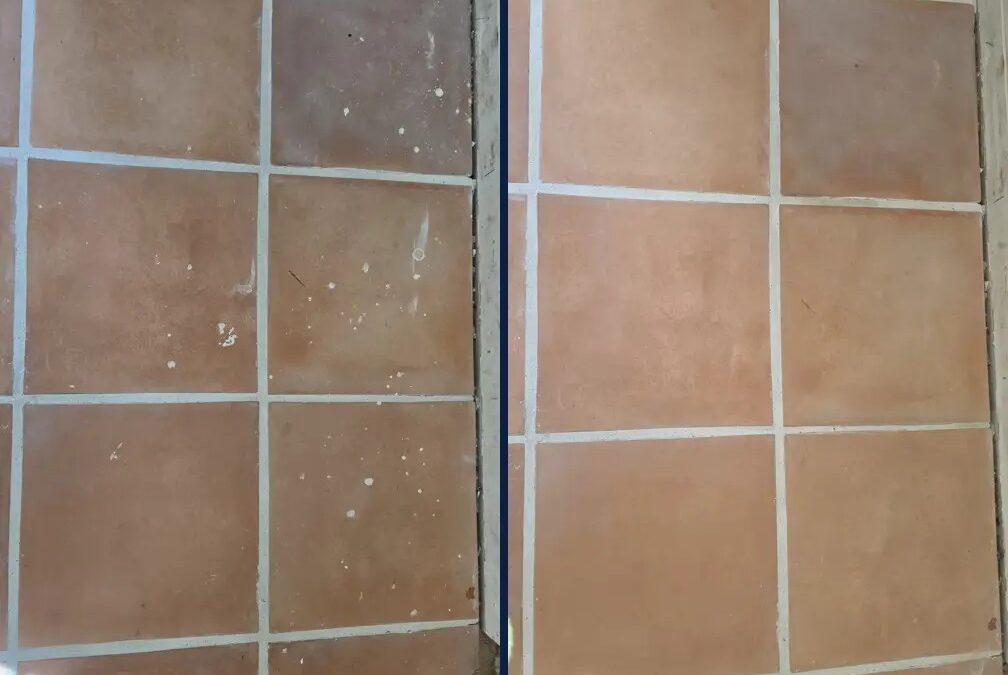
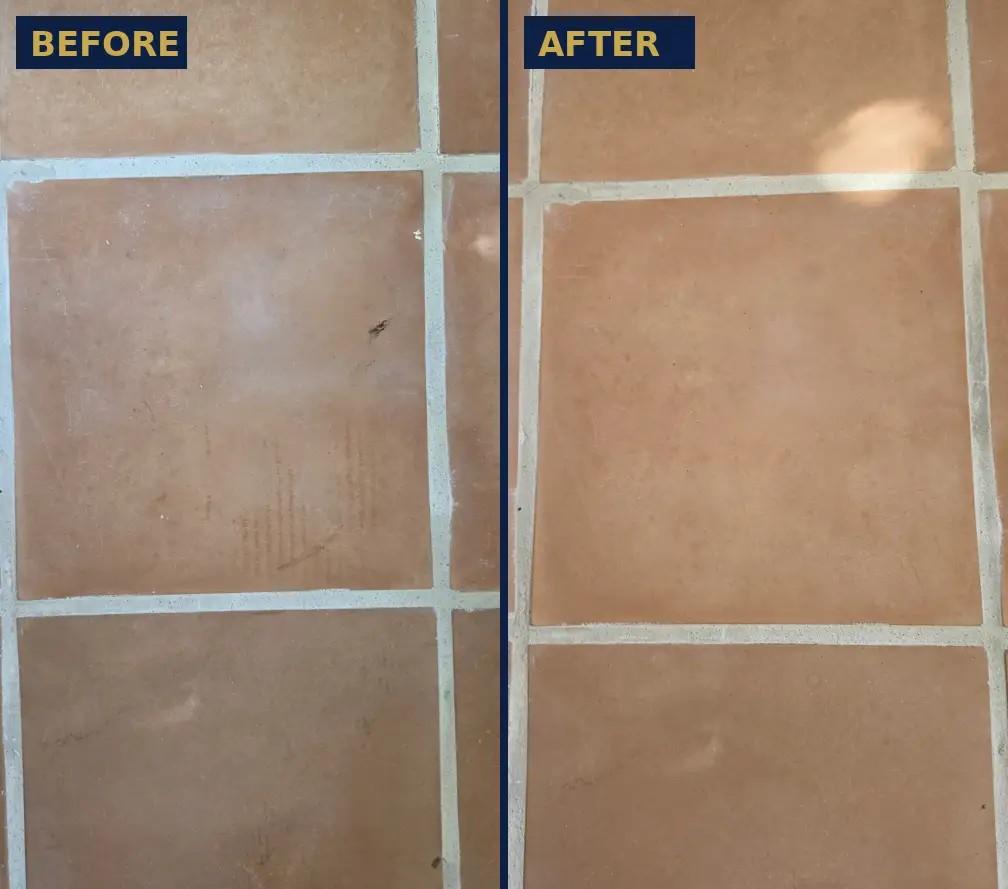
The floor in the before and after at the top of this page, in a Miami Beach home, looks like saltillo at a glance. It is not. It is 100% terracotta from California: uniform squares, sharp edges, even color, thin grout lines.

It came to us with rust streaks across several tiles, white paint splatter, and a white cement haze along the grout lines. The work was low-moisture from start to finish, chemistry plus controlled extraction, with no high pressure and no steam. We removed the rust, the paint and the haze, then finished with a transparent sealer so the clay keeps its natural look.

California terracotta tile in Miami Beach, before with rust streaks and haze, after cleaning and a transparent sealer

The haze part of this job is the same problem we correct on new tile installs every week. Our grout haze removal in Miami Beach page explains it, and so does our guide to telling grout haze from dirty grout.

Real Terracotta or a Concrete Look-Alike?

The terracotta downstairs in this Miami Beach home is real. Upstairs, the wood floors came out, and the homeowner had a new shipment of terracotta brought in to replace them. She believed the whole time it was the real thing. It wasn't.

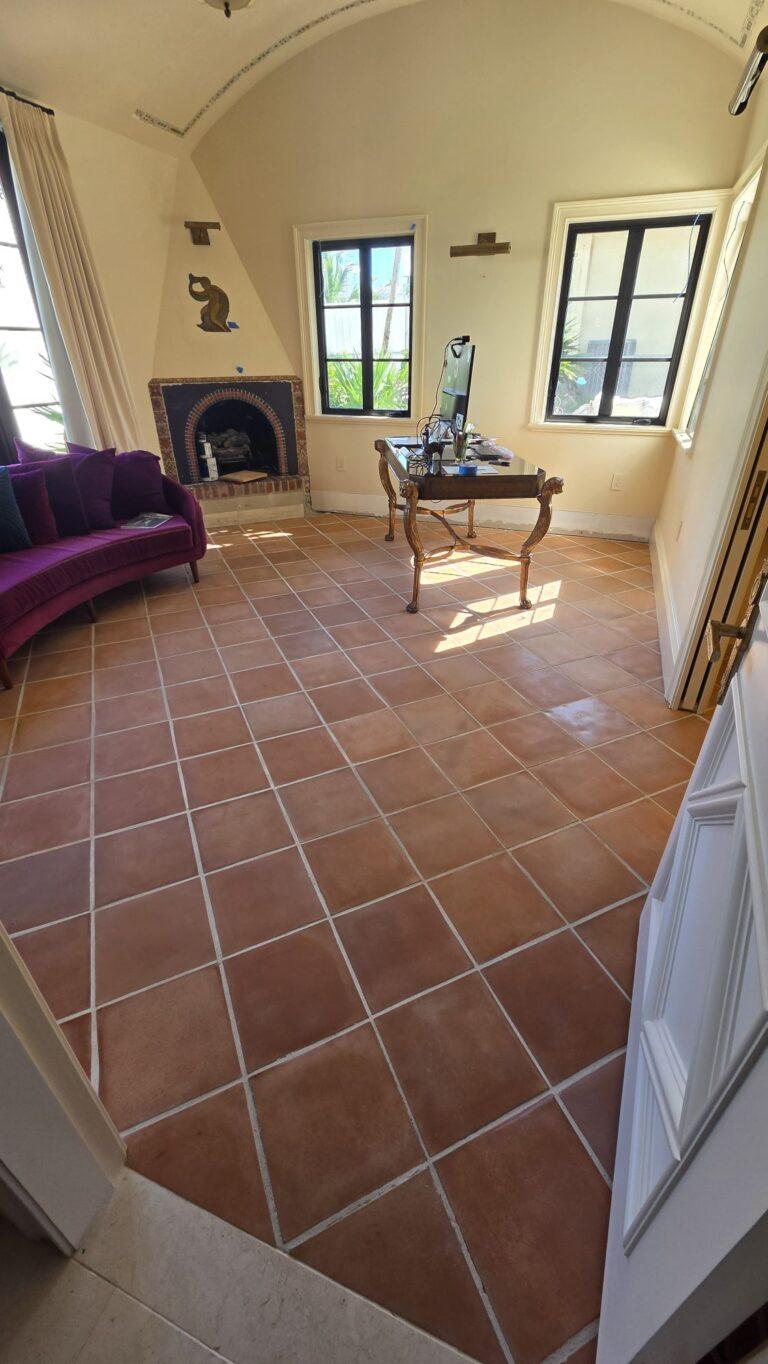
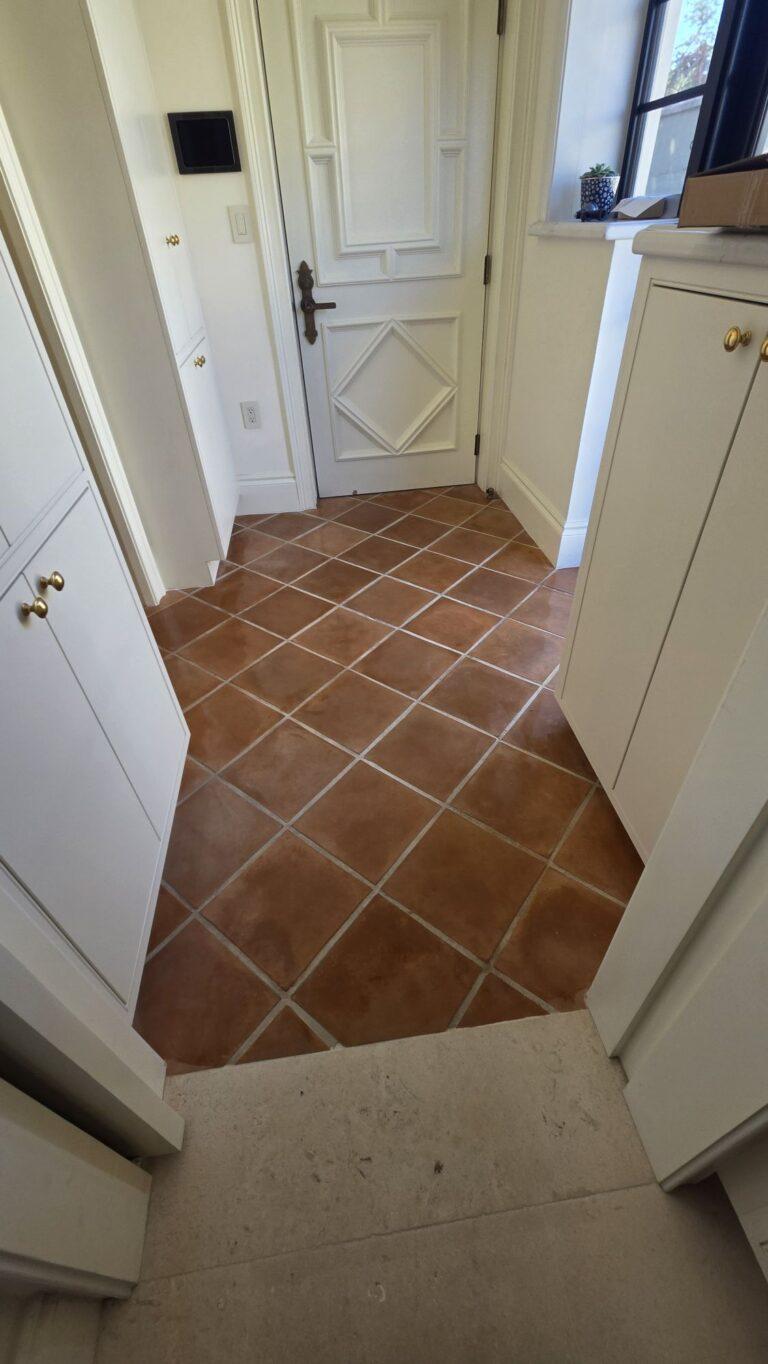
Real terracotta tile floor laid on the diagonal in a Miami Beach home
The real terracotta downstairs, Miami Beach.

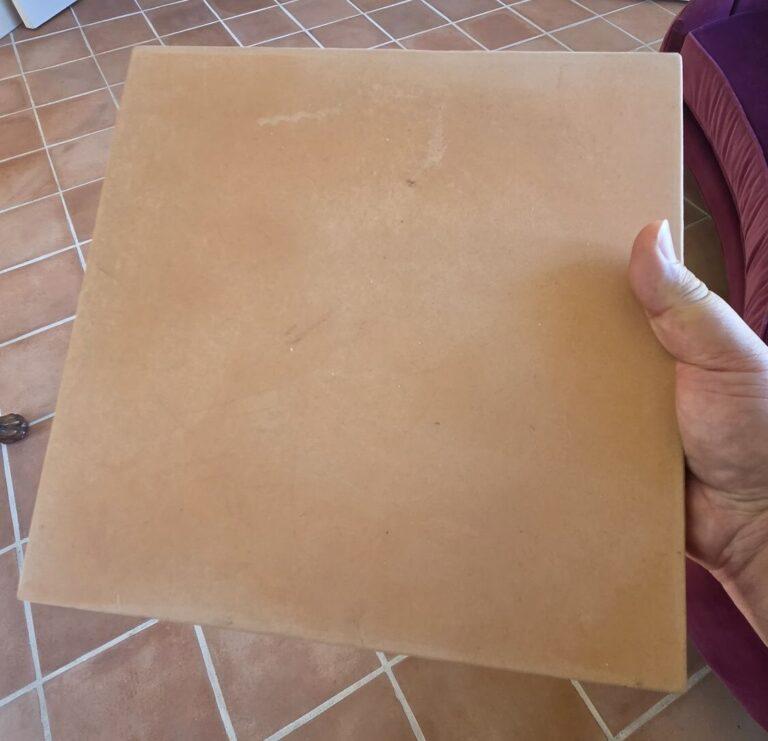
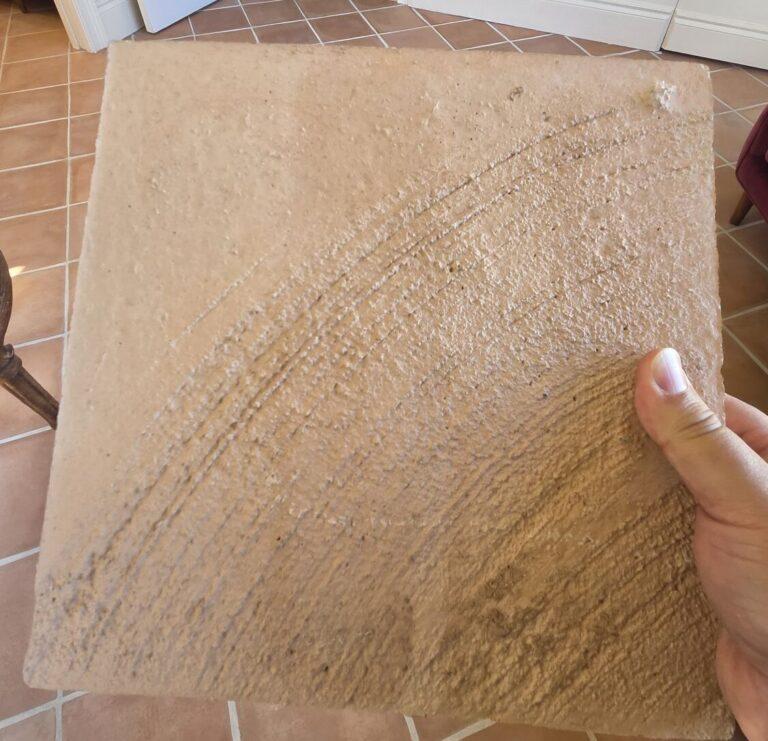
The name tells you what to look for. Terracotta is Italian for "baked earth." Real terracotta is fired clay. It feels earthy, and you can smell the clay. The new tiles felt off in the hand, and the smell was a little off too. Flipping one over settled it, because the back was concrete. Our crew saw the same thing right away.

Front of a concrete tile made to look like terracotta, held over a real terracotta floor in Miami BeachBack of the look-alike tile showing concrete, held over a real terracotta floor in Miami Beach
The look-alike from the new shipment: the front, and the concrete back.

Water gives it away as well. Real terracotta soaks it in within a few minutes. On the concrete look-alike, the water lingers on top and stays wet longer.

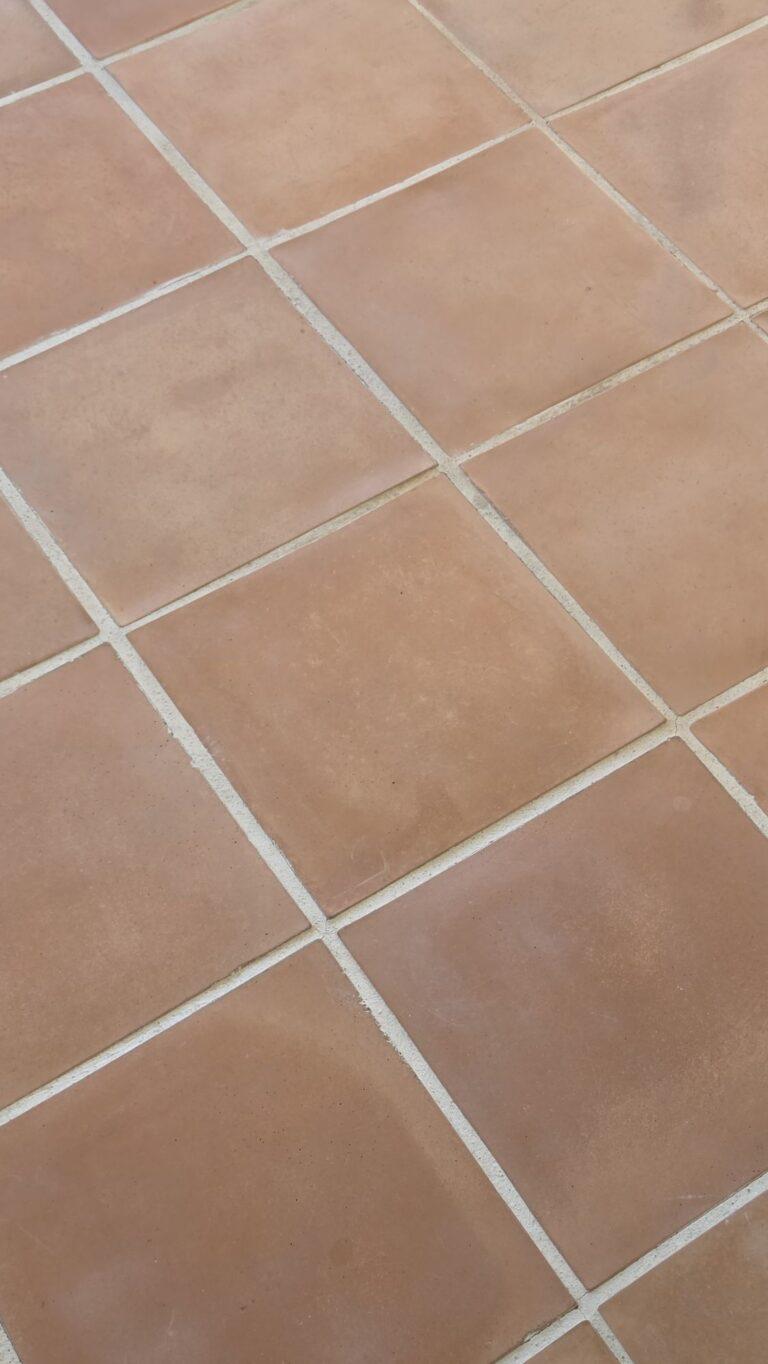
Sealer freshly applied to a real terracotta hallway floor in a Miami Beach homeClose-up of real terracotta floor tiles and grout in a Miami Beach home
Sealer going down on the real terracotta hallway, and a close-up of the real tile.

The homeowner called the supplier, and they confirmed it. The new tiles were a concrete imitation, not terracotta. Then she wanted to know if the original floor downstairs was real too. Miguel told her it was, and a chipped tile in that floor backed him up.

It is one more reason we look at a clay floor in person before we plan the work.

Chipped edge of an original terracotta floor tile in a Miami Beach home

A chipped tile in the original terracotta floor, Miami Beach.

Where We Restore Terracotta and Saltillo

We work on clay floors across Miami-Dade County and the Florida Keys, including Miami Beach, Coral Gables, Pinecrest, Key Biscayne, Coconut Grove, Kendall, Brickell, Sunny Isles Beach, Aventura, Key Largo and the rest of the Florida Keys. Every clay floor starts with a $250 on-site assessment, credited in full toward the work, because the right plan depends on what the floor actually is.

Frequently Asked Questions

Is saltillo the same as terracotta?

Saltillo is a type of terracotta, but not all terracotta is saltillo. Terracotta is the broad category of clay tile and can be made anywhere. Saltillo is handmade, sun-dried clay tile that comes only from the area around Saltillo, Mexico.

How can I tell if my floor is saltillo or terracotta?

Look at the shape, the color and the grout. Machine-made terracotta is usually smooth and flat, one even reddish brown, with tiles that are all the same size and thin grout lines. Saltillo has wavy surfaces, bumpy edges, blends of peach, yellow and red, slightly different tile sizes, and thick grout lines.

Do paw prints in the tile mean it is saltillo?

Very often, yes. Saltillo is dried outside in the sun, so dog paw prints, bird tracks and leaf imprints get baked right into the tile. Machine-made terracotta does not have them.

Are saltillo and terracotta cleaned the same way?

The everyday cleaning chemistry is the same, because both are raw clay. The difference is that saltillo is much more porous than machine-made terracotta, so it needs maintenance more often.

Why does my clay tile floor look yellow or brown?

Usually it is not the tile. Layers of wax and acrylic applied over the years without ever being stripped oxidize into a yellow-brown haze, and in South Florida humidity gets trapped under them. Once those layers are stripped, the clay underneath is usually the same color it always was.

Can rust stains, paint and haze come off terracotta tile?

On this Miami Beach floor we removed rust streaks, paint splatter and cement haze with low-moisture work, chemistry plus controlled extraction, then applied a transparent sealer. Every clay floor is different, so we assess it in person before we plan the work.

How can I tell real terracotta from a concrete look-alike?

Real terracotta is fired clay. It feels earthy, it smells like clay, and it soaks in water within a few minutes. A concrete look-alike feels off in the hand, water lingers on top and stays wet longer, and the back of the tile shows concrete. On a Miami Beach job, our crew spotted a concrete look-alike in a new shipment, and the supplier confirmed it.

Do you restore terracotta and saltillo floors in Miami-Dade and the Florida Keys?

Yes. Keep It Clean Tile and Grout restores terracotta and saltillo floors across Miami-Dade County and the Florida Keys, including Miami Beach, Coral Gables, Pinecrest, Key Biscayne and Key Largo. The $250 on-site assessment is credited in full toward the work. Call or text 305-741-9729.

Not Sure Which Clay Floor You Have?

Keep It Clean Tile and Grout restores terracotta, saltillo and natural stone across Miami-Dade County and the Florida Keys.

Veteran-Owned | 25+ Years | 185+ Five-Star Reviews
★★★★★ Read our reviews on Google

The $250 assessment is credited in full toward your service.

Call or text: 305-741-9729

Always Local. Always On Time. Always Honest.